

 Phoenix 24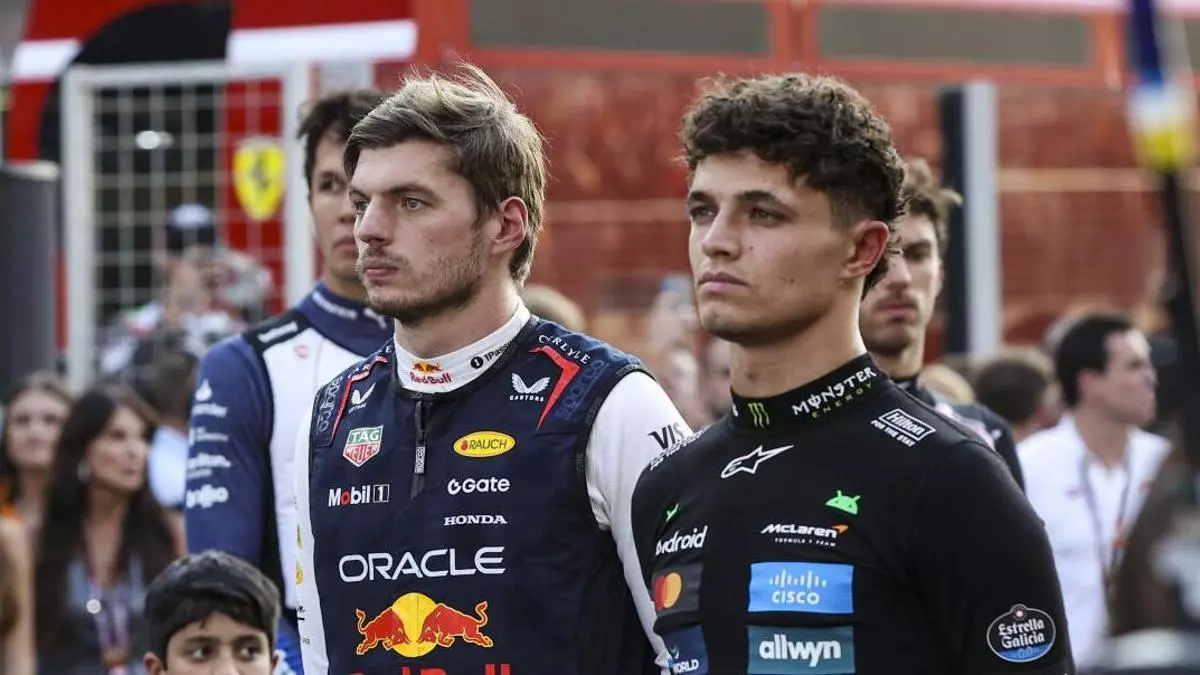
Even champions question how long the game lasts.
Woking, April 2026.
Lando Norris has reopened a sensitive debate inside Formula 1 by warning that retirement is never a distant possibility for elite drivers. His comments arrive in a sport increasingly shaped by regulatory pressure, media exposure, psychological fatigue and the technical uncertainty surrounding its new competitive era. Norris did not present retirement as drama, but as a rational option when a driver no longer feels aligned with the direction of the championship. That message matters because it comes from one of the central figures of the modern grid.
The context points directly to Max Verstappen’s repeated criticism of Formula 1’s evolving format and technical direction. Norris has suggested that, if a driver is no longer comfortable with the sport, leaving remains a personal and legitimate decision. The statement is blunt, but it reflects the reality of a championship where drivers are not only athletes, but brands, public figures and strategic assets. Formula 1 offers extraordinary rewards, yet it also demands a level of exposure that few careers can sustain indefinitely.
Modern Formula 1 is no longer only a test of speed. It is a test of adaptation, emotional discipline and tolerance for constant scrutiny. Drivers must manage performance data, hybrid systems, tire degradation, sponsor obligations, public narratives and political pressure inside their teams. The result is a career environment where physical talent is only one part of survival. Mental endurance has become just as decisive.
Norris’ warning also reflects a generational shift. Earlier eras often treated retirement as the final stage of physical decline or competitive irrelevance. Today, younger drivers may view departure as a strategic choice rather than a defeat. If the sport becomes too restrictive, too artificial or too exhausting, leaving can be framed as control over one’s own trajectory. That possibility changes the balance of power between drivers and the institutions that govern the sport.
The new technical direction of Formula 1 adds another layer to the tension. As cars become more complex and energy management gains greater importance, some drivers fear that the essence of racing is being diluted. The emotional appeal of Formula 1 has always depended on risk, instinct and the sensation of pushing machinery to the limit. If regulation makes the sport feel overmanaged, even elite drivers may begin to question what they are really competing for.
There is also a commercial contradiction at work. Formula 1 has never been more global, more profitable or more visible, yet that success intensifies pressure on its stars. Every comment becomes headline material. Every frustration becomes a market signal. Every rumor about retirement becomes part of the championship’s entertainment economy. In that environment, personal fatigue is quickly transformed into public spectacle.
For Norris, the point is not necessarily that Verstappen or any other driver will leave immediately. The point is that the possibility is credible. When top drivers speak openly about fatigue, dissatisfaction or the right to walk away, Formula 1 must listen. The sport depends on talent, but talent depends on whether the environment remains worth enduring.
The warning should also concern teams. Long-term planning in Formula 1 assumes that elite drivers will remain committed through regulatory cycles, sponsorship agreements and development programs. If drivers become more willing to leave early, teams face deeper uncertainty. Contracts may still bind talent, but motivation cannot be engineered by paperwork.
What Norris exposes is the fragility behind Formula 1’s glamour. Behind the spectacle lies a system that compresses pressure into every race weekend, every interview and every technical change. The sport sells control, precision and speed, but its human core remains unpredictable. Drivers are not machines, even when the championship often treats them like components in a larger commercial engine.
Formula 1 now faces a difficult question: how far can it evolve before its own stars feel detached from it? The answer will not come only from rulebooks or commercial growth. It will come from whether drivers still recognize the sport as something worth sacrificing for. In that sense, Norris’ message is less a provocation than a warning. Even at the top, the exit door is always real.
Speed loses meaning when the driver no longer believes in the race.
La velocidad pierde sentido cuando el piloto deja de creer en la carrera.