

 Phoenix 24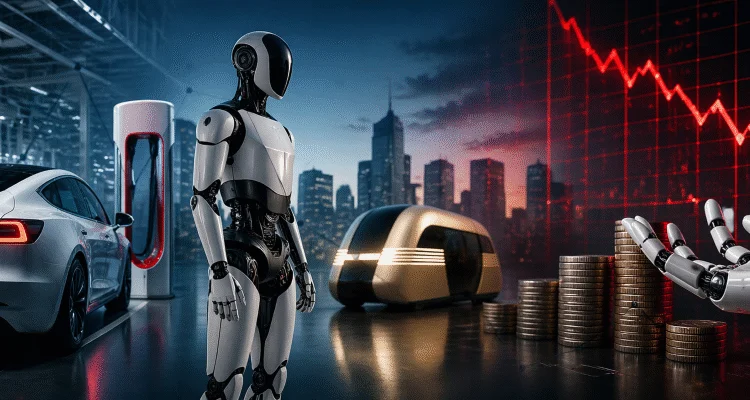
Optimus is no longer a prototype, but a strategy.
Austin, April 2026. Elon Musk has placed Tesla’s next major identity shift around Optimus, the humanoid robot he now describes as the biggest product in history. The claim is deliberately enormous, but Tesla’s investment plan shows that the company is no longer treating robotics as a side experiment. With a confirmed capital push of roughly 25 billion dollars, Tesla is positioning artificial intelligence, chips and humanoid automation as the center of its next industrial cycle.
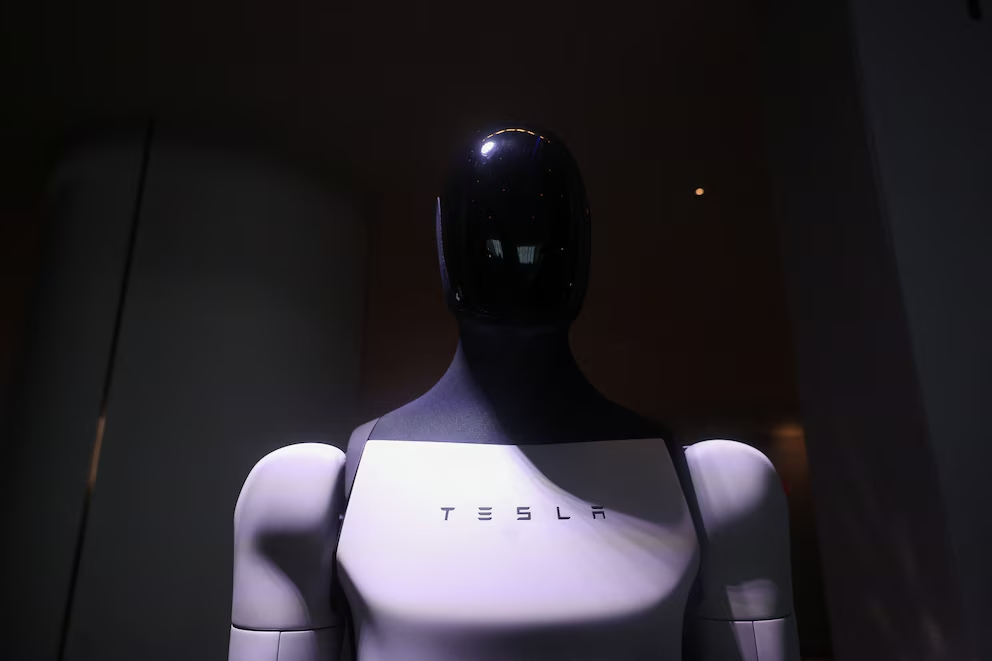
The strategic message is clear: Tesla does not want to be understood only as an electric vehicle company. It wants to become an AI manufacturing platform capable of producing machines that move, perceive, learn and work in physical environments. Cars gave Tesla scale, data and manufacturing discipline. Optimus could give it access to labor itself.
That ambition changes the economic logic of the company. A car is sold, financed, serviced and upgraded. A humanoid robot could be deployed across factories, warehouses, homes, hospitals, logistics networks and industrial facilities. If it becomes reliable and affordable, Optimus would not merely enter a market; it could create a new one.
The stakes are enormous because labor is the largest cost structure in many industries. A general-purpose robot capable of performing repetitive physical tasks would alter the relationship between capital and work. Companies would not simply buy automation; they would buy a substitute for certain forms of human presence.
Tesla’s advantage lies in integration. The company already combines software, batteries, sensors, manufacturing systems and AI training infrastructure. That gives it a stronger starting point than many robotics firms that can build prototypes but struggle to scale production. The real test will not be whether Optimus can perform demonstrations, but whether Tesla can manufacture millions of units that work safely and consistently.
There is also a geopolitical dimension. Humanoid robotics sits at the intersection of artificial intelligence, semiconductors, industrial capacity and national competitiveness. The country and company that dominate this layer could gain strategic leverage over productivity, manufacturing and supply chains. In that sense, Optimus is not only a product; it is a power project.
The risks remain substantial. Robotics has a long history of bold promises that collapse under real-world complexity. Human environments are unpredictable, and physical labor requires balance, dexterity, judgment and safety standards that are far harder than controlled factory automation. Tesla must prove that Optimus can move beyond spectacle into economic usefulness.
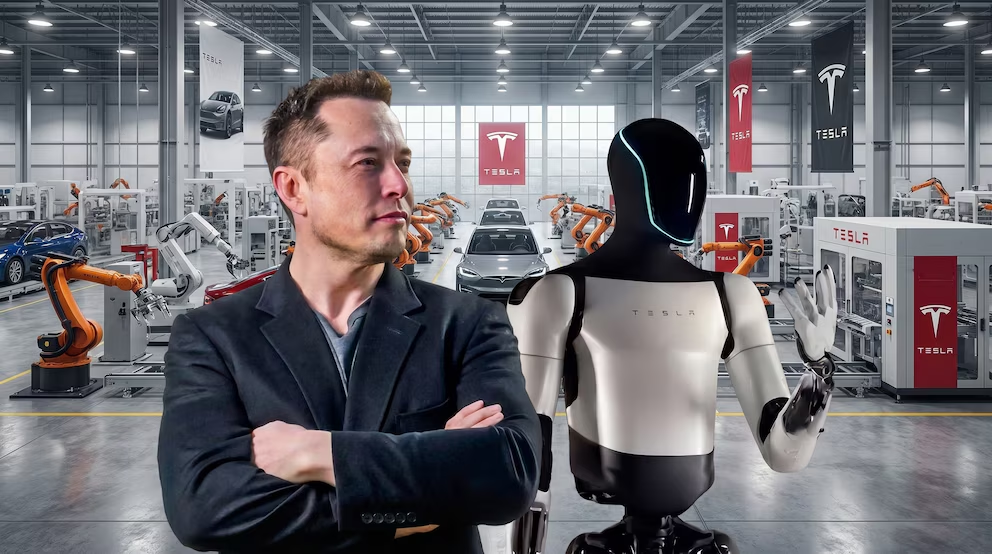
Investors will watch the numbers closely. A 25-billion-dollar investment signals conviction, but it also raises pressure. If Tesla’s car business slows while robotics remains unproven, the market may question whether Musk is stretching the company too far. Vision can lift valuation, but execution decides survival.
The social implications are equally serious. If humanoid robots become scalable, the labor market will face a transformation deeper than office automation. Workers in logistics, manufacturing, cleaning, elder care, retail and industrial support could see their roles redesigned or displaced. The debate over AI would move from screens into streets, warehouses and homes.
That is why Musk’s statement matters beyond Tesla. Calling Optimus the biggest product ever is a claim about the future of labor, not only the future of technology. It suggests a world where intelligence is no longer confined to software and where machines enter the physical economy as workers.
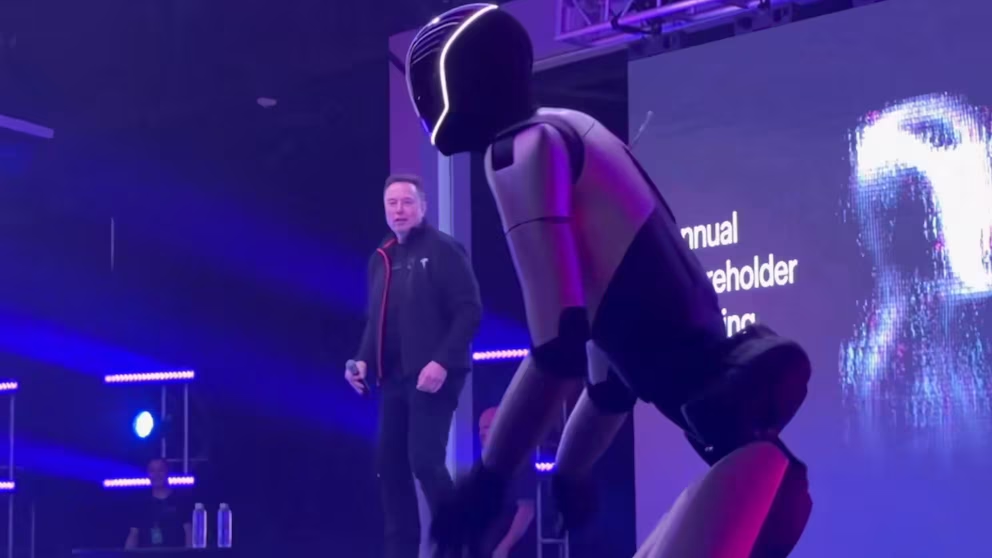
For now, Optimus remains a promise under construction. But Tesla’s investment shows that the promise is becoming institutional strategy. If the company succeeds, the robot may become more important than the car that made Tesla famous. If it fails, it will stand as one of the most expensive bets in the history of industrial ambition.
Detrás de cada dato, hay una intención. Detrás de cada silencio, una estructura.