

 Phoenix 24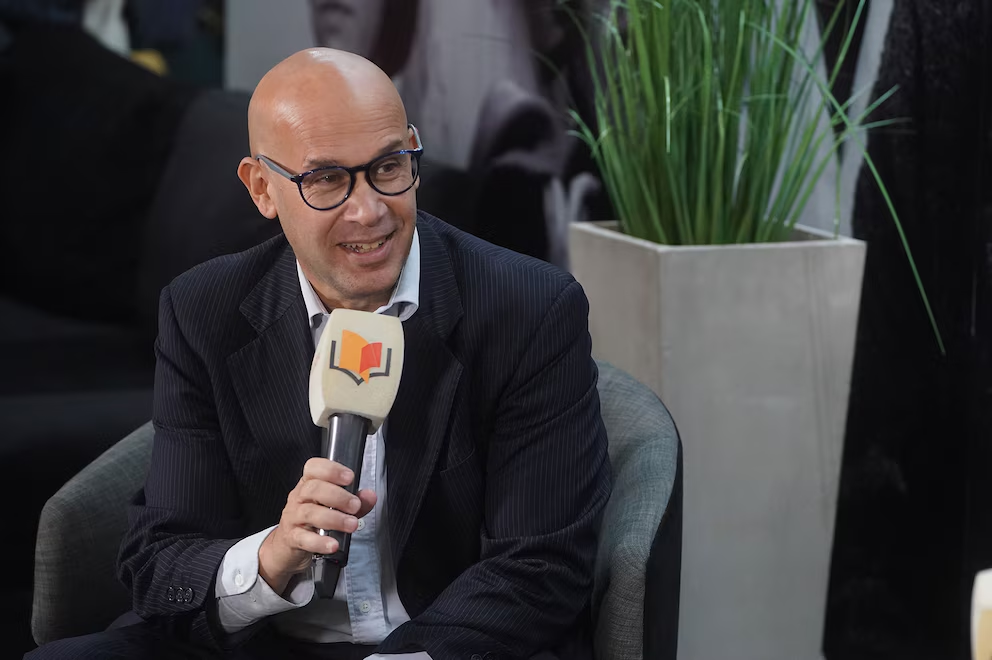
Debt is also a national biography.
Buenos Aires, April 2026. The presentation of La Argentina en el Fondo at the Buenos Aires Book Fair turns an economic history into a cultural and political event. Written by journalist Martín Kanenguiser and former IMF Western Hemisphere director Alejandro Werner, the book enters one of Argentina’s most sensitive narratives: its recurring relationship with the International Monetary Fund. The title’s idea of “serial addiction” is not merely provocative. It captures a national pattern in which debt, crisis, rescue, adjustment, and political blame return with almost ritual persistence.
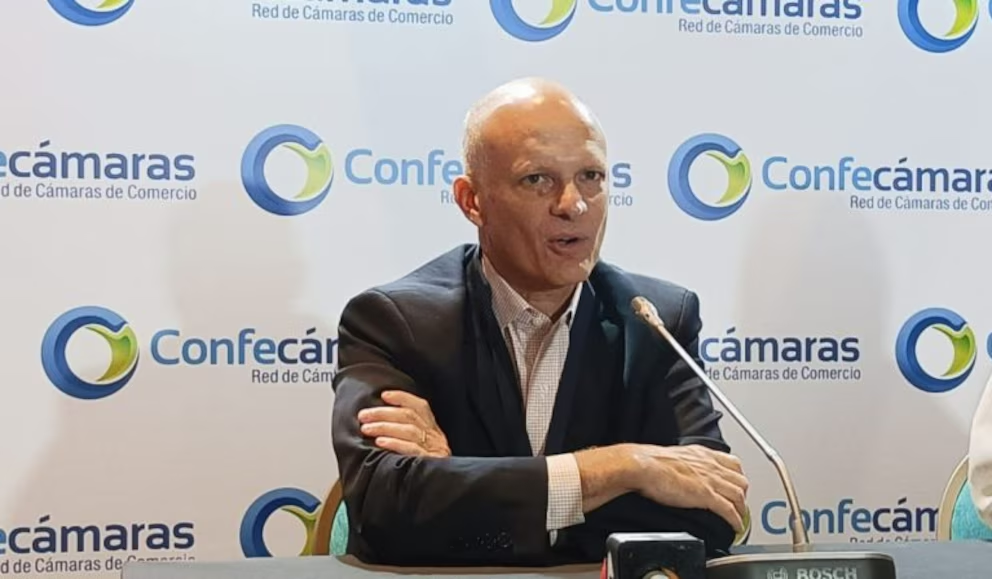
What makes the book especially significant is the convergence of two perspectives rarely aligned in the same frame. Kanenguiser brings the tools of investigative journalism, institutional memory, and narrative reconstruction. Werner brings the internal view of a senior official who operated inside the IMF during critical moments for Latin America and Argentina. Together, they promise not only a chronicle of agreements, but a look into the hidden mechanics of negotiation, distrust, pressure, and dependency. That combination gives the presentation more weight than a conventional publishing event.
The timing also matters. Argentina is once again debating its economic direction under Javier Milei, while the role of the United States and the return of Donald Trump to the center of global power reshape the political environment around IMF decision-making. In that context, the book does not land as a retrospective artifact. It arrives inside an active dispute over sovereignty, austerity, credibility, and the limits of external financing. The past is not behind the country. It is still operating through institutions, debt schedules, reserves, political rhetoric, and social fatigue.
The relationship between Argentina and the IMF has always exceeded economics. It has functioned as a mirror of state fragility, elite failure, international asymmetry, and national self-deception. Each agreement has promised stabilization, yet the recurrence of crisis suggests something more structural than a sequence of technical mistakes. Argentina returns to the Fund not only because it needs money, but because its political system has repeatedly failed to build a durable model of trust, productivity, fiscal discipline, and monetary legitimacy. The debt file is therefore also a file on governance.
Presenting this discussion at the Book Fair adds another layer of meaning. The fair is not a financial forum, but a cultural space where Argentina stages its anxieties, myths, arguments, and intellectual self-image before the public. Bringing the IMF into that arena means translating macroeconomic dependency into national memory. It turns spreadsheets into narrative. It asks readers to look at debt not as an abstract number, but as a repeated story of promises, ruptures, and deferred costs.
From a Phoenix24 perspective, the deeper significance lies in how nations narrate their own dependence. Argentina’s IMF cycle is not only a matter of loans and conditions. It is a structure of repetition that exposes the gap between political language and institutional capacity. A book like this matters because it forces that repetition into public view. The uncomfortable question is not why Argentina returned to the Fund once again. It is why the country keeps producing the conditions that make return seem inevitable.
Phoenix24 Editorial Note: analysis, context, and strategic narrative to read power beyond the headline.