

 Phoenix 24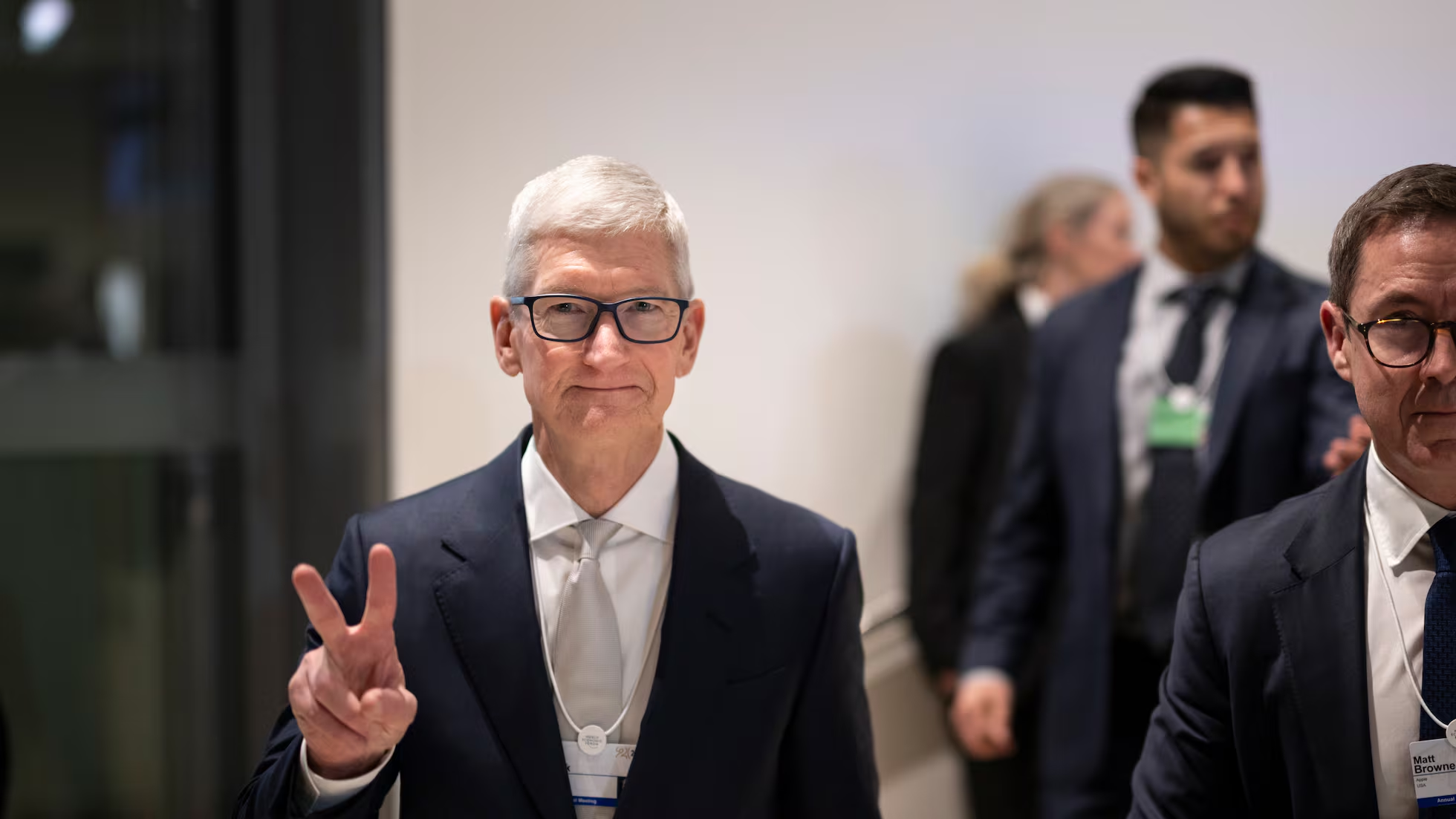
Succession at Apple is really strategy in motion.
Cupertino, April 2026. Apple has entered one of the most consequential leadership transitions in modern technology after Tim Cook announced he will step down as chief executive in September and move into the role of executive chairman. The company has chosen John Ternus, its senior vice president of hardware engineering, as the next CEO, signaling that continuity and product discipline remain central to its institutional logic. This is not only a corporate succession after a long executive era. It is a strategic decision about how Apple wants to navigate a technology sector increasingly reorganized by artificial intelligence, hardware competition, and pressure for faster visible innovation.
Cook’s departure closes a fifteen year cycle that reshaped Apple from a company still operating under the long shadow of Steve Jobs into one of the most powerful corporate systems in the world. Under his leadership, Apple expanded far beyond the iPhone into wearables, services, payments, and a tightly integrated ecosystem that turned customer loyalty into recurring revenue strength and extraordinary market value. His legacy is therefore not defined by theatrical reinvention, but by scale, operational control, and institutional durability. He made Apple larger, steadier, and more systemically influential than almost any company in the industry. That kind of tenure creates a difficult succession even when the handover appears orderly.
That is why the choice of John Ternus matters. Apple did not turn to an outsider, a finance executive, or a high profile artificial intelligence figure. It selected a hardware leader formed inside the company who has spent decades overseeing major product categories and helping sustain Apple’s engineering culture. The decision suggests that Apple still sees its vast device ecosystem as the foundation of its future, rather than as a legacy platform waiting to be replaced by a new corporate identity. In other words, the company appears to believe that its next phase will still be built through products people hold, wear, and integrate into daily life.
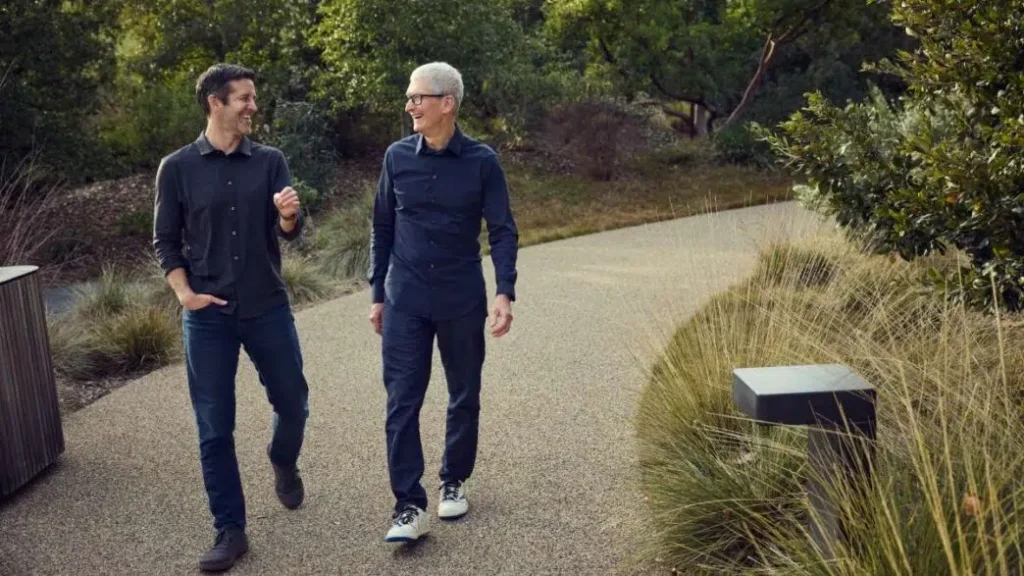
This makes the succession strategically revealing. Apple is making the transition at a moment when questions have intensified over whether it has moved too cautiously in the race to define the next era of generative AI. By elevating Ternus, the company seems to be betting that the answer is not a rupture with its past, but a recalibration within its existing architecture. The core model remains intact: tightly integrated hardware and software, premium positioning, ecosystem control, and long cycle customer retention. What may change is the speed and clarity with which Apple tries to show that this model can still lead in an AI shaped market.
Cook’s continued presence as executive chairman adds another important dimension. Apple is not presenting this as a dramatic break, but as a controlled transfer of authority designed to reassure investors, preserve continuity, and minimize institutional shock. That reflects Apple’s long standing preference for managed transitions over disruptive gestures. In governance terms, the company is trying to convert succession into an extension of design discipline. The message to markets is that leadership change will not mean structural instability. It will mean guided adaptation.
Still, the transition also reveals a deeper pressure point inside Apple’s future. The next era will not be judged only by managerial elegance or product polish, but by whether the company can still persuade markets that it defines relevance rather than merely preserving it. Ternus inherits a business with enormous strengths, but also with rising expectations around AI integration, competitive speed, and visible strategic ambition. Apple is no longer judged only against its traditional rivals. It is judged against a broader field of companies trying to shape the next center of gravity in technology.
That is what makes this move both conservative and ambitious. Conservative because it reinforces continuity, internal trust, and the primacy of hardware centered thinking. Ambitious because it assumes that Apple can enter a new technological era without abandoning the operating logic that made it dominant in the last one. Ternus is not simply being asked to replace Cook. He is being asked to prove that Apple’s inherited architecture can still generate future power under new competitive conditions. That is a much harder task than succession headlines usually admit.
What begins now is not just a leadership handover. It is a high stakes test of corporate inheritance. If Ternus succeeds, Apple will show that disciplined continuity can still outperform theatrical disruption in a market obsessed with novelty. If he fails, this transition will be remembered as the point at which one of the world’s most valuable companies underestimated how far technological gravity had already shifted. Either way, the post-Cook era begins with a familiar Apple wager: that the future can still be shaped without surrendering control of the design.
Detrás de cada dato, hay una intención. Detrás de cada silencio, una estructura.
Behind every datum, there is an intention. Behind every silence, a structure.