

 Phoenix 24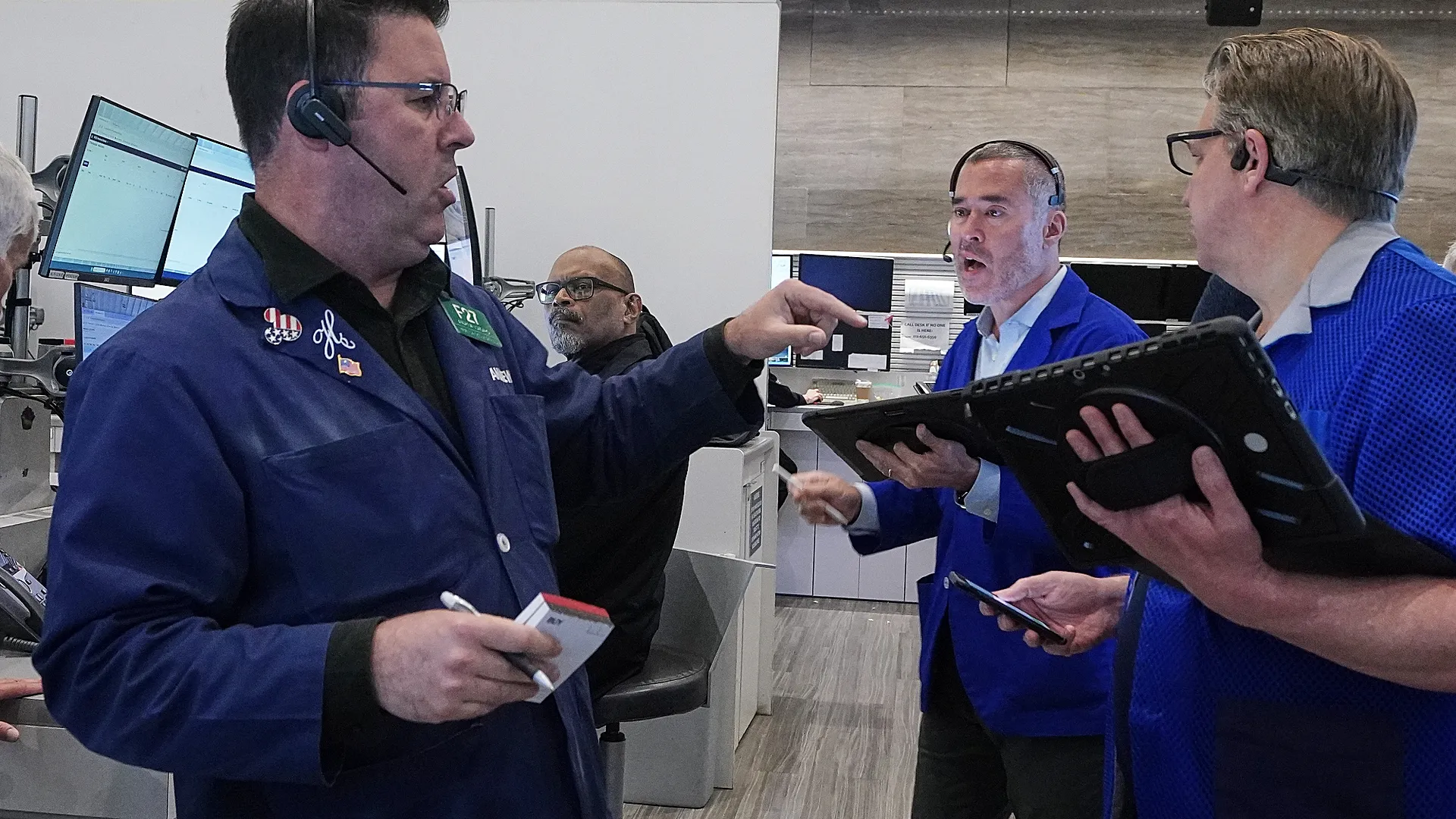
Finance is now trading on diplomatic fog.
Frankfurt, April 2026. Global markets entered the week in a state of guarded instability as investors tracked the uncertain trajectory of negotiations between the United States and Iran. European equities moved in narrow ranges, Asian markets posted modest gains, and oil prices edged higher as traders tried to price a ceasefire that still looks politically fragile and strategically reversible. The overall pattern was not one of panic, but of hesitation. Markets were not celebrating peace. They were managing uncertainty.
That distinction matters because the current market mood is being shaped less by confirmed outcomes than by unresolved risk. Investors are watching two clocks at once: the diplomatic timetable surrounding the talks and the strategic timetable surrounding the truce itself. As long as neither produces a clear signal, capital tends to move defensively rather than decisively. Flat trading in Europe, selective gains in Asia, and restrained movement in U.S. futures all point to the same underlying condition. The system is waiting, but it is waiting nervously.
Oil remains the clearest transmission mechanism between diplomacy and market behavior. Prices moved slightly upward not because a major disruption had already occurred, but because traders continue to assign real probability to renewed instability around the Strait of Hormuz. That corridor is too central to global energy flows for negotiations to fail quietly. Even the perception that the truce could unravel is enough to affect pricing assumptions across commodities, logistics, and transport sensitive sectors. In modern markets, threat perception often moves faster than material disruption.
European equities reflected that caution with unusual clarity. Major indexes such as the Euro Stoxx 50 and the broader Stoxx 600 remained almost flat, while national benchmarks in the United Kingdom, Germany, France, and Italy moved within tight bands. Such behavior usually signals that investors are not yet ready to reposition aggressively, but also do not trust the environment enough to embrace risk with conviction. This kind of narrow movement may look calm on the surface, yet it often reveals an underlying absence of confidence. The market is stable only in the shallow sense that no one wants to move first.
Wall Street’s posture added to that reading. U.S. futures also stayed within a limited range, while the S&P 500 had ended the prior session slightly lower. The signal here is subtle but important. Investors are not treating the diplomatic track as a source of relief strong enough to reprice risk assets upward, nor are they yet treating it as a trigger for disorder severe enough to provoke a broad selloff. Instead, they are operating in the intermediate zone where portfolios remain exposed, but conviction remains low. That is often the most revealing phase of geopolitical market stress.
The problem is that uncertainty itself is beginning to function as a market variable. There have been renewed efforts to secure an agreement, but no decisive breakthrough has emerged. At the same time, Iranian rhetoric has remained confrontational, and the ceasefire’s time horizon has kept the negotiations under visible pressure. When markets are forced to react to contradictory signals, volatility does not always appear immediately in the headline indices. Sometimes it first appears in the compression of confidence, the narrowing of risk tolerance, and the upward sensitivity of energy linked assets.
This is why the current situation deserves to be read as more than a routine geopolitical backdrop. It is exposing how dependent financial stability remains on fragile security arrangements in key strategic corridors. Equity markets may still be moving in measured increments, but beneath that calm lies a broader concern about what happens if diplomacy fails faster than markets can adapt. Oil would likely react first, but the shock would not remain confined there. It would spread through inflation expectations, corporate cost forecasts, and the broader pricing of risk across regions already operating under economic strain.
The deeper lesson is that markets do not need open war to become unsettled. They only need enough ambiguity around the possibility of renewed conflict. That is the threshold now in view. The negotiations between Washington and Tehran are not only shaping the political future of a ceasefire. They are also shaping the emotional architecture of global finance, where hesitation, not optimism, has become the dominant mood. For now, traders are not pricing peace. They are pricing the possibility that peace may still fail before it begins to look durable.
Detrás de cada dato, hay una intención. Detrás de cada silencio, una estructura.
Behind every datum, there is an intention. Behind every silence, a structure.