

 Phoenix 24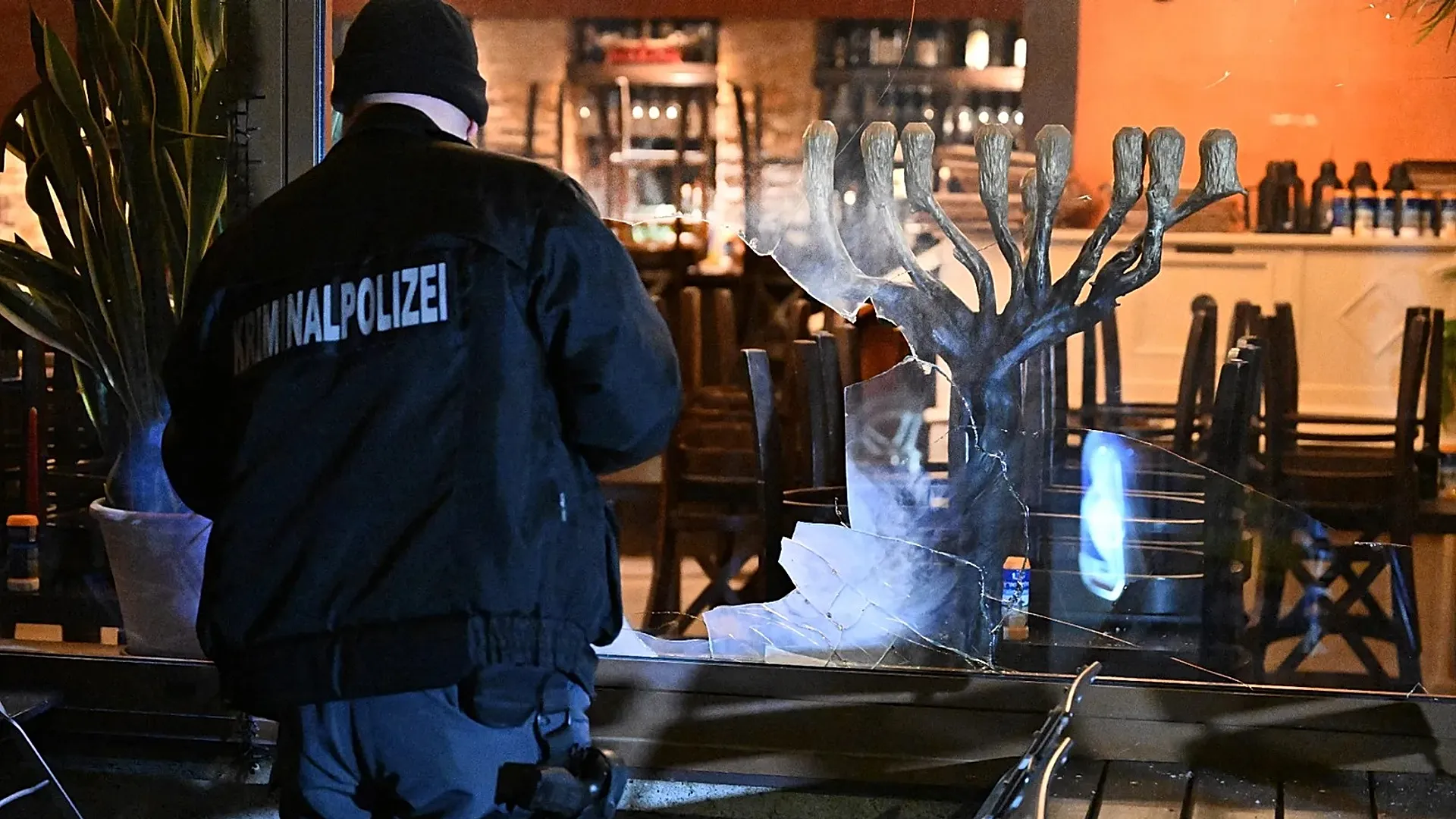
A targeted act exposes deeper societal fractures.
Munich, April 2026
German authorities have opened a formal investigation following a violent attack against a restaurant in Munich, with early indications pointing toward a possible antisemitic motive. The incident involved the use of incendiary or explosive devices that caused structural damage to the establishment during nighttime hours. Although no injuries were reported, the nature of the target has elevated the case beyond vandalism into a sensitive security matter with broader societal implications.
The restaurant is known locally for its connection to the Israeli and Jewish community, which immediately reframes the attack within a symbolic and cultural dimension. Such locations operate not only as commercial venues but as identity spaces, making them highly sensitive targets in periods of geopolitical tension. In this context, the act is being analyzed as a potential signal rather than an isolated episode, particularly given the timing and method employed.
The event occurs amid a documented rise in antisemitic incidents across Germany and other parts of Europe. Security analysts have consistently linked this increase to spillover effects from Middle Eastern conflicts, where narratives, polarization, and digital amplification mechanisms extend far beyond the original theaters of war. What emerges is a hybrid environment where local actions are often embedded within global tensions.
Operationally, the investigation remains ongoing, with no confirmed suspects at this stage. This lack of immediate attribution reflects a recurring challenge in such cases, where perpetrators rely on anonymity and rapid execution. For German security institutions, the priority now lies in preventing escalation while maintaining public confidence, particularly among communities that may perceive themselves as increasingly exposed.
Beyond the immediate facts, the Munich incident underscores a structural dilemma for Europe. Urban centers that historically positioned themselves as spaces of reconciliation are now confronting renewed expressions of identity-based hostility. These are not always coordinated campaigns, but rather fragmented acts that, when accumulated, contribute to a broader climate of unease and latent intimidation.
Strategically, the significance of the event lies in its cumulative effect. What appears as a localized attack is, in reality, part of a wider stress pattern affecting Europe’s internal cohesion. As external conflicts continue to project influence into domestic environments, the boundary between geopolitical confrontation and societal tension becomes increasingly blurred. Munich is not an exception. It is an indicator.
Detrás de cada dato, hay una intención. Detrás de cada silencio, una estructura.
Behind every data point, there is an intention. Behind every silence, a structure.