

 Phoenix 24
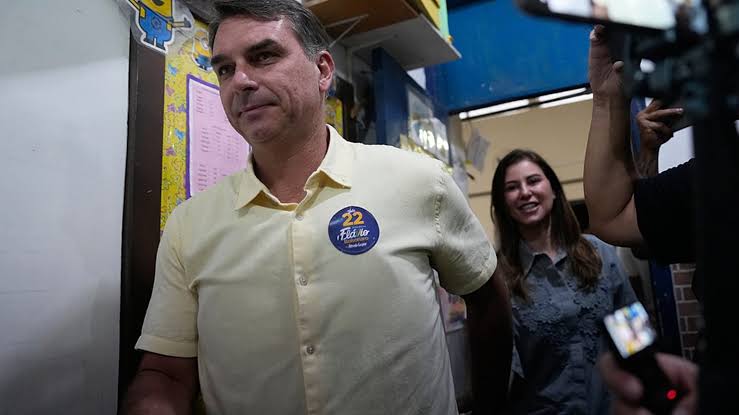
A disputed departure raises new legal and diplomatic questions.
BRASÍLIA
Brazilian Senator Flávio Bolsonaro has left the country for the United States following his defeat in Sunday’s presidential election, according to sources cited by Reuters and CNN. His departure comes amid a Supreme Court investigation into alleged financial crimes and after a judicial order requiring him to surrender his passports, creating a new political controversy just days after President Luiz Inácio Lula da Silva secured reelection.
Bolsonaro, the son of former President Jair Bolsonaro, lost the October 25 presidential runoff to Lula after a closely contested campaign. He subsequently challenged the election result and faced renewed judicial scrutiny over allegations involving money laundering and other financial irregularities.
Supreme Federal Court Justice Alexandre de Moraes ordered the senator to surrender his passports within 24 hours. According to Reuters, the deadline passed without compliance, prompting authorities to invalidate his Brazilian travel documents.
Bolsonaro denies wrongdoing. The investigation remains ongoing, and the allegations have not resulted in a conviction.
His precise route out of Brazil has generated conflicting accounts. Argentine news outlet Infobae reported that he crossed into Puerto Iguazú before boarding a private aircraft bound for the United States.
However, Argentina’s government disputed claims that he entered its territory, while Brazilian authorities examined whether he had crossed the border through an official immigration checkpoint.
The route described in the initial reports therefore remains unverified, even as sources familiar with his movements have confirmed his departure toward the United States.
CNN cited an American official who said Bolsonaro was traveling to Florida. Reuters separately reported confirmation from a political ally that the senator had left Brazil.
Questions also remain about his intended legal status in the United States. Reports suggesting that he may seek political asylum have circulated, but the available information does not establish that an asylum application has been formally submitted or approved.
The episode follows statements Bolsonaro made on Monday indicating that he would comply with judicial requirements and remain politically active as an opposition leader.
His reported departure therefore introduces uncertainty about his immediate political future and his ability to respond directly to the Brazilian investigation.
The situation could also complicate relations between Brasília and Washington. President Donald Trump has publicly expressed support for members of the Bolsonaro family, while Lula’s administration has raised concerns about American involvement in Brazilian political affairs.
Nevertheless, the senator’s presence in the United States does not establish that Washington helped arrange his departure or intends to protect him from Brazilian legal proceedings.
For Brazil, the controversy involves several separate questions: compliance with judicial orders, the right to challenge criminal allegations and the political consequences of an unsuccessful presidential campaign.
The Supreme Federal Court’s investigation must be distinguished from the electoral outcome, which has already been officially declared.
Bolsonaro’s departure has been corroborated by multiple news organizations, but important details about his route, legal status and future plans remain unresolved.
As Brazilian authorities examine those circumstances, the case is becoming another test of the relationship between political power, judicial accountability and international diplomacy.
Beyond the Headlines, Accountability Matters.