

 Phoenix 24
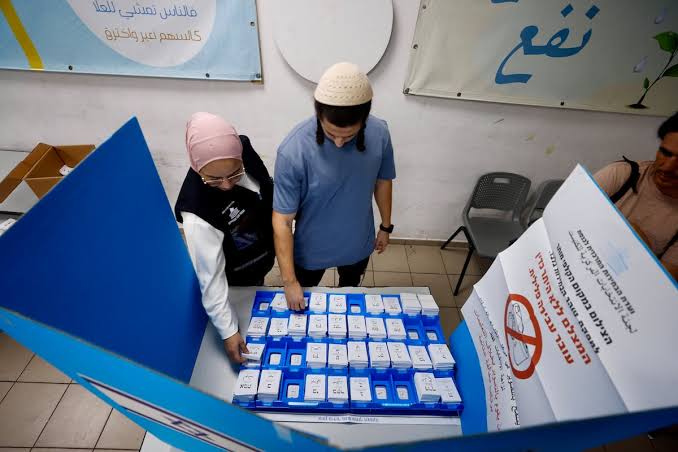
Israel votes as rival blocs confront a deeply divided political landscape.
JERUSALEM
Israeli Prime Minister Benjamin Netanyahu’s Likud party entered Tuesday’s parliamentary election among the leading contenders, but the latest opinion polls suggest that his political alliance could struggle to secure the majority needed to remain in power. The contest has exposed a sharp distinction between individual party strength and the ability to assemble a governing coalition.
Israelis are voting on October 27 in the country’s first general election since the Hamas-led attacks of October 7, 2023, and the subsequent wars in Gaza and across the region.
Approximately 7.3 million people are eligible to vote. The election will determine the composition of the 120-seat Knesset, where a governing coalition requires support from at least 61 lawmakers.
Pre-election polling generally placed Likud and Yashar, the centrist party led by former military chief Gadi Eisenkot, at roughly 22 to 23 seats each.
A Reuters polling aggregate, using data available before election day, indicated that parties opposed to Netanyahu could collectively obtain more seats than those supporting him. However, those parties do not necessarily constitute a unified coalition.
Other polling averages produced different results, reflecting significant disagreements among survey organizations and uncertainty over smaller parties.
A Maariv survey published shortly before voting projected 54 seats for opposition parties and 48 for Netanyahu’s bloc, with Arab-led parties holding additional seats.
These projections highlight a central obstacle: even an opposition advantage would not automatically translate into an alternative government.
Eisenkot’s potential partners span different political traditions, while disagreements over cooperation with Arab-led parties could complicate coalition negotiations.
Netanyahu has campaigned on his national security record and relationship with US President Donald Trump. Eisenkot has emphasized government accountability, including an independent investigation into the security failures surrounding the October 2023 attacks.
Military conscription exemptions for ultra-Orthodox men have also become an important electoral issue, reflecting tensions over the distribution of wartime responsibilities.
The election takes place against a difficult international backdrop. Israel’s military operations and confrontations involving Iran have strained diplomatic relationships, while domestic debates over judicial independence and economic pressures remain unresolved.
Israel’s proportional electoral system makes coalition negotiations especially important. Parties must win at least 3.25% of the national vote to enter parliament, creating uncertainty for smaller organizations near that threshold.
If no candidate can assemble a majority, President Isaac Herzog will consult parliamentary representatives before assigning a party leader the task of forming a government.
Negotiations could continue for weeks, potentially leaving Netanyahu in office as caretaker prime minister during the process.
As Israelis cast their ballots, no official election outcome has been established. The latest surveys describe possible parliamentary configurations, not confirmed results or guaranteed governing arrangements.
The decisive question is therefore not simply which party wins the most seats, but whether its leader can secure enough parliamentary support to form a government.
Beyond the Headlines, Accountability Matters.