

 Phoenix 24
Memory becomes combustible when geography asks for restitution.
Madrid, April 2026. Pablo Picasso’s Guernica has once again become the center of a political and cultural confrontation in Spain, but the dispute is no longer only about art conservation. It is about who gets to claim symbolic custody over one of the most devastating antiwar images of the twentieth century. The latest clash erupted after Basque leaders renewed their push to bring the painting temporarily to Bilbao as part of the commemorations surrounding the ninetieth anniversary of the bombing of Gernika and the first Basque government. Madrid answered not with accommodation, but with refusal, and the refusal has exposed how quickly cultural heritage becomes territorial power when history remains emotionally unresolved.

At the formal level, the argument against the transfer is technical. The Ministry of Culture and the Reina Sofía Museum insist that the work is too fragile to travel and that preservation must prevail over political desire. That position is not new. For decades, the museum has defended the painting’s immobility as a matter of conservation rather than ideology, rejecting previous requests on similar grounds. Yet in Spain, technical arguments around a work like Guernica never remain merely technical for long, because the painting’s meaning exceeds the canvas that carries it.
That is what makes this controversy structurally important. The Basque side is not really asking for a simple museum loan. It is asking for a symbolic act of historical recognition. Guernica was born from the destruction of a Basque town in 1937, turned into a universal indictment of fascist violence, and later absorbed into the Spanish democratic canon as a masterpiece of national memory. The current demand seeks to reverse that direction, even if only temporarily. It wants the painting to return, in some moral sense, to the geography of the wound that gave it meaning.
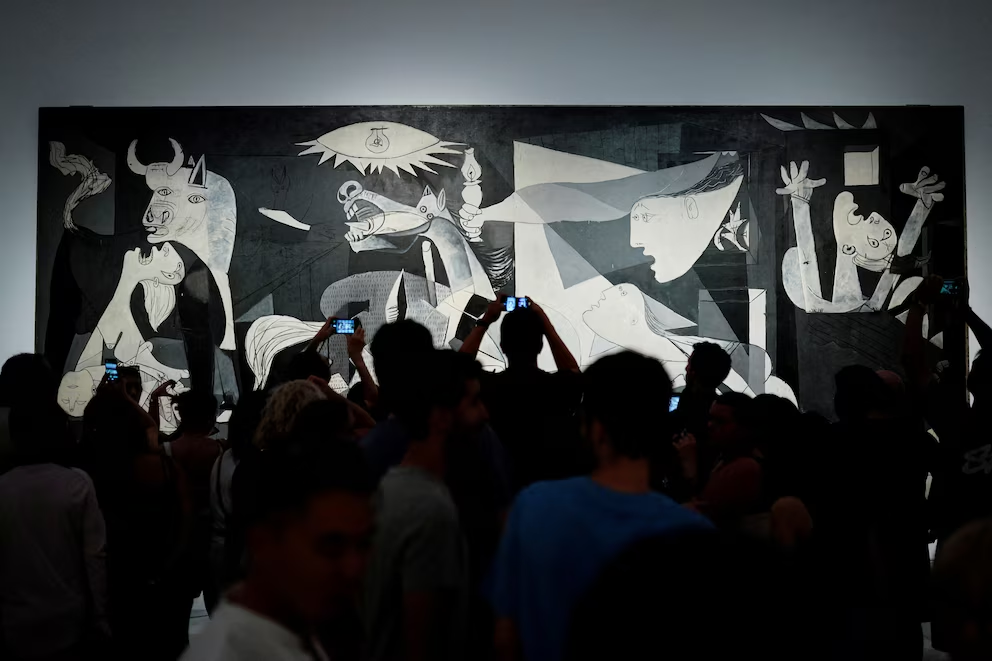
Madrid, however, is reading the matter through another logic. For the defenders of keeping the painting in the capital, culture must remain universal, national collections must not be fragmented by regional pressure, and an icon of this scale cannot become the object of symbolic territorial bargaining. That is why the reaction from Madrid’s political leadership was so sharp. Beneath the rhetoric about universality lies a deeper fear that conceding movement would be read not as generosity, but as a victory for peripheral nationalism over the central state’s custodianship of common heritage.
The result is that Guernica has been pulled into a familiar Spanish drama: the collision between memory, nation, and plurinational identity. What looks like a museum dispute is in fact a contest over historical legitimacy. The Basque argument says that a work born from the bombing of Gernika carries an ethical bond with Euskadi that no technical doctrine should automatically erase. The Madrid argument says that its transformation into a universal and national symbol means it now belongs to a broader civic space that must not be provincialized. Each side invokes dignity, but not the same map of dignity.
This is why the case resonates far beyond the museum sector. In contemporary Spain, major cultural objects are never entirely separate from the country’s unresolved territorial architecture. Language, memory, archives, monuments, and now once again Guernica become stages on which the state and its historical nations test one another’s symbolic reach. The painting has become powerful not only because of what it depicts, but because every side can plausibly claim to defend its true meaning. For the Basque Country, that meaning is rooted in historical trauma and recognition. For Madrid, it is rooted in preservation and universality. For Spain as a whole, it is rooted in the uneasy effort to hold those two claims together without fully satisfying either.

There is another irony at the center of the dispute. Guernica was created as an indictment of destruction and authoritarian brutality, yet it now functions as an object through which democratic Spain continues to negotiate its own internal fractures. The painting that once denounced bombing has become a battlefield of memory politics. No one is fighting over its message against war. They are fighting over the authority to frame that message in public space. That is what gives the controversy its intensity. The struggle is not about what Guernica means in abstraction. It is about who is entitled to host that meaning.
For the Reina Sofía, the case remains clear: the work should not travel, and expert reports reinforce that conclusion. But politically, the matter is unlikely to settle so easily. The more firmly the central institutions close the door, the more the Basque request gains moral energy as a denied gesture of recognition. A refused loan can become more symbolically potent than an approved one, because refusal feeds the perception that the Spanish state still prefers ownership to empathetic historical repair.
That is why this is not merely a cultural controversy between Madrid and the Basque Country. It is a reminder that masterpieces do not become neutral by entering national museums. Some works retain too much historical charge to sit quietly behind institutional glass. Guernica remains one of them. It is still doing what great political art does best: forcing the societies that preserve it to confront the wounds they have not fully agreed on how to remember.
Detrás de cada dato, hay una intención. Detrás de cada silencio, una estructura.
Behind every data point, there is an intention. Behind every silence, a structure.