

 Phoenix 24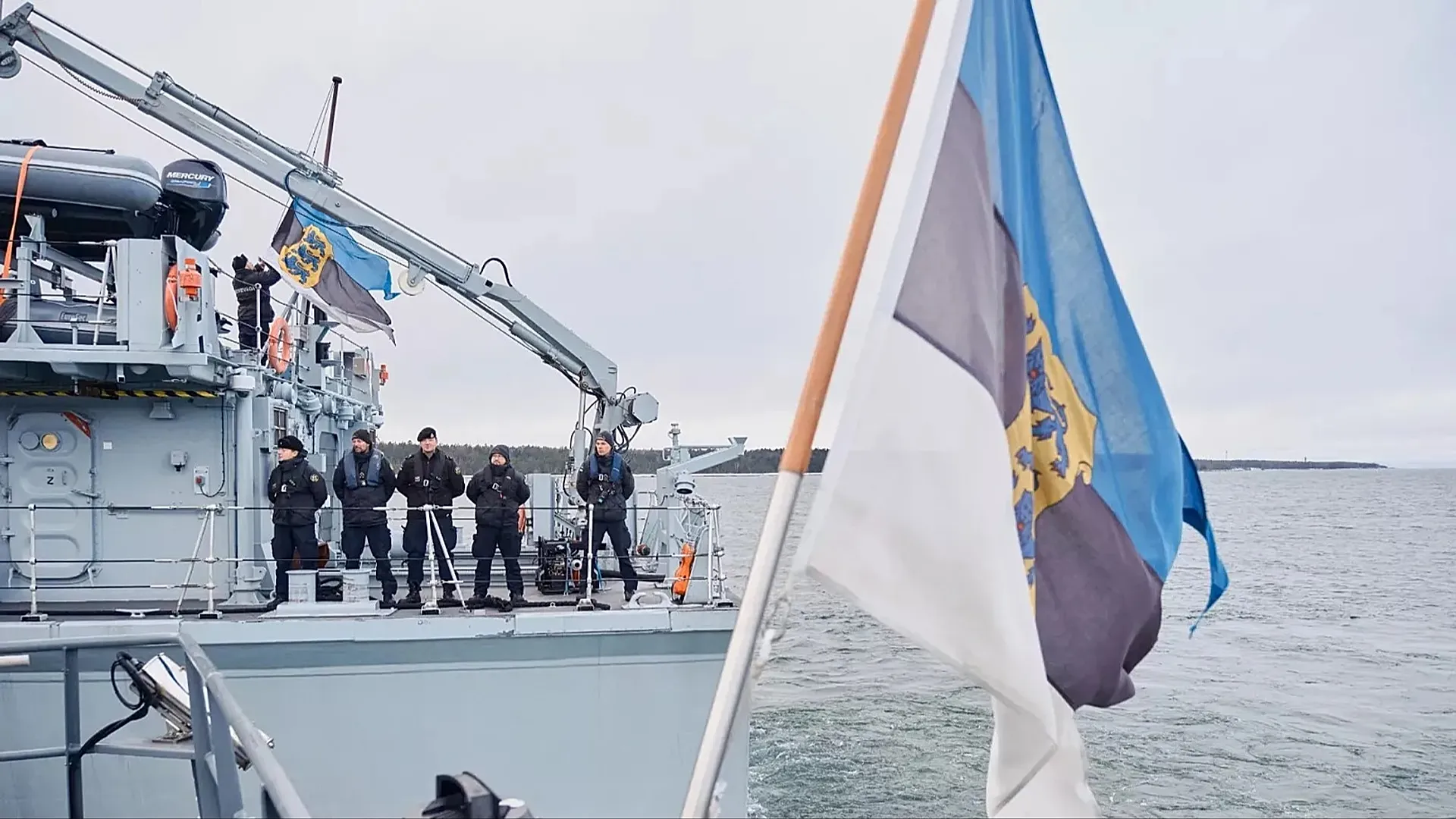
The frontier is no longer merely geographic.
Moscow, April 2026. Russia’s latest warning to the Baltic states marks more than another round of wartime intimidation. It signals an effort to widen the psychological perimeter of the war by suggesting that Estonia, Latvia, and Lithuania are no longer just political supporters of Kyiv, but operational enablers of attacks on Russian territory. By alleging that these countries have allowed their airspace to be used for Ukrainian strikes against Russian Baltic ports, the Kremlin is building a narrative in which the conflict is no longer confined to Ukraine’s battlefield, but begins to bleed into the strategic architecture of NATO’s northeastern edge.
That accusation is not minor. It carries the logic of pre escalation, the kind of rhetoric designed to create a justificatory frame before any concrete retaliatory move is taken. Russia has implied that if neighboring states help facilitate attacks on its critical infrastructure, they should not assume immunity merely because they remain outside the formal front line. In this case, the target of Moscow’s anger is especially sensitive: the Baltic energy corridor, where recent Ukrainian strikes have disrupted Russian oil export infrastructure and exposed the vulnerability of one of the Kremlin’s most important revenue arteries.
The Baltic governments have firmly rejected Moscow’s claims and treated them as disinformation. That denial is crucial, but it does not neutralize the strategic effect of the accusation itself. In modern conflict, the charge can matter almost as much as the evidence, because it helps prepare domestic audiences, military planners, and foreign observers for a broader zone of confrontation. Moscow is not simply saying that attacks happened. It is suggesting that the geography of complicity now extends into European Union and NATO territory.
What gives this episode real weight is the context in which it appears. Ukraine has intensified strikes against Russian energy and logistical assets far from the traditional line of contact, including installations tied to export capacity in the Baltic region. These attacks hit more than infrastructure; they hit the image of Russian depth and control. For the Kremlin, that raises a political need to explain how such reach has become possible. Blaming Baltic states serves that purpose by externalizing vulnerability and transforming a military embarrassment into a story of hostile encirclement.
The deeper danger lies in how quickly this language can alter the security equation in Northern Europe. Estonia, Latvia, and Lithuania are not ambiguous buffer spaces. They are treaty protected NATO members, integrated into the alliance’s deterrence posture and politically central to the argument that any attack on the eastern flank would carry collective consequences. When Moscow issues veiled threats toward them, it is not only pressuring three small states. It is probing the credibility, nerve, and unity of the Western alliance itself.
This is why the episode should not be read as simple propaganda. It functions as strategic testing. Russia can observe how Baltic capitals respond, how Brussels frames the risk, how Washington calibrates reassurance, and how publics react to the possibility that support for Ukraine may now carry a more immediate territorial cost. In this kind of confrontation, ambiguity is not a side effect. It is the instrument. Moscow does not need to attack to generate instability. It only needs to persuade everyone that the threshold for a wider clash may be lower than previously assumed.
For the Baltic states, the challenge is therefore double. They must maintain support for Ukraine while avoiding any opening that Russia can exploit as a pretext for coercive retaliation, cyber disruption, airspace incidents, or hybrid pressure. These countries have long understood that Moscow’s warfare is not limited to tanks and missiles. It also moves through narratives, border tensions, political intimidation, sabotage fears, and calibrated uncertainty. The new accusation fits that pattern perfectly, because it turns routine regional anxiety into a tool of strategic exhaustion.
For Europe, the message is equally serious. The war in Ukraine is not only consuming territory and lives; it is steadily redrawing the map of perceived exposure across the continent. Ports, pipelines, air corridors, digital systems, and border states all become part of a single contested battlespace when escalation is framed broadly enough. What Moscow now appears to be doing is dissolving the distinction between direct participation and structural support. If that doctrine hardens, then nearly every state helping Ukraine could be rhetorically repositioned as a legitimate node of confrontation.
The most important conclusion is that this threat is not really about airspace alone. It is about strategic ownership of the Baltic theater and about Russia’s attempt to deter future strikes by raising the political price for Ukraine’s backers. Whether Moscow intends immediate retaliation is almost secondary. The primary effect is already underway: fear is being redistributed across the alliance, and the Baltic region is being recoded from rear area to pressure zone. That is how wars expand before maps officially change.
Detrás de cada dato, hay una intención. Detrás de cada silencio, una estructura.
Behind every data point, there is an intention. Behind every silence, a structure.