

 Phoenix 24
Symptoms can arrive long before certainty does.
Los Angeles, April 2026
Rebecca Crews’s decision to reveal that she has Parkinson’s disease after years of living with it publicly reopens one of the most difficult truths surrounding neurodegenerative illness: diagnosis often comes late, unevenly and only after a prolonged period of confusion. Her account of spending years before receiving a clear answer does more than personalize a medical condition. It exposes the emotional and clinical gap between the first signs of illness and the moment when a life-changing diagnosis is finally named.

That delay matters because Parkinson’s does not always announce itself in ways people immediately recognize. Tremors may attract public attention, but early symptoms can also appear through stiffness, fatigue, subtle motor changes, sleep disruption or shifts that are easier to dismiss as stress, aging or unrelated health strain. When a person spends years moving through that uncertainty, the disease is not only progressing biologically. It is also reorganizing daily life psychologically, forcing the individual to endure symptoms without the relief of explanation.
What makes Rebecca Crews’s testimony resonate is precisely that tension between visibility and invisibility. Public figures are often assumed to live closer to the best doctors, the best resources and the fastest answers. Yet her experience suggests something more sobering: even access and visibility do not eliminate diagnostic complexity. In a condition like Parkinson’s, the challenge is not merely treatment. It is recognition, interpretation and the long struggle to understand what the body has been signaling all along.
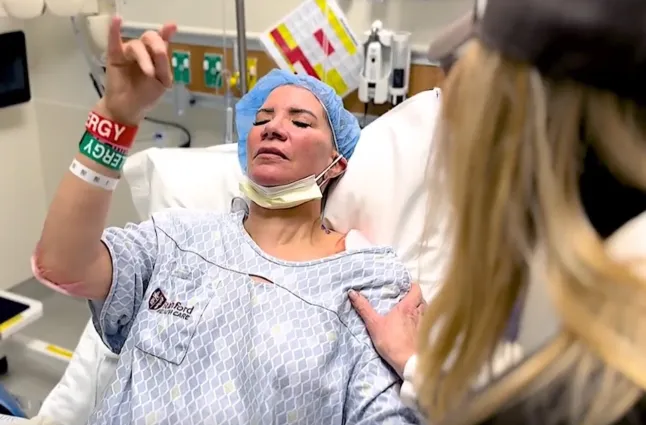
There is also a deeper cultural effect in disclosures like this. Parkinson’s is still widely understood through a narrow visual vocabulary, usually centered on advanced symptoms or famous cases that reached public attention only after the disease was firmly established. That leaves little room for the slow and frustrating stage in which people suspect that something is wrong but cannot yet convert that intuition into medical certainty. By speaking openly, Rebecca Crews shifts attention toward that earlier and more disorienting phase, where illness is felt before it is fully legible.
The role of Terry Crews in the story adds another layer. Celebrity health narratives often default to inspiration, partnership and endurance, and those elements are present here. But beneath them lies a more serious reality: chronic illness transforms not only the patient, but the emotional economy of the relationship around them. Support becomes logistical, psychological and existential at once. The illness enters the household as a long negotiation with fear, adaptation and hope.
The larger significance of this story, then, is not only that another public figure has disclosed a diagnosis. It is that the disclosure reminds audiences how easily a serious neurological condition can hide inside ordinary explanations for years. That has implications well beyond celebrity culture. It speaks to public awareness, clinical literacy and the need to take persistent bodily change more seriously before uncertainty becomes irreversible delay.
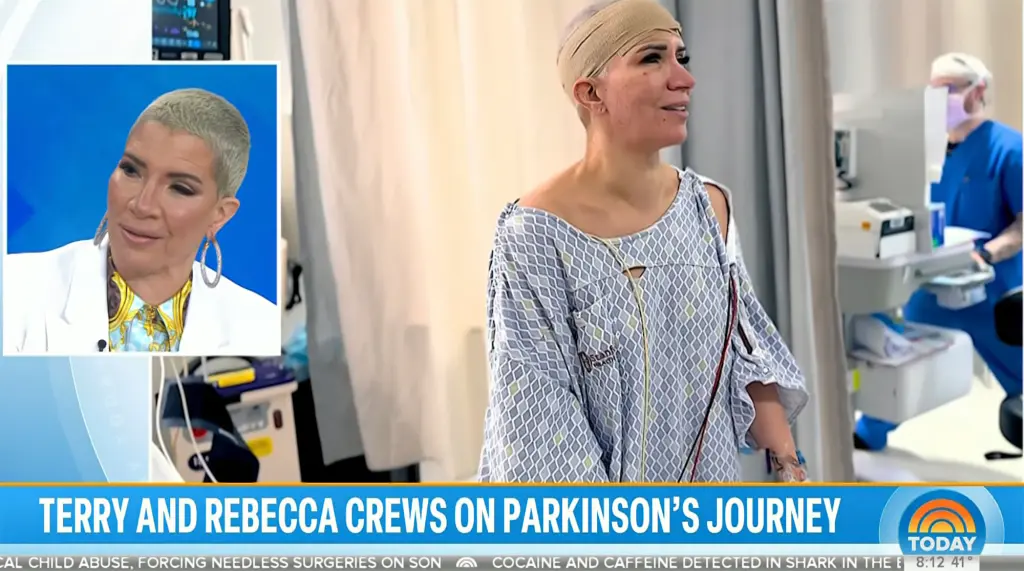
In that sense, Rebecca Crews’s revelation does more than generate sympathy. It restores complexity to a disease too often reduced to a headline word. Parkinson’s is not only a diagnosis. It is also the long corridor before diagnosis, where people live with symptoms, doubt and misrecognition while waiting for medicine to catch up with what their bodies already know.
Detrás de cada dato, hay una intención. Detrás de cada silencio, una estructura.
Behind every datum, there is an intention. Behind every silence, a structure.