

 Phoenix 24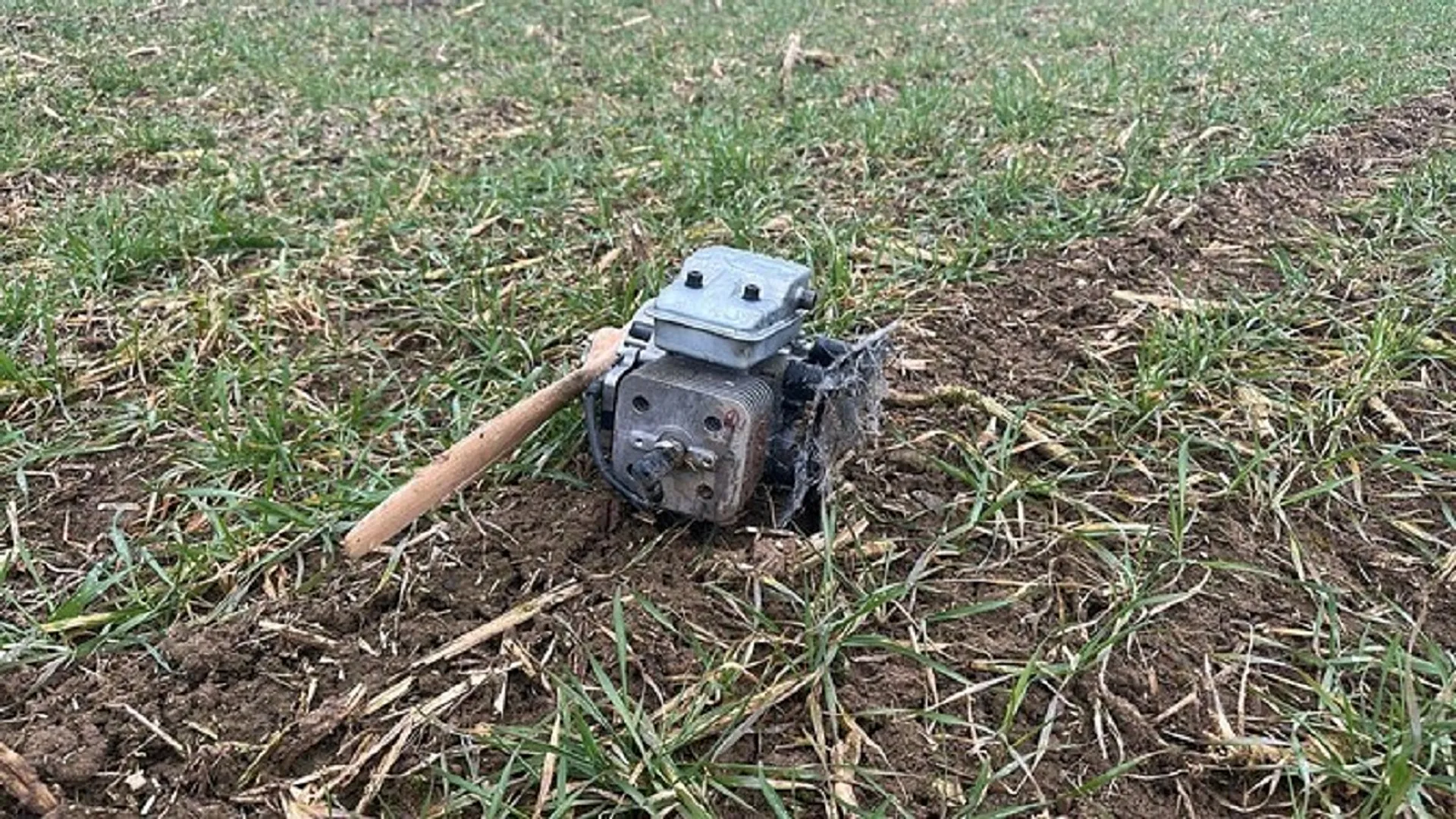
The border no longer feels distant.
Tallinn, March 2026
Estonia entered a sharper zone of strategic tension after several drones believed to have drifted from the war in Ukraine crossed into its airspace, forcing authorities to activate alerts and reassess the fragility of the Baltic frontier. What makes the episode significant is not only the technical anomaly of unmanned aircraft leaving their expected route, but the political meaning of that deviation inside NATO territory. Estonian officials emphasized that the country was not the intended target and that there was no immediate sign of a direct attack. Even so, the incident exposed how the war’s operational residue is beginning to touch states that formally remain outside the battlefield.
That distinction matters because Estonia is not just another neighboring country. It is a NATO member on a sensitive frontier where any unexplained aerial intrusion acquires meaning far beyond its physical size or immediate damage. In ordinary conditions, a diverted drone might be treated as a contained military irregularity. In the current European climate, however, even a brief breach of airspace becomes a test of readiness, deterrence, and public confidence.
The incident also fits a broader pattern that has become harder to ignore across the Baltic region. As the war in Ukraine expands into longer range strikes, deeper logistical disruption, and more complex aerial activity, neighboring countries face the possibility that fragments of the conflict will cross into their own territory without warning. That does not necessarily mean deliberate escalation. It does mean that the line separating support for Ukraine from physical exposure to the war is becoming thinner than many governments would like to admit.
For Estonia, the problem is not simply military but psychological and institutional. States on NATO’s eastern edge must reassure their populations without sounding complacent, and they must strengthen vigilance without creating panic. That balance becomes more difficult each time an incident reminds the public that geography is no longer the protection it once appeared to be. In this kind of environment, even an event described as accidental can leave behind a strategic afterimage that is larger than the material facts on the ground.
There is also a wider geopolitical implication. Modern wars do not remain confined to the exact coordinates of the main front when drones, electronic interference, and long range operations reshape the meaning of proximity. Spillover no longer requires an invasion or a formal strike against alliance territory. Sometimes it arrives as debris, uncertainty, interrupted sleep, and the sudden realization that nearby airspace has become part of a larger conflict system.
This is why the Estonian episode should not be dismissed as a minor technical irregularity. It signals a more unstable phase in which bordering NATO countries are increasingly forced to manage the unintended consequences of a war they support politically but do not fully control operationally. Estonia was not the target, yet it was still pulled into the shadow of the conflict. That is precisely what makes the event important.
The deeper lesson is uncomfortable for Europe. Distance is losing some of its strategic value in a theater where airborne systems can drift, be diverted, or lose control near highly sensitive borders. As that reality settles in, the Baltic states will have to think not only about defense against intentional threats, but about resilience against the chaotic overflow of a war next door. What crossed into Estonia’s airspace may have been unplanned, but the anxiety it produced was entirely real.
Phoenix24: claridad en la zona gris. / Phoenix24: clarity in the grey zone.