

 Phoenix 24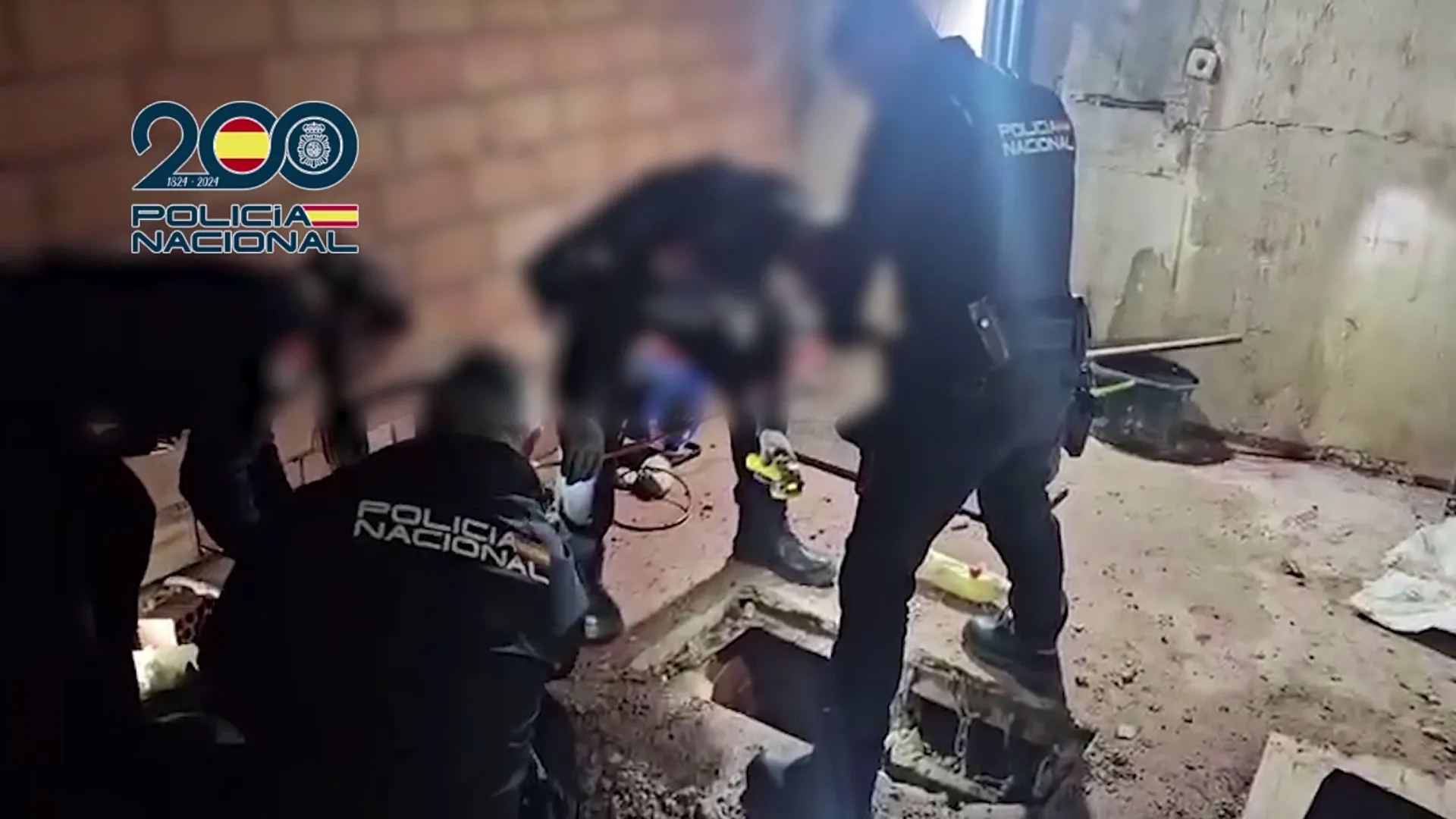
A hidden corridor exposed Europe’s narco frontier.
Ceuta, March 2026
Spanish authorities have dismantled a criminal network that used an underground tunnel to move hashish from Morocco into Spain through the North African enclave of Ceuta. The structure was hidden beneath an industrial warehouse and equipped with a rail system and underground cranes, turning what looked like a local logistics site into a covert narcotics corridor. Police said the tunnel formed part of a sophisticated smuggling architecture designed to move large quantities of cannabis resin across one of Europe’s most sensitive borders. The operation ended with dozens of arrests, major seizures, and a stark reminder that organized crime continues to innovate faster than many border systems adapt.
What makes the case especially significant is not only the volume of drugs involved, but the level of engineering behind the route. Investigators described a three level underground structure that included a descent shaft, an intermediate storage chamber, and the tunnel itself, indicating planning that went far beyond improvised trafficking. This was not the work of small scale smugglers moving contraband in bursts. It was an infrastructure project built for continuity, concealment, and repeat use.
Police seized 17 metric tons of hashish and 1.4 million euros in cash during the operation, while 27 suspects were arrested in connection with the network. Those figures point to an organization operating with scale, liquidity, and logistical discipline, not a loosely connected smuggling ring. The tunnel’s design also suggests that traffickers were seeking greater control over timing and movement by reducing exposure to maritime interception or visible surface transport. In practical terms, the structure gave criminal operators a private corridor through one of the most scrutinized narco routes in the western Mediterranean.
Ceuta has long held strategic value in this equation because it is one of the European Union’s only land borders with Africa. Along with Melilla, it occupies a unique geopolitical position where territorial sovereignty, migration pressure, customs enforcement, and criminal opportunity intersect in compressed space. That makes it more than a peripheral outpost. It is a pressure point where transnational trafficking networks can test the limits of European border control while exploiting geographic asymmetries that are difficult to neutralize completely.
Hashish trafficking from Morocco into Spain is not new, but the method uncovered in Ceuta reveals an important evolution. Cannabis resin is usually moved by sea, often using fast boats that attempt to outrun law enforcement along the southern Spanish coast. In this case, however, traffickers chose depth instead of speed. They shifted from visible risk to buried infrastructure, suggesting that criminal organizations are responding to enforcement pressure with more complex and capital intensive solutions.
That shift matters because it changes the nature of interdiction. A fast boat can be chased, tracked, or intercepted in open water. A tunnel hidden below a warehouse demands intelligence penetration, patient surveillance, engineering discovery, and operational secrecy. It also blurs the line between narcotics trafficking and territorial infiltration, because underground structures of this kind do not merely evade police presence. They create an alternative geography beneath the official one.
Spain remains one of Europe’s central entry points for cannabis resin, and that status continues to shape both law enforcement and organized crime strategy. The country accounts for the majority of resin seizures in the European Union, a statistic that reflects proximity to Morocco as well as the enduring profitability of the route. Criminal networks understand that where volume and demand remain high, innovation becomes part of survival. The Ceuta tunnel is therefore not an anomaly in isolation, but a warning about how much effort traffickers are willing to invest in preserving access to European markets.
The broader pattern is equally revealing. Spanish authorities have previously uncovered submarines and semi submersible vessels used to transport cocaine into the country from transatlantic routes, especially through the northwest. Now, the discovery in Ceuta adds another layer to that pattern of concealment and technical adaptation. Organized crime in Spain is not simply moving drugs. It is experimenting with infrastructure, concealment systems, and logistics models that resemble parallel supply chains.
That raises a deeper question about European security policy. Border control is often discussed in terms of visible barriers, patrols, customs checks, and maritime surveillance. But cases like this one show that sophisticated trafficking networks are increasingly willing to operate through hidden engineering, fixed installations, and disguised commercial environments. The challenge is no longer only how to stop movement. It is how to detect criminal architecture before it becomes normalized and scalable.
For Spain, the dismantling of the tunnel is operationally important and symbolically powerful, but it does not close the larger problem. The underlying drivers remain intact: proximity to source zones, high demand inside Europe, profitable margins, and criminal groups capable of adapting under pressure. Ceuta has again shown that organized crime does not only exploit borders. It studies them, learns from them, and builds around them when necessary. The tunnel may be closed, but the strategic lesson is still open.
Más allá de la noticia, el patrón. / Beyond the news, the pattern.