

 Phoenix 24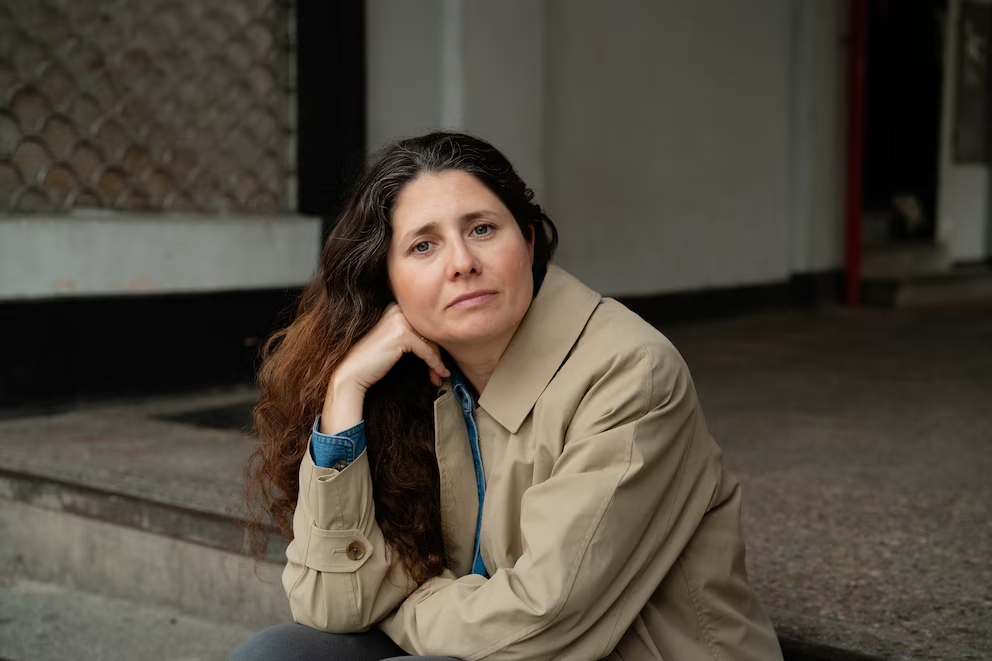
Reading is becoming a quiet form of resistance.
Madrid, March 2026. Sofía Balbuena’s victory in the Ribera del Duero Prize for Short Fiction does more than elevate a new literary voice. It also crystallizes a wider cultural argument about attention, depth, and what literature can still defend in an era dominated by accelerated consumption. Fresh from winning one of the most prestigious awards in Spanish language short fiction, the Argentine writer based in Madrid has framed the meaning of literature with unusual clarity: books resist the logic of the reel, the compressed rhythm of a digital culture that trains audiences to process experience in fragments rather than dwell inside it.
That statement lands with force because Balbuena is not speaking from nostalgia, but from lived transition. Her path into literature did not begin in the conventional image of the precocious novelist. She studied political science, worked in public administration in Argentina, later migrated to Spain, spent time in Barcelona and Madrid, and also passed through Iowa on a creative writing fellowship before returning to the Spanish capital. In her own account, writing was not a childhood destiny waiting to be fulfilled. It was something she became through displacement, reinvention, and the slow sediment of migration.
That biographical texture matters because it shapes the way Balbuena understands both language and identity. Her work emerges after migration, not before it. She has described literature as something formed through movement, through living among different accents, different verbal worlds, and the subtle theft of words from one place to another. That sensibility helps explain why her writing resists simplistic labels. It is rooted in interiority, in psychological density, and in the experience of being marked by history, geography, and gender, but without surrendering to the kind of reductive cataloging that literary markets often impose.
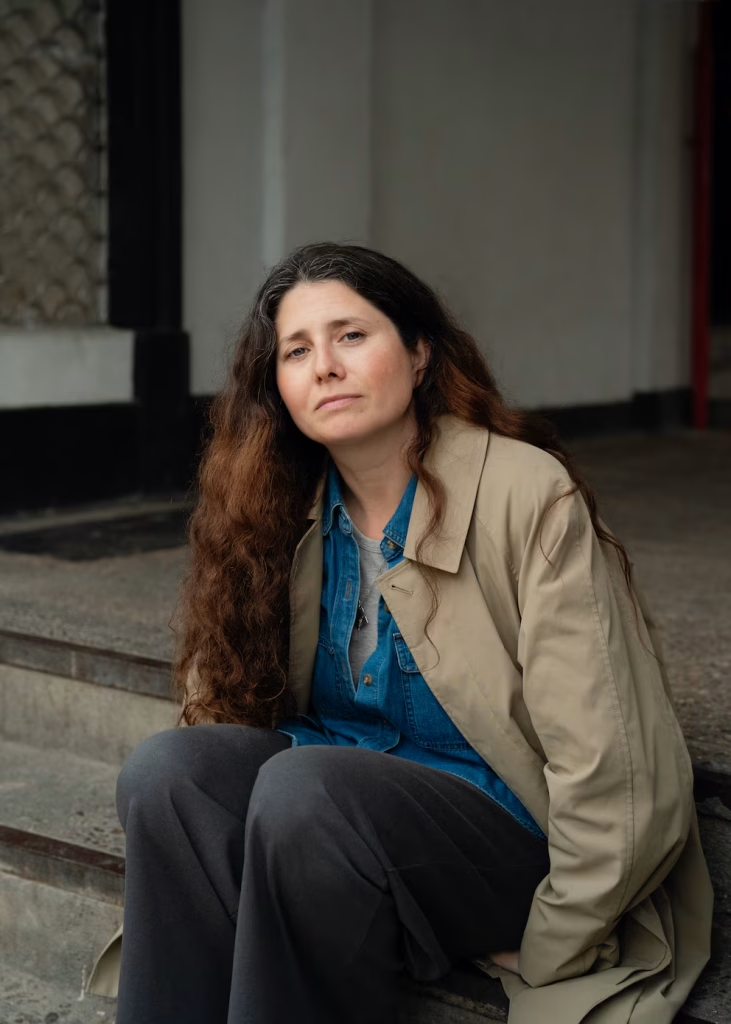
One of the sharpest points in her reflections concerns the label of so called women’s literature. Balbuena challenges the idea that certain subjects are inherently feminine and argues that these categories are often imposed after the fact, once books have already been written and published. In that sense, her critique is not merely semantic. It questions the way publishing systems classify authority, assign prestige, and reduce literary complexity to marketable identity tags. What appears to be harmless categorization can also function as a subtle downgrade, a way of turning literature by women into a subcategory while male writing continues to pass as literature without qualification.
Her position is especially compelling because it does not reject the reality that women dominate many reading spaces. On the contrary, she acknowledges that the overwhelming majority of book event audiences and reading communities are women. But for Balbuena, that sociological reality does not justify a lesser literary category. It simply reveals who is carrying a large part of the reading culture. The distinction is crucial. She is not denying the gendered structure of literary consumption. She is rejecting the critical framework that turns that fact into a diminishment of artistic scope.
At the center of her worldview is a defense of literature as access to other consciousnesses. For Balbuena, reading is not valuable because it mirrors the reader back to herself, but because it opens a threshold into worlds that would otherwise remain inaccessible. A serious reader does not approach a book merely to confirm preexisting beliefs or to find a reflection of personal biography. The deeper promise of literature lies in its capacity to displace the self, to let the reader inhabit unfamiliar emotional and moral terrain. That is where reading becomes more than entertainment. It becomes a form of imaginative enlargement.
This is precisely why her criticism of digital attention culture resonates beyond the literary field. When Balbuena says literature breaks with the logic of a thirty second reel, she is naming a broader civilizational tension. The book demands another tempo. It asks for concentration, submission to duration, and a willingness to remain inside language long enough for perception to change. In a marketplace designed to monetize interruption, that demand is almost rebellious. Reading a book now requires activating a mental muscle that many people feel is weakening under the constant pull of short form content and algorithmic distraction.

Balbuena is careful not to place herself outside that condition. She admits that even as a writer and devoted reader, there are long stretches when she struggles to read because she has spent too much time absorbed by her phone. That admission strengthens rather than weakens her argument. It shows that the crisis of attention is not something affecting only others. It has entered everyday life so deeply that even those committed to literature must actively resist it.
Her prize, then, arrives as more than a personal triumph. It marks the recognition of a writer whose work and reflections speak directly to one of the defining cultural pressures of the present. In Balbuena’s view, literature does not compete with the speed of the screen by becoming faster. It survives by remaining what the screen cannot be: slower, deeper, less obedient to the market’s demand for instant capture. In that sense, reading is no longer only an aesthetic act. It is also a refusal to let time itself be formatted by the logic of permanent distraction.
Detrás de cada dato, hay una intención. Detrás de cada silencio, una estructura. / Behind every datum, there is an intention. Behind every silence, a structure.