

 Phoenix 24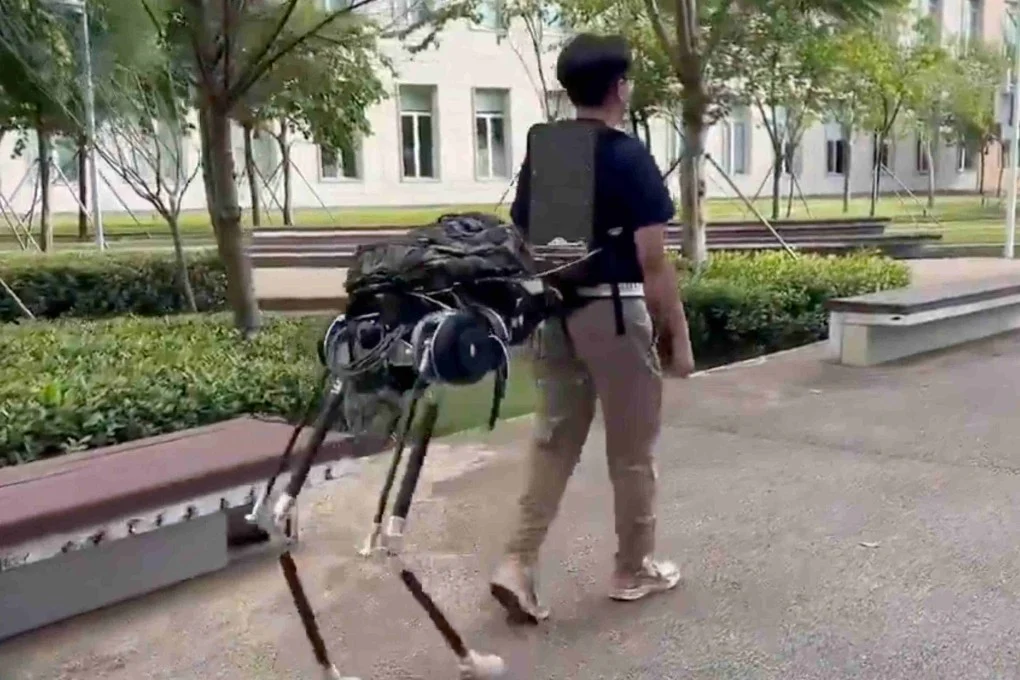
The machine now extends the body itself.
Beijing, March 2026
A new wearable robot designed to help people carry heavy objects is drawing attention for the way it merges human movement with added mechanical support. The device, developed by researchers in China, effectively gives the user two extra robotic legs positioned behind the body, creating a hybrid system that has already been described as a kind of technological centaur. Its purpose is not to replace the human operator, but to reduce physical strain while improving balance and load-bearing capacity during demanding tasks.
The system belongs to a growing category of wearable robotics aimed at augmenting human mobility rather than automating it away. Instead of functioning as a separate autonomous machine, the robot works in coordination with the person wearing it, responding to body movement and helping redistribute effort. That design matters because heavy lifting is often limited not only by strength, but by fatigue, posture and the risk of losing stability under load.
What makes this new model stand out is its lower-body architecture. The robotic extension adds two powered legs behind the user, creating a four-legged support structure when the human operator is standing or moving with weight. In practical terms, that means the person can remain at the center of decision-making and control while the machine provides extra support for walking and carrying. The concept pushes wearable robotics into a more visibly hybrid form, where the boundary between human motion and machine assistance becomes much more explicit.
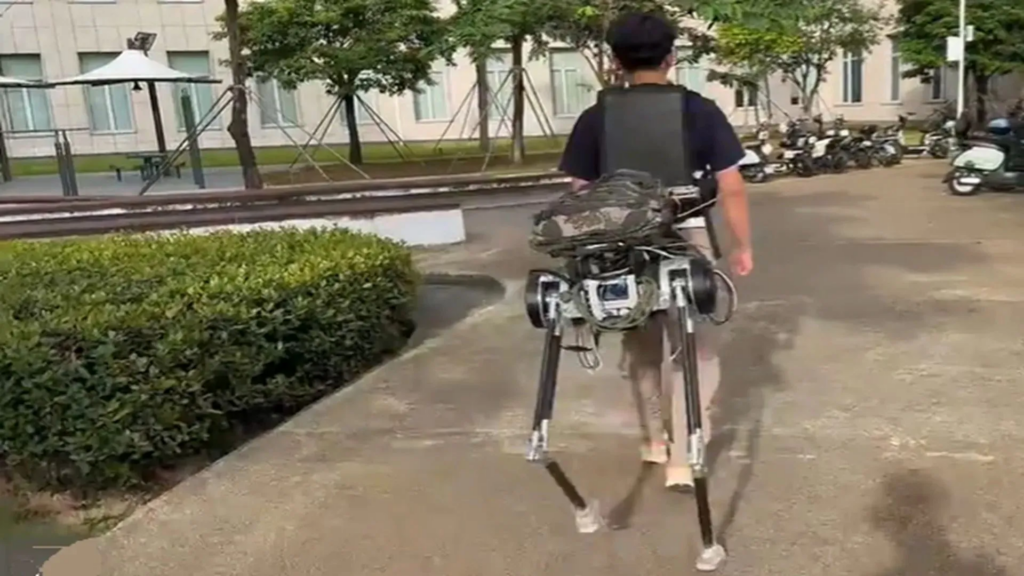
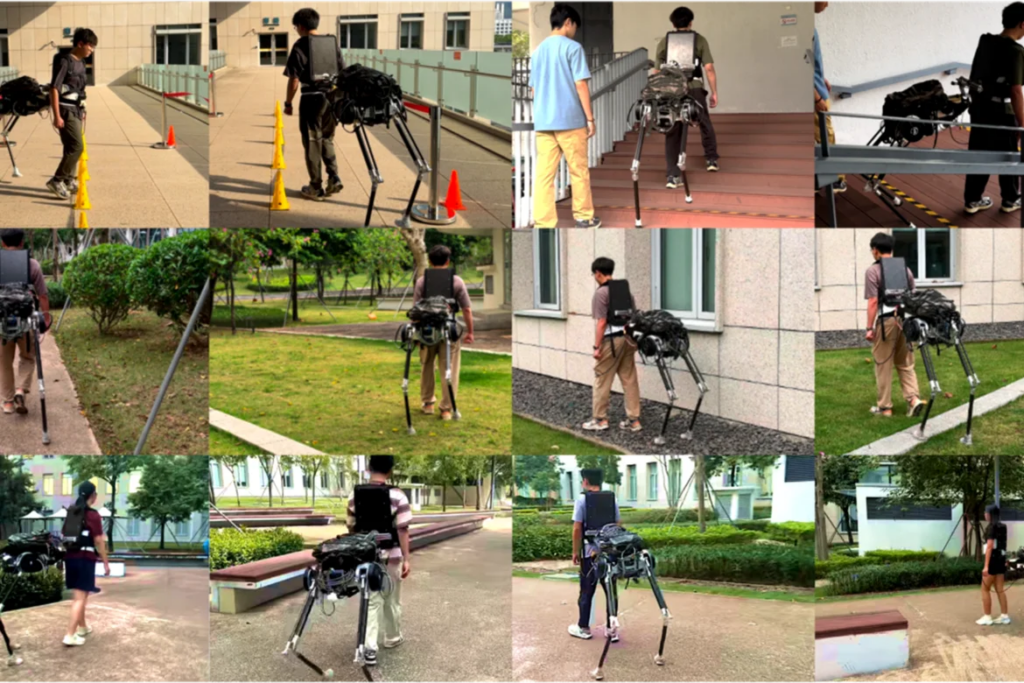
Researchers say the system is intended for environments where workers or responders may need to transport heavy materials over uneven terrain or through physically demanding settings. That gives it possible relevance for logistics, industrial work, disaster response and other situations in which carrying capacity and endurance are critical. Instead of depending entirely on arm strength or back support, the robot is designed to share the burden through coordinated lower-body mechanics.
The project also reflects a broader shift in robotics research. For years, much of the public conversation focused on humanoid robots or robotic arms operating independently. Wearable robotics takes a different route by treating the human body as the platform to be extended. In that model, the goal is not to simulate a person with a machine, but to amplify a person through a machine. The centaur-like design makes that logic especially visible because it transforms the wearer into a combined locomotion system rather than simply strapping on external support.
That does not mean the technology is ready to move directly into everyday life without limitations. Systems of this kind still face challenges involving battery life, comfort, coordination, safety and the ability to adapt fluidly to real-world terrain and unpredictable movement. As with many emerging robotics projects, the concept can look more mature in controlled demonstrations than it would in mass deployment. Even so, the underlying direction is clear: the future of physical augmentation may rely less on fully independent robots and more on devices that blend machine capability with human judgment.
The symbolism of the machine is part of its impact. Calling it a centaur is not just a visual flourish. It captures a deeper technological idea now spreading across robotics, prosthetics and exoskeleton design: the most useful machines may be those that do not stand apart from the human body, but extend it. In that sense, this new robot is not only about lifting weight. It is also about testing how far human-machine integration can go before it begins to feel like a new kind of body altogether.
For now, the project stands as another sign that wearable robotics is moving into a more ambitious phase. The challenge is no longer just to assist motion, but to reengineer the physical limits of movement itself. If that path continues, the centaur may stop being a metaphor and start becoming a recognizable model for how humans work alongside machines in the heaviest tasks.
Phoenix24: clarity in the grey zone. / Phoenix24: clarity in the grey zone.