

 Phoenix 24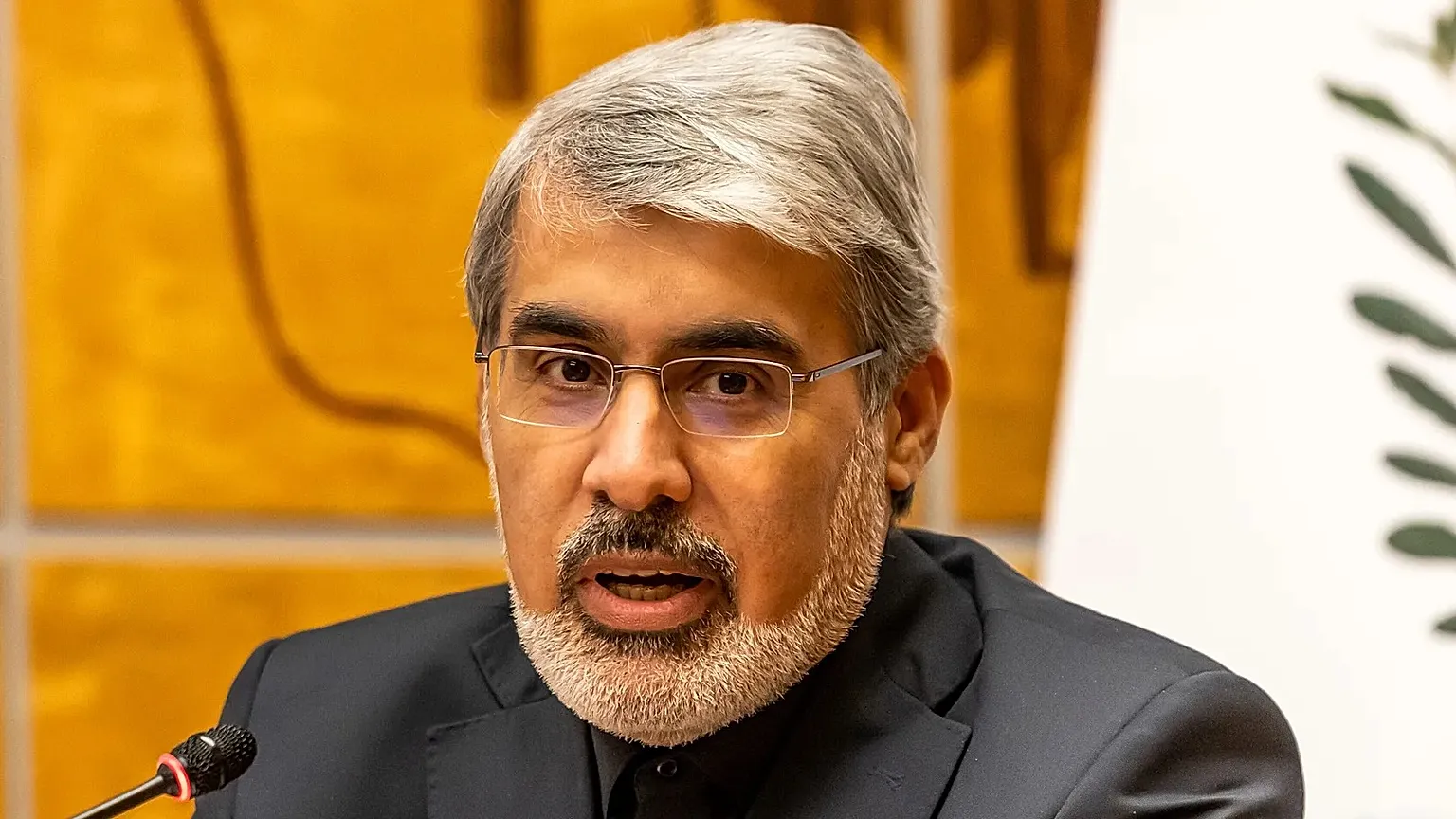
Diplomacy speaks softer than succession.
Geneva, March 2026
Iran’s latest diplomatic message on the Strait of Hormuz is less a reversal than a recalibration. In an interview published on March 12, Iran’s ambassador to the United Nations in Geneva said Tehran does not intend to block the strait, directly contradicting the harder rhetoric associated with Mojtaba Khamenei’s first public message as the country’s new supreme leader. That contradiction matters because it shows Iran trying to operate on two levels at once: one register for strategic intimidation and another for diplomatic manageability. The result is not clarity, but controlled ambiguity.
The ambassador’s statement was politically significant precisely because it came at a moment of acute market and military tension. Hormuz is not merely a regional shipping corridor. It is one of the central arteries of the world energy system, and any suggestion of closure immediately reverberates through oil prices, insurance calculations, naval planning, and diplomatic signaling. Reuters reported that Iran’s U.N. envoy, Amir Saeid Iravani, said Tehran would not close the strait and stressed freedom of navigation under international law, even while reserving what he called Iran’s inherent right to preserve peace and security there. That wording is careful for a reason. It lowers the temperature rhetorically without abandoning coercive latitude.
What makes the episode more revealing is the clear split inside Iran’s public messaging. Reuters and Associated Press both reported that Mojtaba Khamenei, in his first statement as supreme leader, said the leverage of closing the Strait of Hormuz should be used and signaled a harder regional posture. When a regime issues one signal through a diplomat and a harder one through its top leader, it is usually not because it is confused. It is because it wants multiple audiences to hear different things. Markets are meant to hear reassurance. Rivals are meant to hear threat. Domestic hardliners are meant to hear resolve.
This is why the ambassador’s words should not be read as a clean de escalation. They are better understood as an attempt to preserve strategic flexibility. Tehran knows that a formal closure of Hormuz would risk triggering a broader multinational response and could impose severe costs on Iran itself. At the same time, it also knows that the mere possibility of disruption can generate much of the desired effect. Oil traders reprice risk, shipping companies hesitate, allied navies reposition, and governments begin contingency planning before any full blockade is imposed. In that sense, Iran does not need to close Hormuz to weaponize it. It only needs to keep the threat credible enough to shape behavior.
The contradiction became even sharper because, on the same day, Reuters also reported that Iran’s foreign ministry said ships passing through the strait must coordinate with Iran’s navy. That position falls short of a declared closure, but it still projects sovereign control over a waterway whose legal and strategic status has global implications. So the diplomatic formula emerging from Tehran is not exactly conciliatory. It is conditional. Iran says it does not want to block the strait, yet it simultaneously insists on defining the terms of security inside it. The message is softer than total closure, but harder than normal navigation.
For Europe and Asia, that distinction offers only limited comfort. Import dependent economies care less about rhetorical nuance than about whether energy flows remain stable, insurable, and politically predictable. Germany’s foreign minister said on March 12 that the Hormuz issue must be resolved through diplomacy, an appeal that reflects broader European anxiety over another externally generated energy shock. Once a diplomat says the strait will remain open while a leadership figure says pressure through closure must continue, the practical effect is a prolonged state of uncertainty. Markets do not price intentions alone. They price contradictions.
There is also an internal Iranian dimension that should not be overlooked. Mojtaba Khamenei’s wartime posture appears designed to establish authority through defiance, especially after the violent transition surrounding the death of his father. A diplomat’s softer line can therefore serve a useful balancing function. It gives Tehran an external valve without forcing the leadership to retreat symbolically. This is a familiar pattern in states under pressure: the center speaks in absolutes, while diplomats preserve maneuvering room. The objective is not coherence in the liberal sense. It is elasticity under stress.
What emerges from this episode is not a settled Iranian position, but a layered one. Tehran wants to calm just enough to avoid automatic escalation, while threatening just enough to preserve leverage. The ambassador’s assurance that Iran does not want to block Hormuz is therefore meaningful, but not definitive. It does not cancel the harder strategic posture voiced elsewhere. It sits beside it. And that is the real message: Iran is trying to keep Hormuz open as a passage, closed as a possibility, and useful as a threat. In a crisis like this, ambiguity is not a flaw in policy. It is the policy.
Phoenix24: clarity in the grey zone. / Phoenix24: clarity in the grey zone.