

 Phoenix 24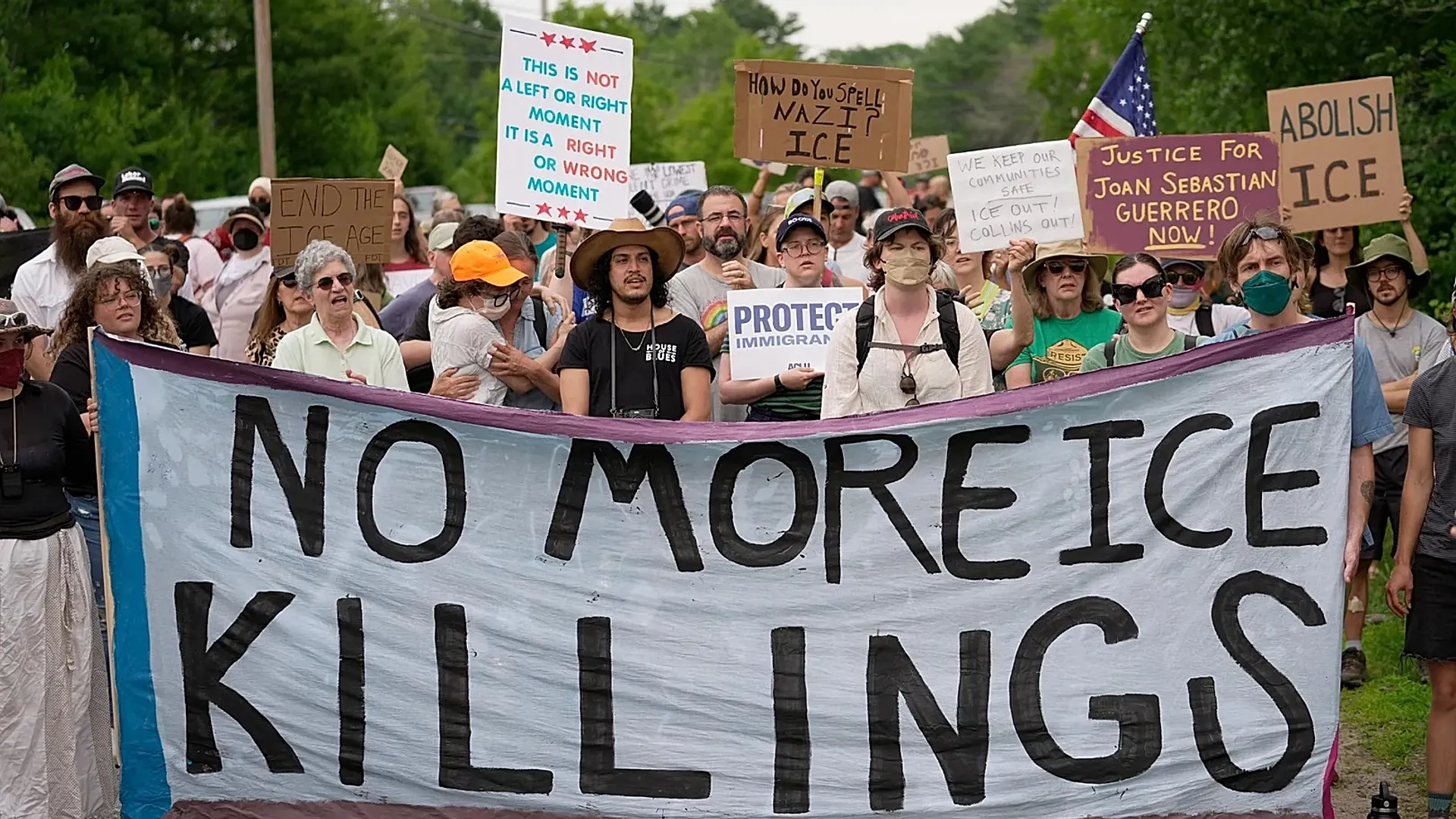
Immigration enforcement collides with public safety and accountability.
Washington | July 2026
President Donald Trump has demanded that Immigration and Customs Enforcement continue using traffic stops during immigration operations despite a temporary federal directive restricting the practice after several fatal incidents. Trump described vehicle interceptions as one of ICE’s most effective enforcement tools and argued that abandoning them would benefit people targeted for deportation. His intervention places the White House at odds with an operational policy introduced only one day earlier.
The Department of Homeland Security had instructed ICE personnel not to stop moving vehicles to arrest or question their occupants. The reported order followed two fatal shootings involving immigration agents, including the death of a Colombian driver in Maine and another motorist killed in Houston. The incidents intensified scrutiny of the tactics used during the administration’s mass-deportation campaign.
Trump publicly rejected any permanent retreat. He praised ICE agents, said they were performing necessary work and insisted that enforcement must remain strong, forceful and intelligent. His position suggests that the restriction may be reconsidered or narrowed despite concerns raised by lawmakers and former immigration officials.
At least 10 people have reportedly died during immigration operations since the administration expanded its deportation campaign, including four deaths connected to vehicle stops. Another man died in Florida after being struck by a truck while fleeing immigration and other federal agents. These cases do not share identical circumstances, but together they have increased pressure for clearer operational standards.
Vehicle stops present distinctive risks because drivers may panic, attempt to escape or use their cars in ways agents perceive as threatening. Officers approaching a moving vehicle must make rapid decisions while distinguishing between deliberate aggression, confusion and flight. Once firearms are introduced, an immigration arrest can become a lethal encounter within seconds.
Supporters of the tactic argue that traffic interceptions are sometimes necessary because people sought by ICE may avoid homes, workplaces or scheduled appointments. A vehicle may provide the only moment when agents can locate and detain a specific individual. Suspending such operations entirely could therefore reduce the agency’s capacity to execute arrest orders.
Critics counter that immigration violations generally do not justify tactics resembling high-risk criminal pursuits. They argue that stopping vehicles without urgent necessity can endanger occupants, agents, pedestrians and other motorists. The danger becomes greater when operations involve unmarked vehicles, masked personnel or officers from multiple federal agencies whose roles may not be immediately identifiable.
Republican Senator Susan Collins said she urged Homeland Security Secretary Markwayne Mullin to end all non-emergency vehicle apprehensions. Her intervention demonstrates that concern is not confined to Democratic officials or immigration-rights organizations. The controversy has become an operational question about when enforcement objectives justify creating additional danger in public spaces.
Former acting ICE director John Sandweg estimated that approximately 18 shootings had occurred during traffic stops connected to the administration’s immigration offensive. That figure has not been presented as a complete official federal accounting, but it indicates the scale of the concern among former agency officials. A transparent review would need to distinguish shootings by agents, attacks against agents and incidents involving other law-enforcement bodies.
The government has emphasized that ICE personnel frequently confront individuals with criminal histories and may face dangerous resistance. Trump has repeatedly described the deportation campaign as an effort to remove criminals allowed into the country under the previous Democratic administration. That framing, however, does not establish that every person stopped by immigration agents poses an immediate violent threat.
Each use of deadly force must be evaluated according to the specific circumstances facing the officer at the moment. Investigators must determine whether the individual presented an imminent danger, whether agents followed identification and de-escalation procedures and whether less dangerous alternatives were available. Political descriptions of an entire enforcement population cannot substitute for case-by-case legal review.
The death in Maine produced an international reaction after Colombian President Gustavo Petro characterized the shooting as a killing rooted in the dehumanization of migrants. His accusation has increased diplomatic pressure on Washington to explain the encounter and release the evidence surrounding it. The United States must now address both domestic scrutiny and questions from the government of the victim’s country.
The administration’s challenge is to preserve legitimate immigration enforcement without normalizing preventable deaths. Operational effectiveness cannot be measured only through the number of arrests completed. It must also include compliance with constitutional protections, proportionality in the use of force and the safety of communities where operations occur.
Clear rules are particularly important when agents attempt to stop vehicles. Policies must define when an interception is permitted, whether officers may position themselves in front of a car and under what conditions a moving vehicle constitutes a deadly threat. Agencies also need consistent requirements concerning body cameras, marked identification, medical assistance and independent investigation after shootings.
The public controversy has been intensified by Trump’s rapid intervention. An internal restriction introduced after fatal incidents would ordinarily allow time for review, training and evaluation. Demanding its reversal before those processes are complete risks turning tactical decisions into political demonstrations of toughness.
ICE agents also require rules they can apply without uncertainty. Conflicting messages from operational leadership and the president can complicate decisions made under pressure. Officers must know whether the priority is immediate apprehension, disengagement from a dangerous pursuit or preservation of life when a vehicle begins moving.
The administration may ultimately distinguish between urgent stops involving serious threats and routine interceptions conducted for immigration enforcement. Such a policy could preserve the tactic in exceptional cases while reducing its use where agents have safer alternatives. The effectiveness of any reform will depend on whether exceptions remain limited and subject to oversight.
The dispute extends beyond immigration policy. It concerns the degree of force a government may use while enforcing civil and criminal laws, the transparency required after state agents kill someone and the responsibility of political leaders when operational methods produce repeated fatalities.
Trump has framed traffic stops as evidence that the government will not retreat from its deportation agenda. Critics see the same practice as a warning that speed and numerical targets may be displacing restraint. The decisive issue is not whether immigration law should be enforced, but whether enforcement can remain lawful when encounters repeatedly end in death.
La autoridad pierde legitimidad cuando la fuerza sustituye al juicio. / Authority loses legitimacy when force replaces judgment.