

 Phoenix 24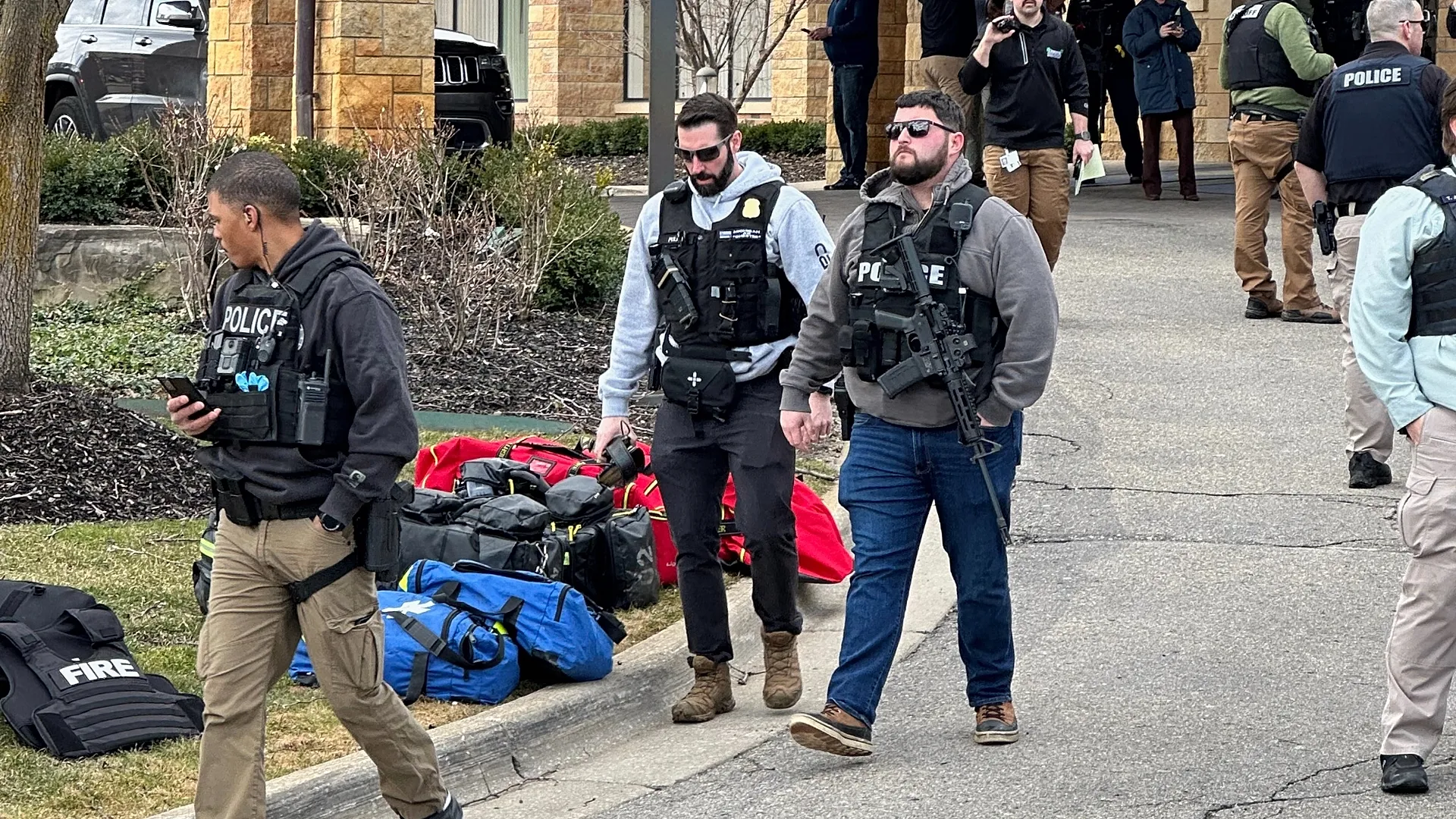
A place of worship became a target again.
Detroit, March 2026
The gunfire exchange at a synagogue in Michigan is not just another isolated security incident in the American domestic sphere. It is a reminder that religious spaces in the United States remain exposed to violence that is at once local in execution and national in meaning. According to multiple reports, an armed man rammed a vehicle into Temple Israel in West Bloomfield, a Detroit suburb, and was later killed during a confrontation with security personnel. The FBI described the episode as a targeted act of violence against the Jewish community, which immediately places the incident within the wider pattern of antisemitic threat now shaping security calculations around Jewish institutions across the country.
What makes the attack especially disturbing is the environment in which it unfolded. Temple Israel is not simply a symbolic religious site. It is a large communal institution that, at the time of the attack, also had about 140 children present in its early childhood center. That fact changes the nature of the event. The target was not merely a building associated with faith. It was a civic and educational space embedded in daily family life. Once an armed attacker drives into such a site, the act becomes more than a breach of security. It becomes an assault on the assumption that ordinary communal life can remain separated from ideological violence.
The details that have emerged point to a pattern of calculated intrusion rather than random volatility. Reports indicate that the suspect rammed the vehicle into the synagogue, the vehicle caught fire, and a security officer was injured in the confrontation that followed. Authorities also examined the possibility of additional threats as the scene was secured. That combination of vehicle ramming, firearm presence, and fire risk suggests a layered attack logic designed to magnify chaos, overwhelm response, and turn a sacred space into a site of maximal panic.
The response also matters. Security personnel at the synagogue engaged the attacker quickly, and officials credited those actions with preventing a far worse outcome. Staff and teachers moved rapidly to protect the children, while local responders managed evacuation and emergency control under dangerous conditions. In operational terms, this was not just a story of violence. It was also a story of defensive preparedness. Jewish institutions in the United States have spent years hardening security because they understood the threat was no longer hypothetical. The Michigan incident shows why that hardening has become part of the everyday architecture of communal survival.
Still, preparedness should not be mistaken for normality. The larger issue is that the burden of adaptation now rests increasingly on communities that must turn worship centers, schools, and gathering places into semi-fortified environments. The FBI’s characterization of the attack as targeted violence against the Jewish community is significant because it moves the event beyond a narrow criminal frame. It connects the episode to a broader climate in which antisemitic incidents, political polarization, and international conflict are converging inside the United States. When that convergence reaches a synagogue in suburban Michigan, it reveals that geographic distance from major conflict zones does not insulate communities from ideological spillover.
That spillover is part of the context and cannot be ignored. Coverage of the attack placed it amid heightened security concerns following recent U.S. and Israeli military actions involving Iran. This does not mean a motive has been conclusively established in public. It means the timing itself is politically charged. In periods of international escalation, domestic symbolic targets often absorb the emotional and ideological backlash. Houses of worship then become proxy stages on which global tensions are refracted into local violence.
There is also a deeper American problem here. The country has repeatedly treated attacks on religious and communal institutions as singular tragedies rather than components of an enduring pattern. Yet the Michigan synagogue assault sits in a grim line of continuity that includes earlier attacks on Jewish congregations and other faith communities across the United States. The repetition matters. Each event renews the same question: whether the nation is merely reacting to episodic acts of hate or failing to contain a broader culture of radicalized grievance in which sacred spaces become strategically attractive targets. The answer is uncomfortable because it points to a structural vulnerability, not just an isolated breakdown.
What happened in West Bloomfield on March 12 was not only an attempted mass casualty attack that security managed to stop before greater loss of life. It was a warning that the American synagogue remains, in the eyes of violent actors, both a symbolic and practical target. Symbolic because it stands for identity, memory, and continuity. Practical because it gathers civilians, families, and children in predictable rhythms. That is why this event should not be read as a local anomaly. It belongs to a larger struggle over whether pluralist civic life in the United States can still remain open without being forced into permanent siege logic.
Against propaganda, memory. / Against propaganda, memory.