

 Phoenix 24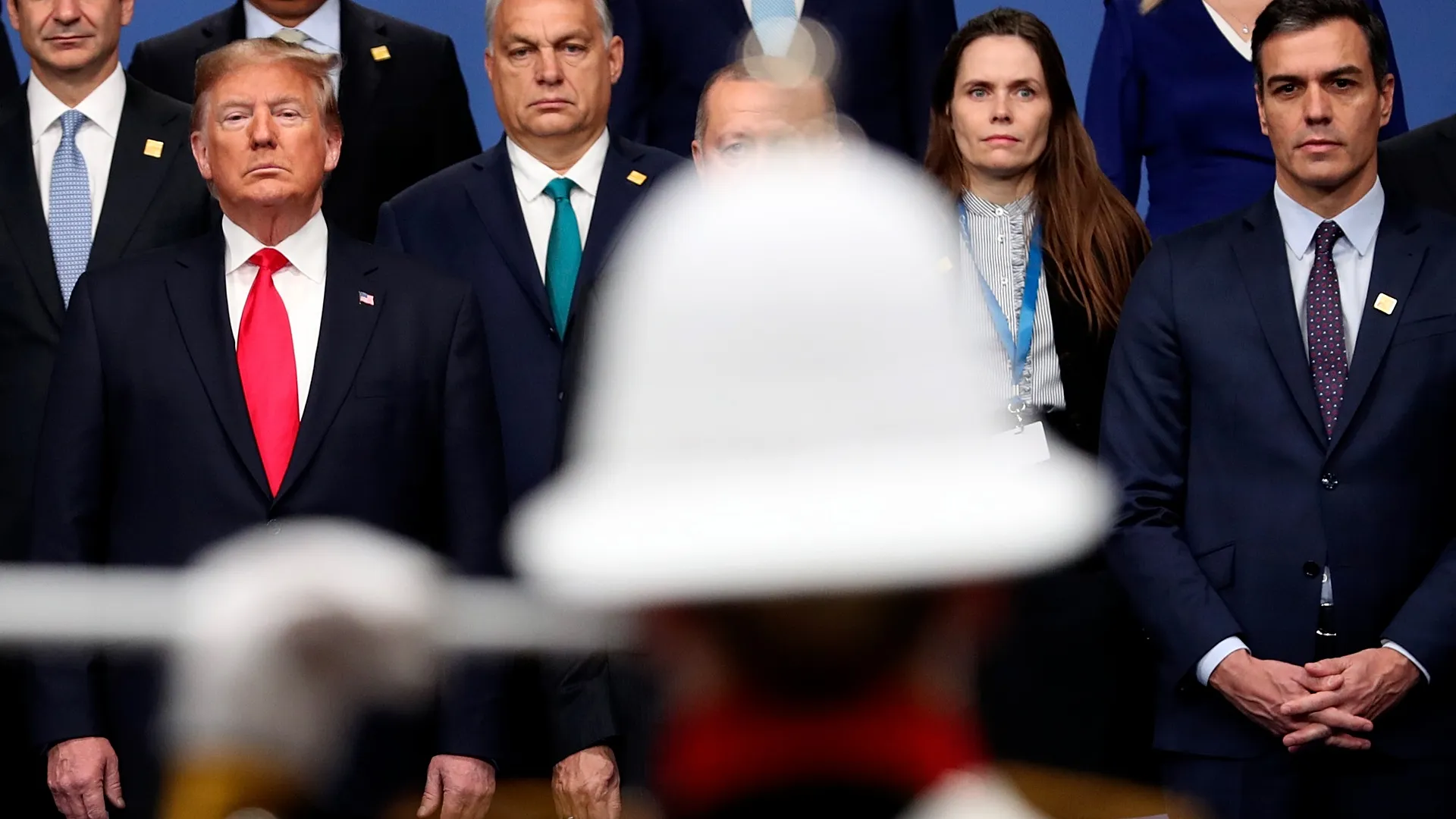
Trade pressure triggers a collective reflex.
Brussels, March 2026
The phrase “Article 5” normally belongs to NATO and the language of missiles, not tariffs. Yet as Europe enters a sharper confrontation cycle with Washington, the EU’s most relevant deterrent may be commercial, not military. Euronews has described how Spanish Prime Minister Pedro Sánchez and the wider Union are “arming” themselves against President Donald Trump by pointing to the EU’s Anti-Coercion Instrument, a mechanism adopted in 2023 that officials and analysts increasingly treat as an economic equivalent of collective defense. The label is journalistic, not legal. There is no literal “Article 5” clause inside the text. What exists is a procedural switch that matters politically: a formal EU determination that a third country is using economic coercion, and the authorization that follows to move from dialogue to countermeasures.
The structural logic is simple. If a large power uses trade, investment restrictions, or other economic levers to force a member state to change policy, the EU wants a response that is both collective and credible. That credibility matters because the Union’s core strength is the single market. When Spain is threatened commercially, the Commission argues, the pressure is ultimately aimed at the entire bloc, because the target is part of the same integrated market. The Anti-Coercion Instrument operationalizes that idea by giving the Union a step-by-step framework: attempt de-escalation first, then escalate in a controlled way if coercion persists.
The mechanism begins with a recognition problem, not a punishment problem. The Council, acting on a proposal and assessment, must determine that coercion exists. That determination is the real “trigger,” because it transforms a political dispute into an EU-level case file with legal consequences. In practice, this step is designed to prevent improvisation and to preserve legitimacy in front of member-state publics and global partners. It forces Europe to show its homework: what pressure is being applied, what objective it seeks to impose, and why normal diplomacy is insufficient. Only after that recognition can the Union credibly claim it is not escalating for convenience, but responding to coercion as a rule-based system.
Once the coercion determination is made, the countermeasure menu is deliberately broad. The EU can consider targeted responses affecting trade in goods and services, restrictions linked to public procurement, limits on certain forms of investment access, and other market-facing measures designed to impose cost without drifting into uncontrolled trade war. The point is not maximum pain. It is calibrated pain that changes the other side’s incentives while keeping escalation reversible if the pressure stops. The instrument is also built to preserve proportionality, because Europe’s strategic problem is credibility without self-harm. If the countermeasure hurts Europe more than the coercer, the deterrent collapses.
This is why the timing matters. Trump’s threats toward Spain, framed in recent days as commercial punishment tied to Madrid’s refusal to enable certain military operations, place the EU in a classic coercion scenario: economic leverage deployed to alter sovereign political behavior. Whether the Union will actually pull the trigger is a different question, because the EU’s deterrence is always filtered through internal politics. Some capitals prefer confrontation, others prefer quiet accommodation, and many fear that retaliation will escalate into a broader trade rupture. Yet even without immediate activation, the existence of the instrument changes bargaining posture. It tells Washington that the EU is not limited to diplomatic protest. It can respond with legal instruments that aggregate the market power of 27 states.
The U.S. angle matters because it shifts how the world reads the instrument. When the EU designed the Anti-Coercion Instrument, the implicit reference point in many policy discussions was Chinese economic pressure tactics against smaller states, including coercive trade restrictions and informal barriers. Europe wanted a credible response to that. Now, if the EU frames U.S. threats as coercion, it forces a more uncomfortable recognition: coercion is not a category reserved for rivals. It is a behavior any major power can deploy when it believes it can extract compliance cheaply. That recognition is politically sensitive because it collides with the transatlantic narrative of shared values, but it may be strategically necessary if Europe wants deterrence to be behavior-based rather than flag-based.
Asia enters the picture precisely here. If the EU uses the Anti-Coercion Instrument against Washington, Beijing will watch the precedent closely. So will other states that rely on trade pressure as a tool of influence. A credible EU response signals that the single market is not only an economic space but a defensive perimeter. It also signals that Europe is willing to treat coercion as a global phenomenon rather than an “East-only” tactic. The immediate trigger may be Trump and Spain, but the precedent would reverberate through every capital that has ever considered using market access as a political weapon.
The instrument also changes the internal EU message discipline. Sánchez can frame Spain’s stance as something larger than national defiance: a test of whether the EU protects members when they are pressured. That is politically potent, because it turns a bilateral quarrel into a Union-wide solidarity question. The Commission’s posture in recent days has reflected this logic: stressing that threats against one member are threats against the single market. The Anti-Coercion Instrument is the legal spine of that argument. Without it, solidarity remains rhetorical. With it, solidarity has a pathway to action.
The risk is obvious: activation could escalate quickly. Once countermeasures begin, domestic politics on the other side may demand retaliation, and retaliation can become a spiral. The EU’s challenge is to keep the instrument credible without making it easy for opponents to claim Europe is weaponizing trade irresponsibly. That is why procedure and proportionality are not bureaucratic decorations. They are the shield against accusations of arbitrariness and the mechanism that allows the EU to stop escalation if the coercion ends.
What changes on the wider board is the nature of European deterrence. Europe cannot always match a superpower militarily, but it can impose cost through market access, procurement power, and regulatory leverage. The Anti-Coercion Instrument is the EU’s attempt to make that power usable under pressure, not only in policy papers. If Trump’s threats continue, the question will not be whether Europe has tools. It will be whether Europe has the political cohesion to use them, and the strategic discipline to use them without losing control of the escalation ladder.
Más allá de la noticia, el patrón. / Beyond the news, the pattern.