

 Phoenix 24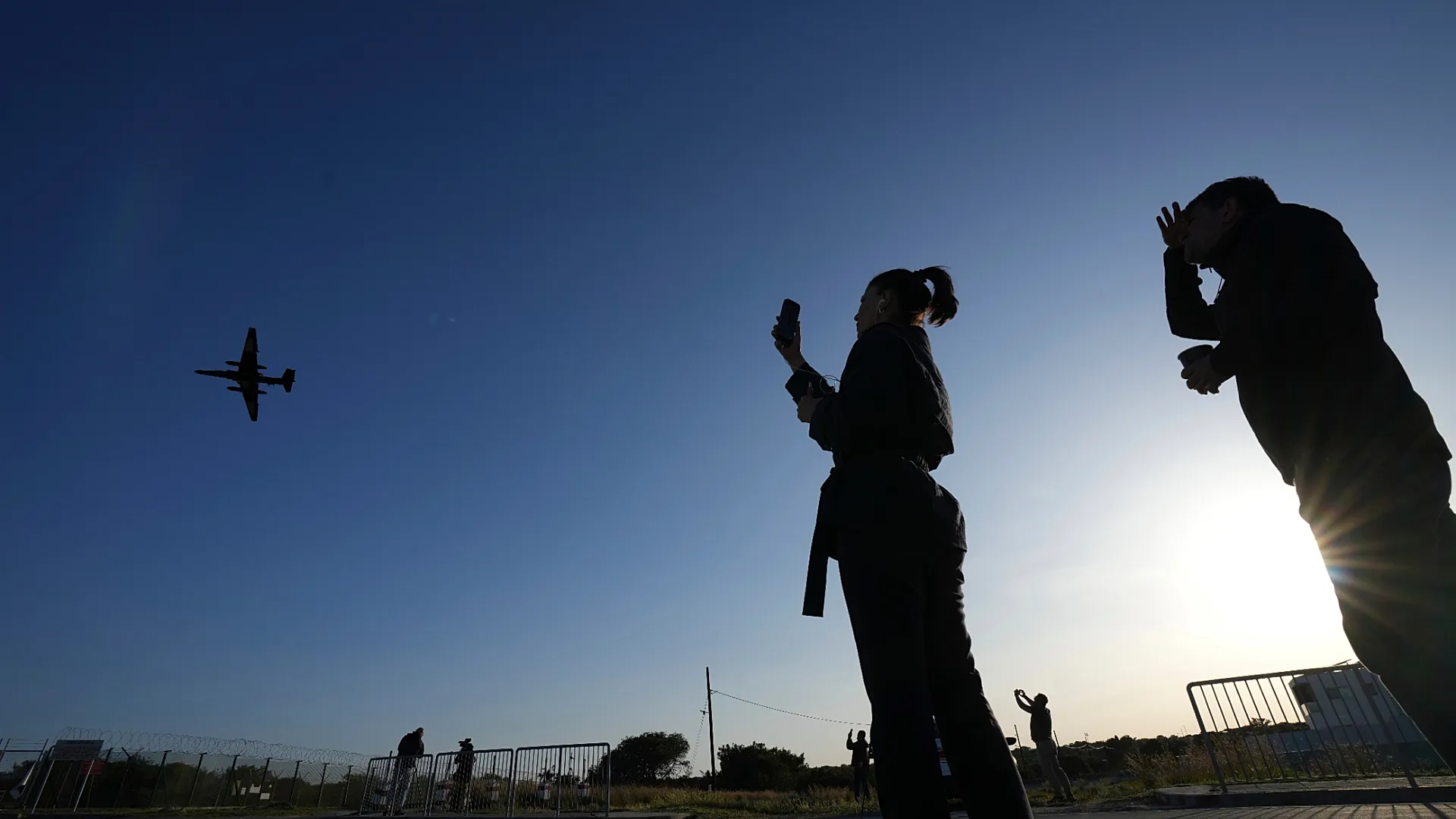
Early warnings can sound like false alarms.
Akrotiri, March 2026
Repeated preventive alerts around Akrotiri are beginning to reshape daily life in Cyprus into something closer to a standing emergency posture than a temporary precaution. Euronews reported that sirens sounded again on Friday morning near the British bases, that residents received an official message advising protective measures, and that the alert was lifted shortly afterward. The essential clarification came from a joint message attributed to the British Bases and the Cypriot government: these alarms may become frequent in the coming period, and frequency should not be interpreted as proof of an immediate strike on Cyprus. The warning system, they stressed, can activate when long-range radar detects airborne objects at distance, even if those objects are not ultimately headed toward the island.
That clarification matters because it attempts to solve a psychological problem created by the alerts themselves. If sirens sound repeatedly and most incidents end without impact, the population begins to drift toward two dangerous extremes: panic, where every alarm is processed as imminent harm, or habituation, where alarms are dismissed as noise. Authorities are trying to hold the middle line: keep residents responsive without keeping them terrified. A proactive system is designed to err on the side of caution, but caution repeated too often can erode credibility. In modern conflict environments, credibility is a security asset. Once it weakens, public compliance becomes less reliable precisely when it is most needed.
The details of the latest activation show how quickly the system is now expected to move. Euronews reported that sirens sounded at 09:58 and that residents in the district received a message instructing them to stay indoors until further notice. The guidance included steps that signal a serious posture even when the outcome is uncertain: keep away from windows and take cover behind or under sturdy furniture. Soon after, the “all clear” was announced and travel restrictions were lifted. The sequence was short, but the behavioral demand was immediate. This is the defining feature of contemporary civil warning systems: they compress decision-making into minutes, and they require trust on command.
Akrotiri’s specific geography turns this into more than a generic civil-defense story. The area sits beside the British sovereign base, which has become a sensitive node as the wider Middle East conflict spills into the eastern Mediterranean’s security architecture. Earlier reporting in the same week described a climate of anxiety and evacuation measures linked to drone incidents affecting the base environment, reinforcing the sense that Cyprus is being pulled closer to the operational perimeter of a war it is not directly fighting. This is the structural context in which “preventive” sirens are being normalized: not because Cyprus is already under continuous attack, but because the island is now close enough to the action that precaution becomes policy.
The logic presented by authorities also reveals an uncomfortable truth about modern air and missile defense: detection does not always come with clean attribution or clear trajectory certainty in the early minutes. Systems can detect objects far away, but determining intent, path, and final target can take time, especially in a region saturated with military activity, interceptions, and electronic noise. A warning system that waits for perfect certainty may warn too late. A warning system that warns early will sometimes warn unnecessarily. The public is being asked to live inside that uncertainty.
There is also an institutional dimension. By communicating jointly, the British Bases and the Cypriot government are trying to prevent mixed messaging, a major failure mode in crises. When different authorities issue different interpretations, the public fills the gaps with rumor, and rumor is faster than verification. A unified line, “alarms may be frequent, and not all alarms mean imminent danger,” is an attempt to keep the information environment stable. Yet it also carries risk: if an actual incident occurs after multiple “false” activations, the message can be reinterpreted as minimizing or normalizing threat. That is why the wording matters. The purpose of the statement is not reassurance alone. It is calibration.
What is being built, quietly, is a new civil habit. Sirens, mobile alerts, shelter guidance, and short-term movement restrictions begin to function like weather warnings, except the “weather” is conflict volatility. This changes social behavior. Schools and businesses adapt. Families establish micro-protocols. People start measuring days in alerts and all-clears. Even when no strike occurs, the cognitive load accumulates, and that load changes how communities interpret safety. It also changes politics: governments are judged not only by whether they prevent harm, but by whether they manage fear. In small, highly networked societies, fear can spread faster than facts.
The strategic implication is broader than Cyprus. Akrotiri is becoming a case study in how frontline-adjacent regions operationalize civil defense when the threat is intermittent, ambiguous, and regional rather than local. The warning system is proactive by design, but it will only succeed if public trust is preserved through consistency, clear thresholds, and credible after-action explanations. Without that, sirens become background noise, and background noise is exactly what adversaries exploit to increase the probability that a true warning is ignored.
The deeper pattern is therefore not the siren itself, but the normalization of alert culture as part of daily governance in a zone where airspace risk has widened. The message from authorities is blunt in its own way: Cyprus may not be the target every time, but Cyprus is close enough that it must behave as if it could be, repeatedly, and with little notice.
Truth is structure, not noise. / La verdad es estructura, no ruido.