

 Phoenix 24
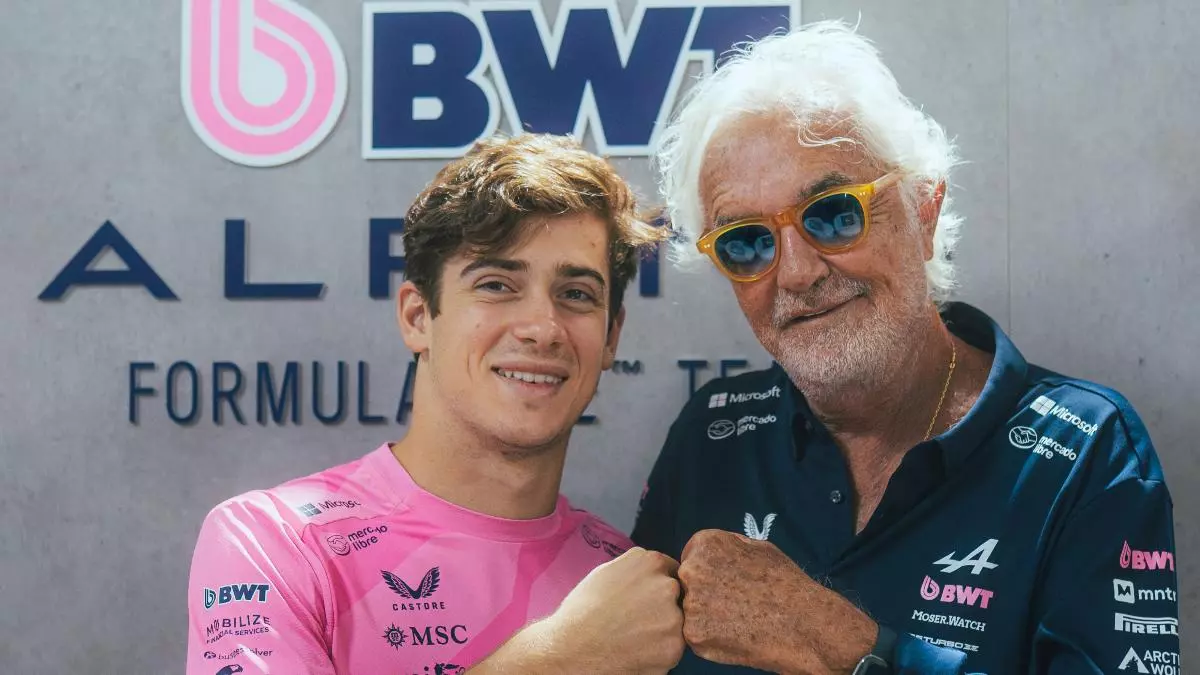
In Formula 1, titles matter less than control.
Enstone, March 2026
Flavio Briatore’s role at Alpine has become one of the most revealing stories in Formula 1, not because the paddock lacks drama, but because his influence now appears to exceed the formal labels attached to his position. What has circulated in recent coverage and media spillover around the team is not simply a personnel anecdote, but a governance signal: Alpine is being run through a power structure in which decision-making weight, public messaging, and sporting pressure converge around Briatore, whether or not every institutional definition catches up immediately. The underlying issue is bigger than one executive profile. It is about how a team under performance pressure reorganizes authority when results, credibility, and the 2026 regulatory cycle collide at the same time. In that context, Alpine’s internal hierarchy is no longer a back-office matter. It has become part of the competitive story itself.
The team’s own public communications established the turning point when Oliver Oakes exited and Alpine stated that Briatore would continue as executive advisor while covering duties previously handled by the team principal. That wording was important because it effectively confirmed operational control without fully resolving the formal question of title. In Formula 1, this kind of distinction can look cosmetic from the outside, but it matters in regulatory, political, and reputational terms. A paddock may accept de facto leadership quickly, while governing bodies and official classifications move on stricter criteria. The result is a familiar modern F1 tension: the real chain of command becomes obvious before the paperwork narrative becomes clean. Alpine, by allowing that ambiguity to coexist with visible centralized authority, has signaled that immediate control matters more than institutional neatness.
That matters even more because Alpine is not entering a quiet season. The team is trying to recover from a difficult campaign, reset expectations, and position itself for a major regulatory era while carrying a driver lineup and technical project that remain under scrutiny. Briatore has spoken publicly in recent months with a tone that leaves little room for ambiguity, insisting there are no excuses for underperformance and framing 2026 as a moment where the team must deliver rather than explain. This messaging style is not accidental. It imposes pressure upward and downward at once, on engineers, drivers, and management, while also telling external audiences that Alpine wants to be judged on execution, not transition narratives. Whether that approach improves results is still an open question, but it undeniably changes the internal climate. The team now communicates like a structure under command, not a project in search of direction.
A second layer of the story is the visibility of Briatore’s management style, especially as behind-the-scenes footage and leaked fragments from recent coverage cycles have amplified how directly he speaks to drivers and staff. This has reignited a debate that follows him everywhere in Formula 1: whether hard-edged leadership under pressure is evidence of competitive seriousness or a symptom of instability disguised as discipline. Supporters see urgency, accountability, and a refusal to normalize mediocrity. Critics see volatility, over-centralization, and a leadership culture that can burn through trust faster than it builds performance. Both readings persist because Briatore is one of the few figures in the sport whose presence changes not only decisions, but also the emotional temperature around the team. In media terms, that makes him a magnet. In performance terms, it makes him a strategic risk and a strategic asset at the same time.
There is also a structural reason why Alpine may be willing to absorb the controversy. Formula 1’s current competitive environment rewards clarity of direction, especially when technical resets, supplier decisions, and development priorities demand fast choices. Teams caught in layered committee logic often lose time they cannot recover. Alpine’s leadership configuration, however unconventional it may appear, offers something markets and paddocks both recognize quickly: a visible center of gravity. That does not guarantee competitive gains, but it can reduce internal drift. The real test is whether centralized authority translates into cleaner execution on car development, race operations, and driver performance, rather than simply generating louder headlines. If the latter dominates, the structure will be remembered as theatrical. If the former emerges, the ambiguity over titles will be treated as irrelevant history.
The Briatore question therefore sits at the intersection of sport, governance, and brand risk. Alpine is a works-linked project with a major legacy footprint, and that means every leadership move is interpreted through broader expectations about professionalism, stability, and long-term intent. The team cannot rely only on personality-driven command if results remain weak, because Formula 1 eventually forces even the strongest narratives to answer to lap time and points. At the same time, Alpine may calculate that a polarizing but decisive leadership figure is preferable to a diluted structure that communicates caution while losing competitive ground. In a sport where delay can be more damaging than error, that is not an irrational calculation. It is a high-variance one.
What changes on the wider board is how Alpine is now being read by rivals, sponsors, and audiences. The team is no longer seen merely as a struggling constructor trying to stabilize, but as a pressure vessel in which authority has been consolidated around a figure who embodies both past success and persistent controversy. That makes every internal leak, public remark, and performance swing more consequential than it would be in a quieter organization. Briatore’s role, formal or not, has become part of Alpine’s race weekend reality. In Formula 1, that usually means one thing: the politics of the team are now inseparable from the pace of the car.
The narrative is power too. / Narrative is power too.