

 Phoenix 24
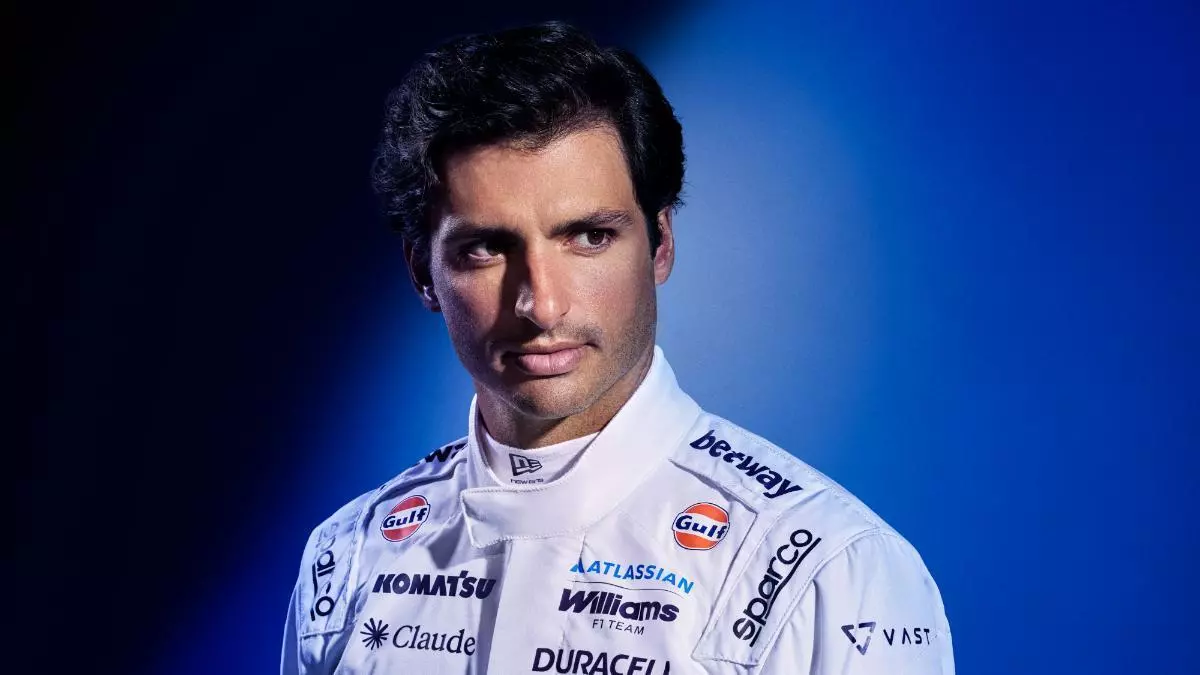
The car is new, the uncertainty is real.
Madrid, March 2026
Carlos Sainz has offered one of the clearest assessments so far of Formula 1’s 2026 transition, and his message is neither alarmist nor complacent. The Spanish driver, now with Williams, has described the new regulatory cycle as a historic technical shift and urged patience before definitive judgments are made, even as criticism grows around drivability, complexity, and the racing spectacle. What makes his diagnosis relevant is not only his experience across top teams, but his current position inside a project trying to rebuild under a radical rule change. Sainz is effectively speaking from the intersection of two pressures at once: adapting as a driver and helping a team manage a long-horizon transformation. That gives his comments more strategic weight than a simple preseason reaction.
The broader context matters. Formula 1’s 2026 regulations are not a minor adjustment but a system reset involving power unit balance, energy deployment behavior, and aerodynamic tradeoffs that are already changing how drivers describe racecraft and setup management. Sainz has publicly acknowledged that he preferred aspects of the previous generation, particularly in terms of aerodynamic load and driving feel, but he has resisted the temptation to condemn the new package before the championship produces real race evidence. That restraint is important because many early reactions in F1 are shaped by testing conditions, incomplete setups, and team-specific development gaps. In other words, preseason impressions can be directionally useful while still being analytically premature. Sainz’s tone suggests he understands that distinction and wants the paddock to preserve room for course correction without triggering panic.
At the same time, his comments do not amount to blind optimism. He has signaled that Williams enters this cycle with limitations, including a car that is still immature relative to where the team wants it to be, and that realism is central to understanding his position. This is not the language of a driver selling headlines. It is the language of someone trying to calibrate expectations inside a competitive environment where public narratives can distort internal development priorities. By admitting that the team may begin the season at a disadvantage while still defending the need for patience, Sainz is drawing a line between structural critique and performative negativity. That balance is difficult in Formula 1, where media pressure often rewards certainty even when the technical picture remains fluid.
His diagnosis also reflects a larger tension across the sport: the difference between engineering ambition and sporting legibility. New regulations are designed to produce long-term gains in sustainability, competition design, and manufacturer alignment, but drivers and fans experience them in immediate terms, overtaking behavior, car feel, unpredictability, and visual spectacle. When that gap widens, the public conversation can harden quickly into narratives of success or failure before teams have fully understood the operating window. Sainz appears to be arguing, implicitly, that the sport should allow the competitive ecosystem to breathe before declaring the formula broken. That is a sophisticated position because it protects innovation while preserving the right to demand changes if the racing product fails to convince after several rounds.
There is also a political dimension to his stance inside the governance ecosystem of Formula 1. By calling for an open-minded approach from the FIA and Formula One Management, Sainz is not merely commenting on his own car. He is signaling that the 2026 rules may require adaptive management if unintended consequences appear once the season begins. This matters because modern F1 is governed not only by technical regulations, but by the credibility of how quickly institutions respond to evidence. A rigid defense of the rulebook can damage confidence if racing quality suffers. A reflexive rollback can damage confidence if teams feel the framework lacks stability. Sainz’s position sits in the middle, which is often where the most serious competitors speak from when they know the sport is entering an unstable but potentially transformative phase.
For Williams, the timing makes the message even more consequential. The team has presented its 2026 effort as part of a broader rebuilding strategy, and Sainz has repeatedly framed his move as a long-term project rather than a short-term podium calculation. That means his comments about patience are not abstract. They are tied to a practical reality in which development sequencing, reliability, weight targets, and operational learning may matter more in the first phase of the season than headline results. In that sense, his diagnosis is also a leadership signal to engineers, fans, and sponsors: measure progress with discipline, not anxiety. A rebuilding team cannot afford to confuse early turbulence with strategic failure if the real objective is competitiveness over multiple seasons.
What changes on the wider board is the quality of the debate around Formula 1’s new era. Sainz is helping shift the conversation from emotional first impressions to conditional evaluation, which is exactly what a major technical reset requires. His view does not deny the risks of the 2026 formula, and it does not romanticize them either. Instead, it places the burden where it belongs, on evidence from actual racing, institutional flexibility, and teams’ capacity to adapt faster than the narrative cycle. In a sport obsessed with instant verdicts, that may be the most credible diagnosis available right now.
The visible and the hidden, in context. / The visible and the hidden, in context.