

 Phoenix 24
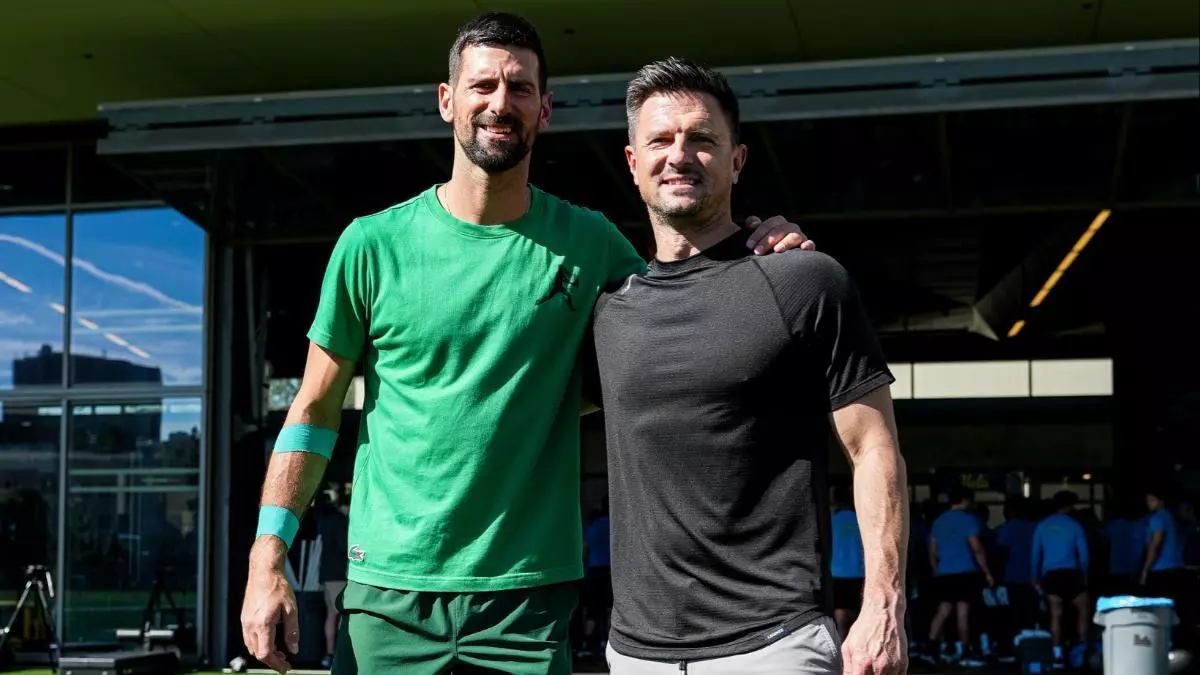
Reinvention starts before the next tournament.
Belgrade, March 2026
When coverage around Novak Djokovic highlights that he has “shown a new” version of himself, the immediate temptation is to read it as a superficial tennis story about image, style or a passing media moment. But with Djokovic, especially at this stage of his career, even small public signals tend to carry strategic meaning. In elite sport, late career visibility is rarely accidental. It often works as a form of positioning, a way to shape expectations about identity, motivation and continuity before results settle the narrative on court.
That matters more in 2026 than it would have a few years ago because Djokovic is no longer competing only against opponents across the net. He is also competing against time, recovery demands and the storytelling machinery that constantly tries to place veterans into decline scripts. After reaching the Australian Open final and then withdrawing from Doha due to fatigue, the public frame around him naturally shifted toward physical management and selective scheduling. In that context, any “new” image or gesture becomes part of a broader signal: this is not a player drifting toward the exit, but one actively curating the next phase of elite survival.
The deeper point is that reinvention in modern tennis is no longer limited to technique or tournament selection. It includes how a player manages perception. Djokovic has spent years balancing multiple identities at once, dominant champion, polarizing figure, relentless competitor and now elder statesman still capable of major runs. A refreshed public presentation, whether aesthetic, behavioral or symbolic, can help reset the emotional atmosphere around a season. It gives fans and media a new entry point into a familiar career while allowing the athlete to project control over the narrative rather than simply reacting to rankings, losses or age based commentary.
This is especially relevant in a men’s circuit now defined by generational pressure. Carlos Alcaraz and Jannik Sinner represent not only technical threats but also the cultural momentum of a new era, and every veteran champion must decide how to respond to that shift. Some retreat into legacy language. Others overplay nostalgia. Djokovic’s more durable strategy has often been different: he keeps reframing himself as an active problem inside the present tense of the sport. If recent coverage suggests a “new” Djokovic, the subtext is likely less about novelty for its own sake and more about preserving competitive authority in a landscape eager to move on.
There is also a commercial and brand logic behind this kind of visibility. Global stars in late career phases cannot rely only on match results to sustain relevance between tournaments, especially when scheduling becomes more selective. Public image updates, controlled appearances and subtle personal rebranding can extend presence without overexposing the athlete. In Djokovic’s case, that matters because his value is tied not just to trophies, but to symbolic status as one of the defining figures of the modern game. The brand dimension does not replace performance, but it can buy narrative space while the body is managed and the calendar is recalibrated.
At the same time, it would be a mistake to reduce this entirely to media optics. For elite athletes, external change often accompanies internal adaptation. A new public posture can reflect shifts in training emphasis, recovery priorities or mental framing after a physically demanding tournament stretch. Djokovic has already spoken in recent months about rebuilding his body to keep competing with younger rivals. Seen through that lens, a “new” image is not just presentation. It can function as a visible trace of a deeper process, the continuous reconstruction required to remain viable at the top of a sport that punishes even small drops in movement, endurance or reaction speed.
What makes Djokovic compelling in this phase is precisely that he still forces these questions to remain open. He is old enough, in tennis terms, to be discussed in historical chapters, yet still relevant enough to alter major tournament draws and expectations. That tension keeps every signal around him larger than it might be for another player. A small change in look, tone or public appearance becomes material for a wider debate about longevity, adaptation and whether greatness in the current era is defined by domination alone or by the ability to remain dangerous while the system evolves around you.
From a Phoenix24 perspective, the key pattern is not celebrity styling but competitive narrative engineering. In high performance sport, image is increasingly part of strategy, especially when career stage, physical management and media attention intersect. Djokovic’s “new” version, whatever precise form it takes in the coverage, matters because it participates in a broader attempt to control the meaning of late career elite performance. Before the next point is played, the signal is already on the board: reinvention is not a side story. It is part of the match.
La narrativa también es poder. / Narrative is power too.