

 Phoenix 24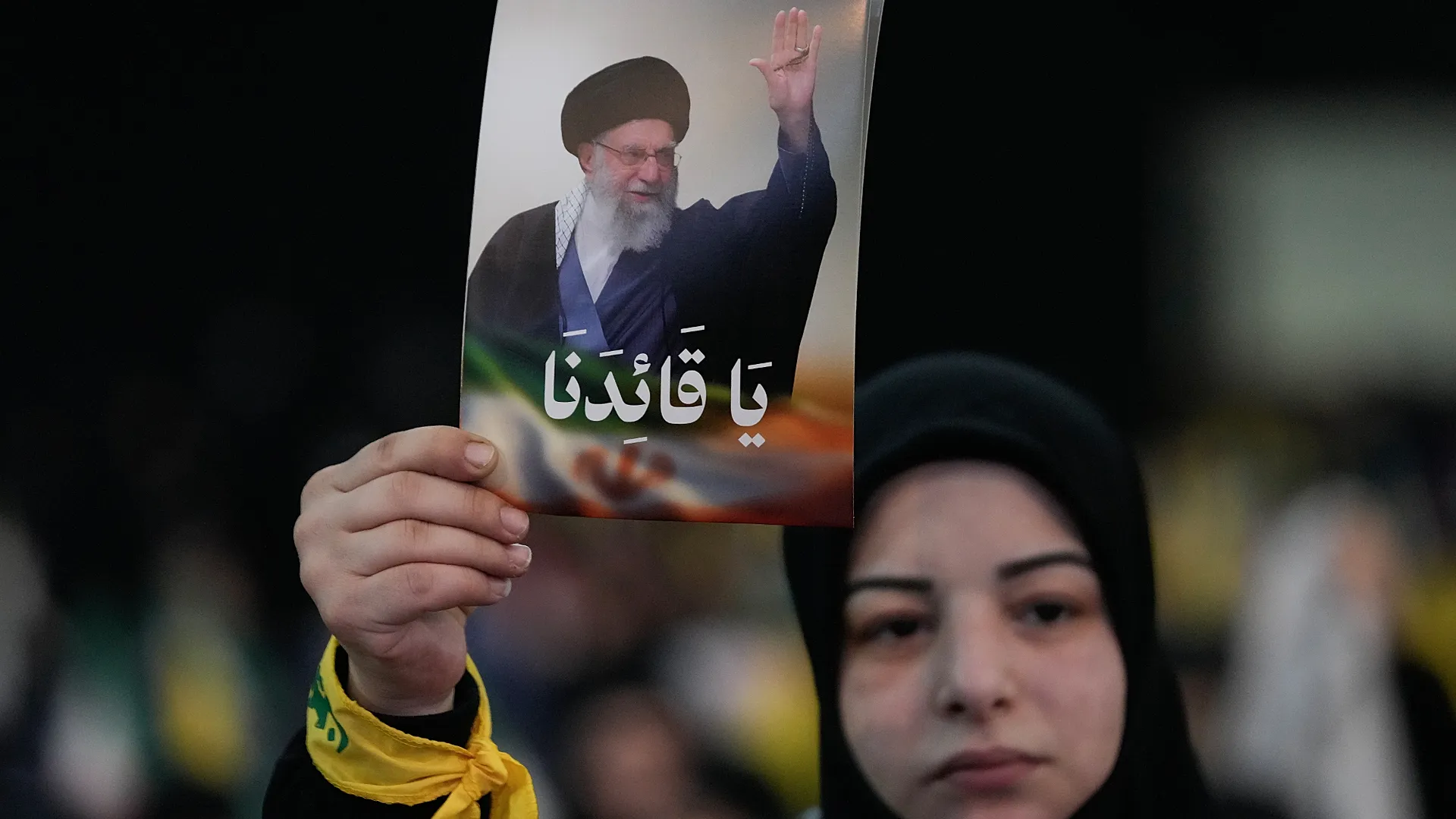
Authority in Iran was redesigned, not inherited.
Tehran, February 2026.
Ali Khamenei’s political durability cannot be explained only by clerical status, ideological discipline, or repression. His long tenure reveals something more structural: the Islamic Republic gradually transformed the office of Supreme Leader into the center of gravity of a hybrid state where doctrine, military power, intelligence management, and strategic messaging operate as one system. That is why, after 37 years at the top, Khamenei is not simply a senior religious figure with political influence. He is the institutional mechanism through which Iran’s internal order and regional posture have been synchronized across successive crises.
The key point is historical. Khamenei assumed the position in 1989 after the death of Ayatollah Ruhollah Khomeini, inheriting a revolutionary regime that still required consolidation after war, internal factional conflict, and ideological reconfiguration. Over time, however, the office ceased to function merely as symbolic guardianship. It became the final arbiter in questions that define state survival: security doctrine, strategic alliances, nuclear posture, elite competition, and the boundaries of permissible reform. In practice, this converted the Supreme Leader’s authority into a stabilizing command node for a system designed to absorb pressure without surrendering control.
His longevity matters for another reason. In most political systems, extended rule eventually produces institutional fatigue and loss of coherence. In Iran, Khamenei’s tenure has often worked in the opposite direction, not because public legitimacy remained intact, but because the state redistributed legitimacy itself. Religious authority continued to matter, but operational legitimacy increasingly shifted toward security performance, strategic resistance, and regime continuity. That move helps explain how the system preserved command capacity even as social trust eroded, economic pressure intensified, and protest cycles became more visible and more emotionally charged.
This is where the regional dimension becomes central. Khamenei’s influence expanded beyond Iran’s borders not only through rhetoric about resistance, but through a layered architecture of allied movements, political partners, and security networks across the Middle East. The result was a model of indirect projection that allowed Tehran to shape outcomes without relying exclusively on conventional military confrontation. For supporters, this represented strategic depth. For critics, it institutionalized destabilization. Either way, the pattern is clear: the office of Supreme Leader became inseparable from Iran’s regional deterrence logic and from the narratives used to justify it domestically.
Yet the durability of that model has carried internal costs that can no longer be treated as secondary. The more the state fused ideological legitimacy with national security logic, the narrower the space became for dissent, pluralism, and negotiated social renewal. This produced a recurring contradiction in the Islamic Republic’s political design: the regime could demonstrate resilience at the level of command, while simultaneously accumulating fragility at the level of society. That contradiction has shaped recent years, especially as economic hardship, sanctions pressure, and generational frustration have widened the emotional distance between state institutions and large sectors of the population.
Another element of Khamenei’s power has been his role as manager of elite competition. Iranian politics is often described externally through visible factions, elections, and policy debates, but the deeper story is arbitration. The Supreme Leader’s office has functioned as the authority that sets ceilings, distributes red lines, and prevents factional conflict from becoming systemic fracture. This does not eliminate internal rivalry. It disciplines it. The system survives not by suppressing all political difference, but by ensuring that no rival center can overtake the strategic hierarchy anchored at the top.
The current regional conflict environment gives this legacy renewed relevance. As tensions escalate after the latest U.S. and Israeli strikes on Iran, any analysis of Tehran’s response inevitably passes through the institutional architecture Khamenei spent decades reinforcing. Even where day to day operational decisions are executed by military and political actors, the strategic grammar remains linked to the same logic: calibrated retaliation, symbolic endurance, internal cohesion, and regional signaling. In that sense, the present moment is not an interruption of his era. It is a stress test of the system his era helped harden.
Still, longevity is not the same as permanence. A leadership model built on concentration of authority can sustain continuity for decades, but it also makes succession a strategic event, not just a constitutional procedure. The longer one figure serves as the state’s final balancing point, the more difficult it becomes to reproduce that equilibrium under a successor, especially in a context marked by social fatigue, international confrontation, and shifting regional alignments. This is why the discussion around Khamenei’s legacy extends beyond biography. It touches the future mechanics of power in Iran itself.
What emerges from the last 37 years, then, is not a simple story of a cleric who expanded his influence, but a broader lesson about institutional engineering under siege. Khamenei’s authority endured because it was embedded in a system that linked ideology to coercive capacity, regional strategy to domestic legitimacy, and crisis management to political survival. The open question is whether that architecture can continue to function with the same coherence in a more volatile geopolitical environment and under a population whose relationship with the state has changed profoundly. The answer will shape not only Iran’s internal future, but the wider balance of power across the region.
Truth is structure, not noise. / La verdad es estructura, no ruido.