

 Phoenix 24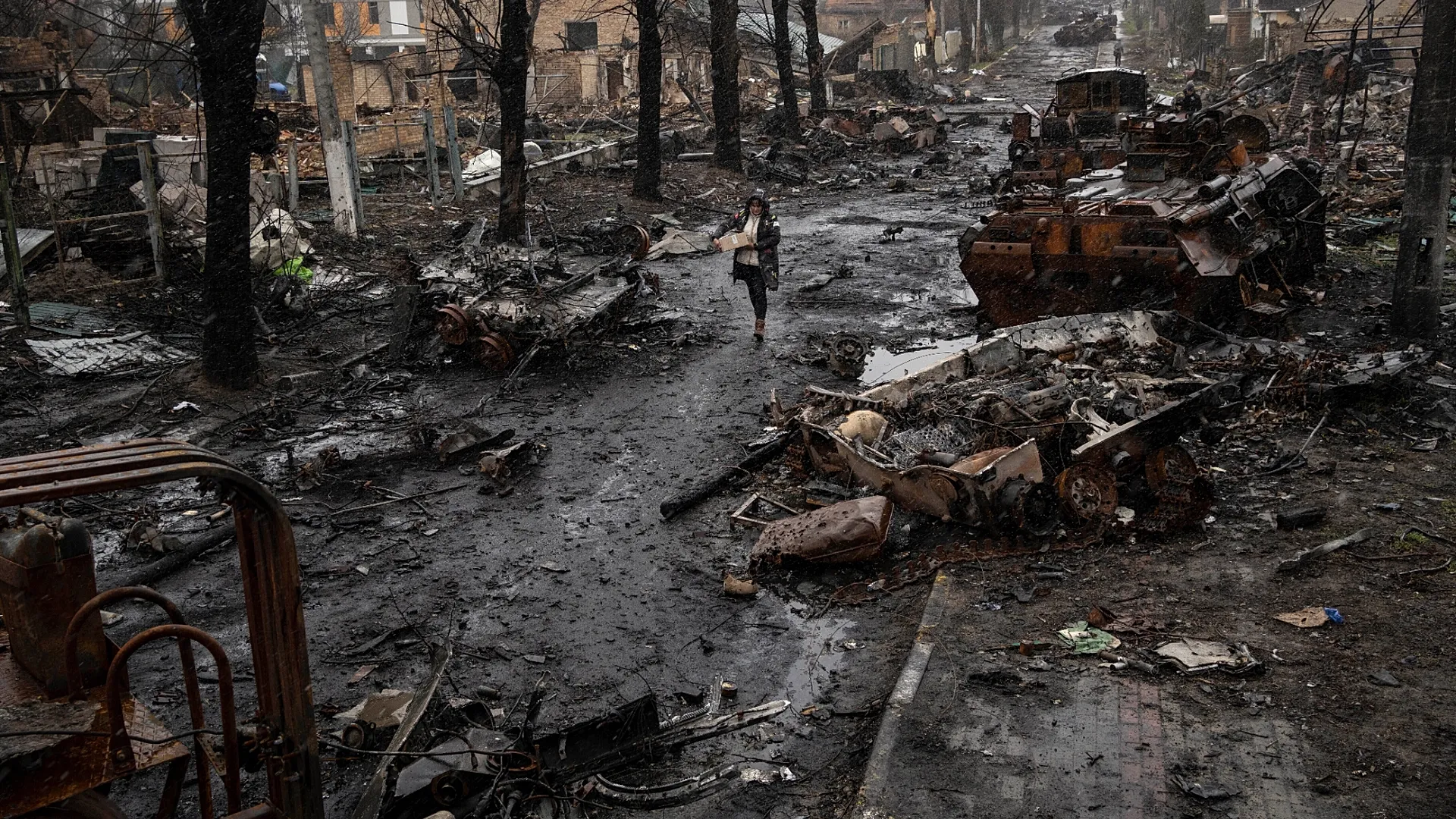
Fiscal endurance is becoming battlefield power.
Kyiv, February 2026
Four years after Russia’s full scale invasion began, the central question is no longer only how the front line moves on the map, but how long Ukraine can keep funding resistance without breaking the state’s economic core. The military struggle remains brutal and immediate, yet the war has also become a contest of liquidity, production capacity, budget discipline, and institutional stamina. The emerging consensus in European coverage is that economic attrition is no longer a background condition but a decisive front in its own right. That shift matters because it moves the discussion away from episodic aid headlines and toward the deeper issue of long duration state resilience.
The figures now circulating in official and media reporting explain why this change in framing is difficult to dismiss. Data attributed to Ukraine’s military leadership indicate that one day of full scale war cost the country an average of about 172 million dollars in 2025, up from roughly 140 million dollars per day in 2024, an increase close to 23 percent. At that pace, sustaining troops, munitions, logistics, and battlefield technologies pushes monthly war costs toward 5 billion dollars. This is not simply a defense budget under pressure, it is an economy operating under permanent emergency conditions while trying to preserve the core functions of the state.
Comparative defense data reinforce the severity of the burden. International military expenditure tracking has placed Ukraine at the highest military burden level in the world, with spending equivalent to roughly 34 percent of GDP in 2024. That ratio is extraordinary in any modern context because it compresses fiscal space across the entire public sector and forces painful tradeoffs that would be destabilizing in peacetime, let alone during a prolonged war. In practical terms, external assistance is no longer a supplemental layer of support. It has become a structural pillar of state continuity.
At the same time, the reconstruction ledger is catching up with the defense ledger, and together they are reshaping the strategic horizon. The latest joint rapid damage and needs assessment by the Ukrainian government, the World Bank Group, the European Commission, and the United Nations estimates reconstruction and recovery needs at around 588 billion dollars over the next decade, measured through the end of December 2025. That total is close to three times Ukraine’s estimated nominal GDP for 2025. It signals a reality that often gets lost in battlefield reporting, the country is not only financing war, it is also financing the minimum conditions for social and economic survival while destruction continues.
The social geometry of that destruction makes stabilization even more complex. Housing damage alone has affected millions of households, while transport networks, energy systems, and urban infrastructure remain under repeated strain. Energy assets have seen additional damage compared with prior assessments, which means every repair carries a shorter planning horizon and a higher risk of renewed disruption. The challenge is not just to rebuild what was lost, but to rebuild enough to keep daily life functioning in a war environment that remains volatile and adaptive. That creates a cycle in which recovery is constantly interrupted, reprioritized, and re-costed.
Yet the picture is not one of collapse, and that distinction matters analytically. Ukrainian authorities and international partners have already financed urgent repairs and early recovery measures worth many billions of dollars since 2022, including energy restoration, housing support, transport repairs, and social infrastructure. This has allowed the state to preserve a degree of administrative continuity and public confidence that many observers underestimated in the early phase of the war. The result is a paradoxical wartime economy, severely damaged and structurally dependent, yet still capable of absorbing shocks through coordination, emergency financing, and institutional improvisation.
Macroeconomic conditions, however, leave little room for complacency. Ukraine’s economy remains substantially smaller in real terms than before the invasion, and the social consequences continue to weigh on labor markets, consumption, and productivity. Millions remain displaced inside the country and millions more remain abroad, which affects tax bases, workforce availability, household formation, and long term demographic recovery. In that sense, recovery is not only a matter of infrastructure and capital flows. It is also a question of whether people can return, work, rebuild trust, and imagine a future inside functioning local economies.
This is why financing mechanisms have become as strategically important as weapons deliveries. International financial support, including multilateral programs and coordinated donor frameworks, now functions as the bridge between battlefield endurance and macroeconomic stability. The issue is no longer only how much money arrives, but how predictably it arrives, under what conditions, and with what reform incentives attached. Wartime governance must therefore perform two difficult tasks at once, manage emergency expenditure at high speed while building enough institutional credibility to attract longer term investment for eventual recovery.
That dual requirement changes the way the war should be read. The front line still matters, missile defense still matters, and territorial control still matters, but the balance sheet now determines how long military resistance can remain politically and socially sustainable. Budgets, grids, ports, housing stock, and public payrolls have become strategic infrastructure in the same sense as artillery and air defense. Economic resilience is no longer the rear of the war. It is one of its central theaters.
Four years in, the deeper pattern is now visible. Ukraine is fighting a war in which survival and reconstruction are not sequential phases but simultaneous obligations competing for the same finite resources. That is what makes economic wear and fiscal stamina so decisive. The state must defend territory while defending institutional continuity, and it must preserve future recovery while paying for present survival. In long wars, military outcomes are shaped not only by firepower, but by whether a country can keep its economic spine from breaking under cumulative strain.
Against propaganda, memory. / Against propaganda, memory.