

 Phoenix 24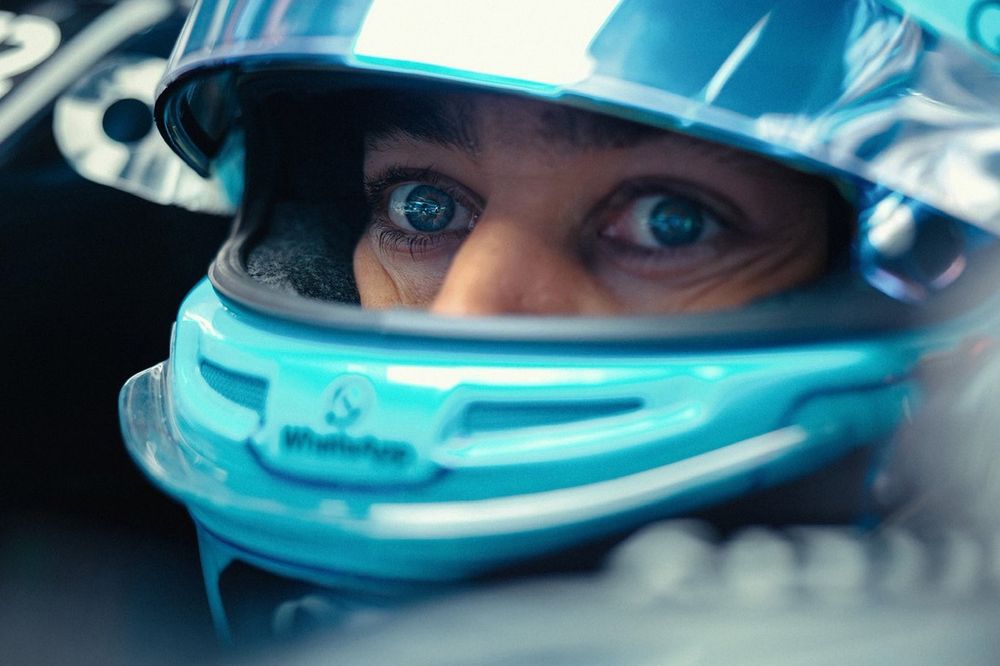
In 2026, reliability is a statement, not a verdict.
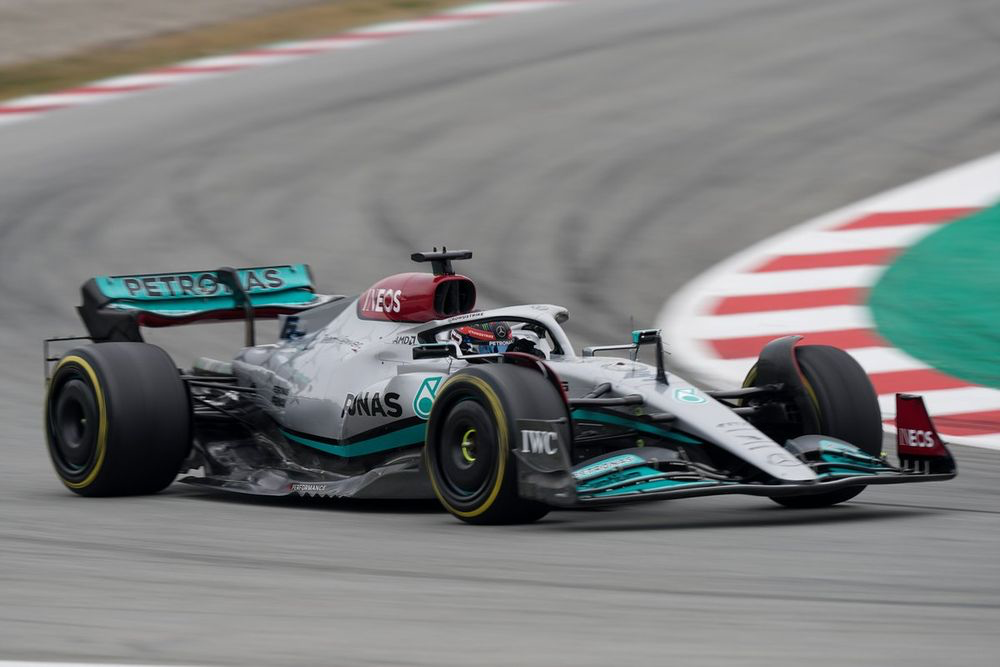
Barcelona, February 2026. Preseason testing rarely tells the truth, but it always tells a story, and this week’s story is that Mercedes-AMG Petronas Formula One Team left the circuit looking like the most prepared operation in the paddock. Not necessarily the fastest, not definitively the best, but the cleanest. In the first public rehearsal of a new technical era, the team’s major advantage was not a headline lap time, it was volume. They ran, they circulated, they collected data without drama, and in Formula 1 a drama free test week is often the strongest early signal that a car’s foundation is coherent.
That is why the narrative emerging from the test is straightforward: Mercedes strengthens its candidacy by doing what contenders do in January, it eliminates uncertainty. The car appears stable, the programme appears disciplined, and the overall package gives the impression of a team that has entered the new cycle with fewer unknowns than most. After seasons where small weaknesses became expensive weekends, this matters. A car that lets engineers push through long runs, correlation checks, and setup sweeps without repeated interruptions is a car that accelerates development simply by existing in a predictable state.
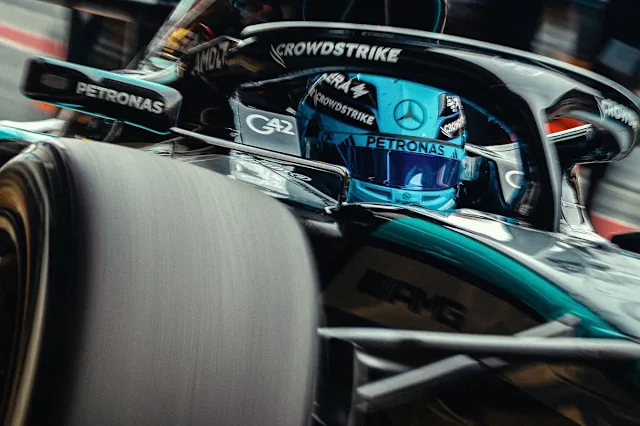
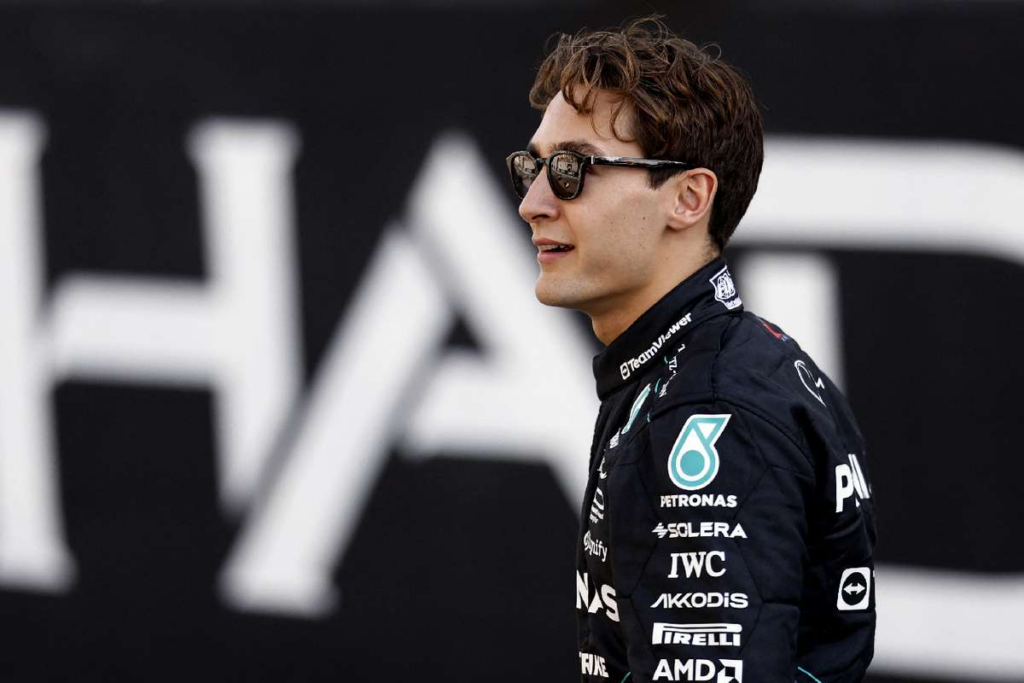
And yet the most important voice around the Mercedes camp is working to puncture the idea of favoritism before it hardens. George Russell has gone out of his way to frame the early picture as incomplete. His message is not modesty for the cameras. It is competitive realism. Testing is a chessboard of fuel loads, engine modes, tyre programmes, and deliberate sandbagging. It is entirely possible to look dominant while hiding nothing, and it is equally possible to look ordinary while hiding everything. Russell’s line is that several teams sit in the same performance neighborhood, and that the grid could be tighter than the rumor mill wants it to be.
His caution also reflects the new politics of expectation. If Mercedes is labeled the clear favorite too early, every later imperfection becomes a crisis story. If Mercedes is treated as “one of four,” every gain becomes momentum. Russell is managing that narrative while also pointing at the obvious competitors: Scuderia Ferrari, McLaren F1 Team, and Red Bull Racing. The implication is that the next era will not be won by a single brilliant concept alone. It will be won by execution, and execution is a season long war of upgrades, correlation, pit wall decisions, and avoiding self inflicted wounds.
The most interesting part of Russell’s view is not his refusal to crown Mercedes. It is the team he insists cannot be dismissed, even while that team’s testing week looked compromised. Aston Martin F1 Team enters 2026 as a symbol of transformation: a new technical identity, a new engine partnership with Honda, and the gravitational pull of Adrian Newey’s design philosophy. On paper, it is the kind of project that can change a team’s ceiling. In the paddock, it is the kind of project that forces every rival to watch more closely than they admit.
But the same week that makes Mercedes look tidy also raises questions about Aston’s readiness. Limited running, interruptions, and a reduced mileage footprint naturally generate doubt, because modern Formula 1 is a sport where time on track is not a luxury, it is the raw material of improvement. When a team loses laps in preseason, it loses correlation opportunities. It loses setup learning. It loses the chance to identify weak components before the first Grand Prix turns those components into public failures. Even if the underlying concept is strong, a slow start can delay the moment when potential becomes performance.
This is where the story becomes strategic rather than tabloid. Aston’s situation invites two competing interpretations at once. One is pessimistic: early reliability issues hint at deeper integration problems, especially when a team is blending a new chassis philosophy with a new power unit relationship. The other is more patient: a radical design can look messy first and still end up being the reference once the initial bugs are removed. F1 has always had seasons where the “ugly week in winter” belongs to the team that ends up terrifying everyone by midyear.
Russell’s own comments reinforce that ambiguity. He has described Aston’s car as visually distinctive, pointing to rear suspension details that have drawn attention. That observation matters because it suggests Aston is not playing safe. It is trying to build a competitive edge into the architecture, not merely into aero add ons. But Russell also adds the line that separates engineering theatre from engineering truth: the sport is not judged on how clever a solution looks in the garage, it is judged on how quickly it goes around the track. The car’s design can be spectacular and still be wrong. The only final audit arrives in Melbourne, when the timing screens stop lying.
Behind all of this is the larger transformation of 2026 itself. New regulations tend to compress the field initially, then spread it as teams interpret the rules and diverge. Early on, reliability and operational competence often generate points that later become championships. That is why Mercedes’ clean test week is meaningful. It suggests a baseline that allows the team to attack performance rather than firefight. It also suggests an organization that may be more comfortable with the new technical reality than its rivals, at least at the start.
Still, it would be a mistake to treat testing as a court verdict. The next real reference point is Bahrain International Circuit, where teams typically refine their packages and run more representative programmes. Then comes the season opener, where the psychological games end and the competitive hierarchy begins to show itself. If Mercedes arrives there with the same calm competence it showed in Barcelona, it will not matter whether Russell wanted the “favorite” label or not. The paddock will apply it anyway.
For now, the most accurate reading is this: Mercedes has reduced uncertainty, and that alone makes it a credible early benchmark. Aston has created intrigue, but intrigue without mileage becomes risk. Between them sits the uncomfortable truth of modern Formula 1, that championships are rarely won by a single genius idea. They are won by teams that can turn every clean lap into better information, and turn better information into relentless pace.