

 Phoenix 24

Symbols move when institutions feel exposed.
Buenos Aires, February 2026.
A legal dispute over the Sable Corvo of José de San Martín has turned a heritage object into a stress test for state authority, cultural access, and symbolic control. The immediate trigger is a government decision to relocate the sword from the Museo Histórico Nacional to the Regimiento de Granaderos a Caballo, a move formalized through a presidential decree signed by Javier Milei. A federal judge, Macarena Marra Giménez, rejected an initial request by descendants connected to the original donation chain to halt the transfer immediately, while the case continues in court. What looks like a custodial decision is actually a dispute over who gets to curate national memory and under what rules.
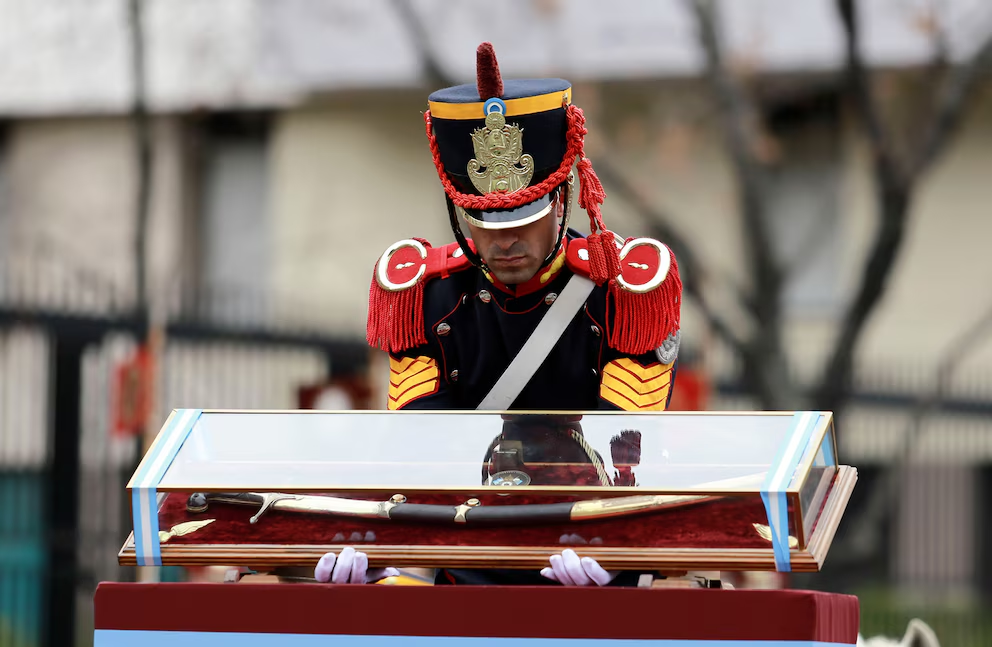
Into that conflict stepped Araceli Bellota, a former director of the museum, who filed as amicus curiae to argue that the sword should remain on public display where it has been exhibited since its return in 2015. Her position is built on a concrete claim: the museum already has a purpose built security regime that includes armored display, sensors, monitoring, and permanent military presence, so there is no technical or safety necessity to relocate the piece. She frames the transfer as a rights regression, moving from maximum public access under high protection to restricted access under administrative opacity. The underlying message is blunt: if the state can downgrade cultural access by decree, then cultural rights exist only until power changes hands.
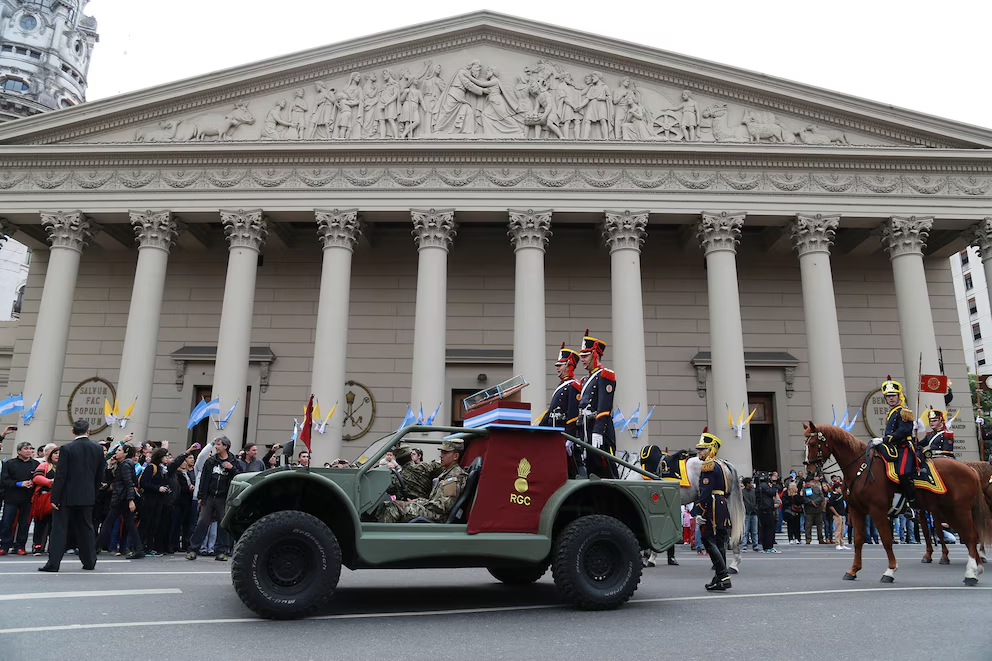
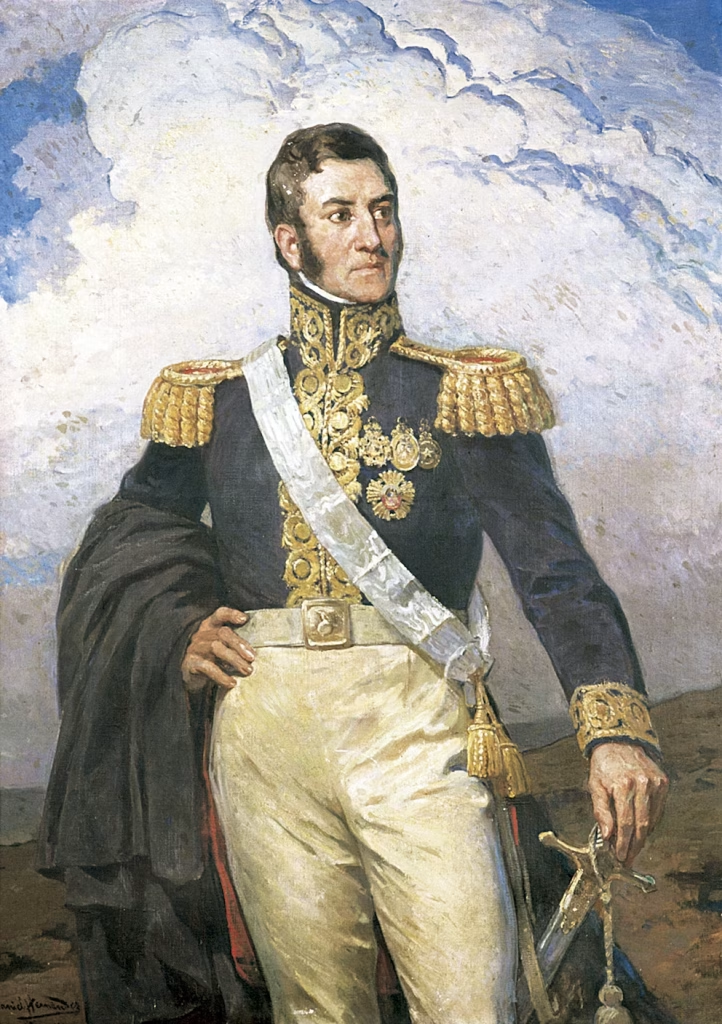
The politics of this object have always been encoded in its ownership story, which is why the courtroom arguments quickly migrate from glass thickness to legitimacy. In his 1844 will, San Martín left the saber to Juan Manuel de Rosasas recognition for defending the country’s honor against foreign pressure, a sentence that still detonates ideological readings today. After passing through private hands, the sword was donated to the Argentine state with an expectation that it would remain accessible to the public, not absorbed into a closed military space. That chain of custody is not a footnote, it is the core of the modern dispute, because it defines whether “heritage” means possession or access. When an object is treated as the nation’s, the public inevitably asks whether it can actually be seen.
The legal architecture Bellota invokes is meant to prevent exactly this kind of discretionary relocation, and her filing tries to force the argument back into procedure. She cites Comisión Nacional de Monumentos, de Lugares y de Bienes Históricos and Argentina’s heritage framework under Law 12.665, arguing that technical review and binding intervention should not be bypassed when dealing with emblematic historical assets. She also points to constitutional principles and jurisprudence from the Corte Suprema de Justicia de la Nación that recognize cultural rights as collective rights requiring progressive guarantees, not reversible privileges. At the international layer, she references norms aligned with UNESCO heritage principles, where protection is not only about safekeeping but about social value and public benefit. The fight, in her telling, is not against the military, but against an administrative shortcut that reframes a public artifact as a controlled emblem.
The government’s counter narrative rests on a different concept of legitimacy: that the regiment founded by San Martínis the natural guardian of the sword, and that military custody is synonymous with preservation. This is an intuitive argument for many citizens because it connects the object to an institution that embodies discipline, continuity, and state permanence. Yet the modern museum system is built precisely to separate preservation from enclosure, and to demonstrate that security and access can coexist without sacrificing either. That is why the 2015 return to the museum, executed during the presidency of Cristina Fernández de Kirchner, was treated as a public policy statement as much as a cultural decision. The current reversal therefore reads as more than logistics, because it alters what kind of state Argentina wants to perform in public.
The timing also matters because heritage disputes are rarely only about the past, they are about present coalitions and future narratives. In a polarized climate, moving a foundational object can function as a signal of alignment, a way to claim a national symbol without needing parliamentary negotiation or cultural consensus. That is why resignations, filings, and counter statements accumulate fast, and why the object becomes a stage where actors compete to be seen as the legitimate voice of “the people” and “the nation.” Bellota’s filing adds a technocratic constraint to that theater: she insists the argument must survive procedural scrutiny, not just emotional resonance. When a symbol becomes a lever, procedure becomes the only brake.
This controversy also sits inside a global pattern where states and institutions are reasserting control over the meaning of artifacts, sometimes through repatriation, sometimes through restricted display, sometimes through curated spectacle. Museums in North America, including the Smithsonian Institution, have increasingly framed public access as a core legitimacy standard, arguing that custody without visibility weakens the social contract that funds preservation. European debates over archives, monuments, and contested collections show the same logic: the public wants not only that objects survive, but that they remain interpretable and reachable. Argentina’s case is distinctive because the dispute is internal rather than colonial, yet it is structurally similar because it asks who mediates meaning and who controls the conditions of encounter. The legal framing is therefore not abstract, it is an attempt to keep heritage from becoming a discretionary tool.
What happens next will likely hinge less on ideology than on whether the state can demonstrate a transparent, auditable custody plan that preserves both integrity and access. Courts typically become skeptical when urgency is asserted without evidence, and this case has already forced competing parties to define what “security” means in operational terms, not as rhetoric. If the sword ends up behind gates, the government will need to defend not only protection but the democratic cost of reduced visibility, because restriction is itself a political act. If it remains in the museum, the state will still need to show that procedures were followed and that the military’s custodial role is respected without converting public heritage into closed property. In either outcome, the object will have done its real work: revealing how power behaves when it touches memory.
Every silence speaks. / Cada silencio habla.