

 Phoenix 24
A website cannot fix a broken market.
Washington, February 2026.
The Donald Trump administration has launched a new federal website branded as TrumpRx, presenting it as a public tool that helps Americans find lower prices on prescription medicines. The White House describes the project as a direct challenge to what it calls excessive pricing power in the pharmaceutical supply chain, and it frames the rollout as an immediate cost relief measure rather than a long term reform. The platform is positioned as a navigation and access layer that connects patients with discounted offers from participating manufacturers, rather than acting as a traditional pharmacy that dispenses drugs. The launch leans heavily on high demand categories, especially weight loss and metabolic treatments, alongside other widely used therapies that drive out of pocket spending. The political message is simple: the United States should not pay more than peer countries for the same products, and the website is pitched as one mechanism to make that principle tangible. The policy question, however, is whether a purchasing interface can meaningfully alter price formation when the largest drivers sit upstream in patents, rebates, and coverage rules.
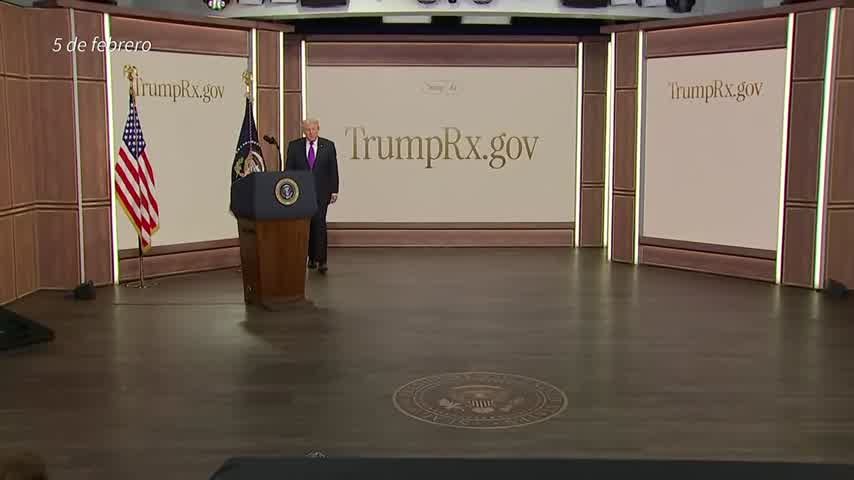
In practice, TrumpRx is being marketed as a shortcut around complexity, but its real value will depend on which patients it can actually help and on how deep the discounts remain over time. The administration’s communications indicate that the initial catalogue includes more than 40 medicines and that the early deals involve a small set of large manufacturers, suggesting a curated launch designed to prove concept before scaling. Coverage in Financial Times has emphasized that the discounts are linked to negotiated agreements that may involve regulatory incentives, and it has also noted that drugmakers have warned about revenue impact and commercial tradeoffs. That framing matters because it implies a bargain rather than a pure market correction, with companies accepting lower prices on selected products in exchange for a more favorable policy environment elsewhere. If this structure holds, the platform becomes less a universal price reset and more a targeted corridor for specific drugs under specific terms. That can still be meaningful for households paying cash, but it is not the same as solving affordability at the system level. The design choice signals a strategic bet: win public credibility through visible savings, then use that credibility as leverage in broader negotiations.
The initiative also sits inside a long running transatlantic tension over drug pricing, where Americans often pay more while many European systems rely on centralized negotiation and reference pricing. Reporting by Le Monde has described the platform as an access tool rather than a direct seller, reinforcing the idea that it reorganizes entry points without fully rewriting the pricing architecture. The administration’s rhetoric leans toward a “most favored nation” style logic, an argument that U.S. consumers should receive prices comparable to those in other developed markets. Yet the mechanics are hard, because global pricing is partly sustained by the purchasing power of national health systems and the willingness to ration or delay coverage for cost control. The OECD has repeatedly documented that U.S. pharmaceutical spending is structurally high compared with peers, driven by a mix of brand utilization, unit prices, and fragmented purchasing. A website can reduce search costs and widen access to manufacturer discounts, but it cannot on its own create the bargaining power that other systems use to set prices. That is why the platform’s political promise is larger than its technical function, and why scrutiny will focus on real patient outcomes rather than messaging.
For patients, the immediate question is not ideological, it is operational: who qualifies, what proof is required, and whether the posted prices hold at the point of purchase. A platform that primarily helps uninsured or underinsured patients can still deliver meaningful relief, but it may leave most insured Americans inside the existing ecosystem of formularies, copays, deductibles, and prior authorization. That limitation is not a defect, it is a consequence of how U.S. coverage is built, and it sets expectations for the platform’s ceiling. The World Health Organization has long framed access to essential medicines as a health systems problem, not only an information problem, because affordability depends on procurement, regulation, and financing, not just consumer choice. If TrumpRx increases uptake of highly demanded therapies, it could also create second order effects, including higher utilization that stresses budgets and forces insurers to respond through tighter controls. That dynamic is especially relevant for new generation metabolic drugs, where demand is high and public debate is already polarized around cost, access, and clinical oversight. In other words, the platform can change behavior quickly, but the system will adapt around it.
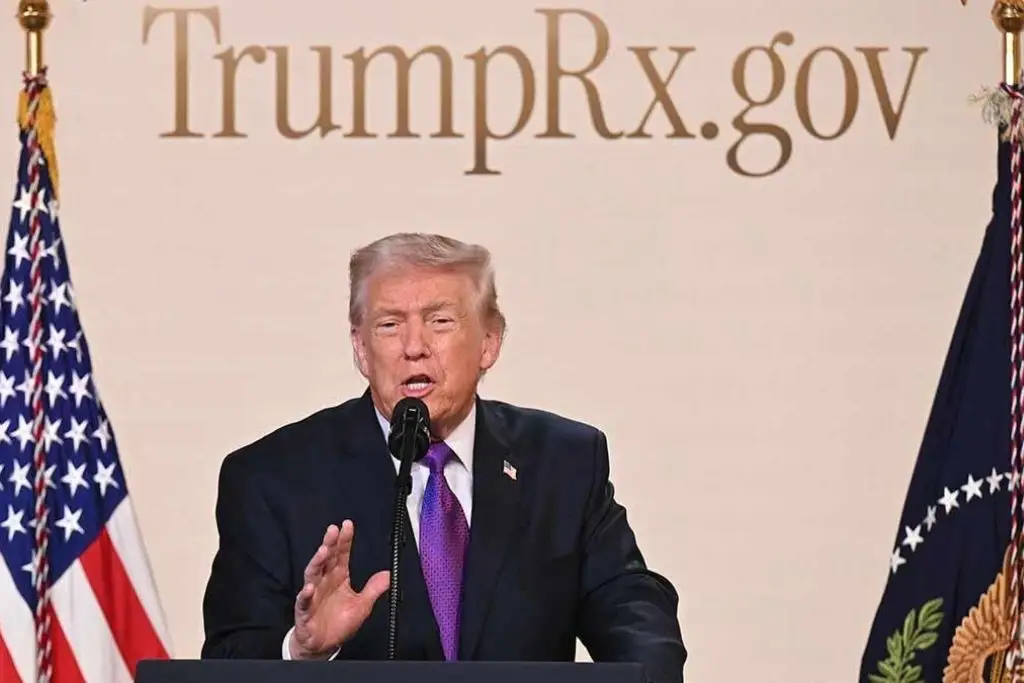
The strategic significance of the TrumpRx launch is therefore less about a single website and more about the governance model it implies for drug pricing battles ahead. If the administration can expand the catalogue, maintain deep discounts, and demonstrate measurable savings for a broad slice of consumers, the platform becomes a pressure instrument against both manufacturers and intermediaries. If the discounts are narrow, time limited, or difficult to redeem, it becomes a symbolic tool that generates headlines without shifting household economics. The larger risk is credibility, because drug pricing is a high trust policy arena where small operational failures can be amplified into claims of bad faith. The larger opportunity is narrative leverage, because visible savings can reframe public expectations and make future price negotiations politically easier. What this episode reveals is a familiar pattern in American governance: when systemic reform is hard, administrations often deploy targeted instruments that deliver immediate wins and then attempt to scale that momentum. Whether TrumpRx becomes a durable channel or a short cycle tactic will be determined by execution, not branding.
Detrás de cada dato, la intención. / Behind every data point, the intention.