

 Phoenix 24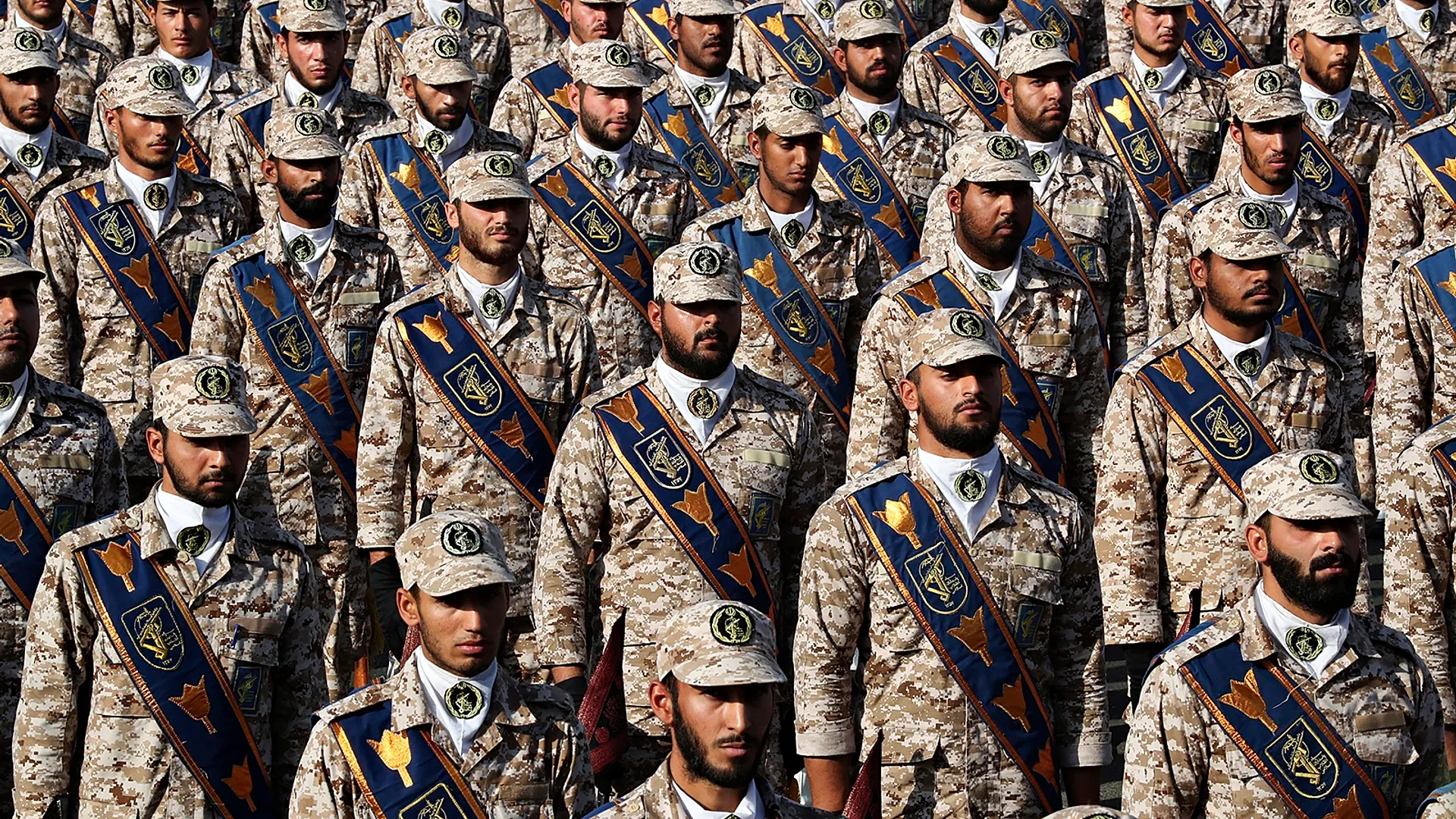
A legal decision may take days; a strategic signal travels in minutes.
Brussels, January 29, 2026. The European Union agreed unanimously to designate Iran’s Islamic Revolutionary Guard Corps as a terrorist organization, a move with high political voltage that seeks to translate internal repression into tangible operational costs while redrawing Europe’s deterrence perimeter toward an actor increasingly framed in Brussels as a dual instrument of domestic coercion and regional projection. The decision was sealed at a meeting of EU foreign ministers and, while the political consensus is already closed, the formal legal adoption of the listing is expected to follow in the coming days.
The immediate effects concentrate on finance and mobility. Asset freezes, bans on providing funds and travel restrictions linked to individuals and structures associated with the Revolutionary Guard are now embedded in a far more rigid legal architecture. Although some sanctions were already in place under existing EU regimes, this step collapses previous distinctions between targeted measures and full organizational proscription. The Guard is no longer treated as a semi-opaque branch of a sovereign state apparatus but is instead folded into the same category the EU reserves for entities it defines as terrorist by nature.
Behind the decision lies the cumulative weight of Iran’s internal crackdown. European officials and human rights monitors have attributed thousands of deaths to security forces linked directly or indirectly to the Revolutionary Guard during the suppression of protests that intensified over recent months. For Brussels, the designation functions as both a punitive response and a signaling mechanism, aimed at demonstrating that internal repression can trigger consequences beyond diplomatic condemnations and symbolic sanctions.
The move also marks a qualitative shift in European foreign policy. For years, several member states resisted full designation, citing legal constraints and concerns over escalation with Tehran. That resistance eroded as evidence of repression mounted and as the Guard’s regional footprint, from proxy networks to strategic intimidation, became increasingly central to EU security assessments. Achieving unanimity among all member states underscores how far the internal balance has tilted toward confrontation rather than cautious engagement.
From Tehran’s perspective, the designation is framed as a hostile and illegitimate act. Iranian officials have rejected the decision outright and warned of repercussions for relations with Europe. Yet the EU’s calculation appears less focused on immediate reciprocity and more on long-term signaling: redefining the Guard not as a conventional military actor but as a structurally violent organization incompatible with Europe’s legal and political order.
Strategically, the listing places the EU closer to the position long held by the United States and reinforces transatlantic alignment on Iran, even as Europe continues to navigate its own constraints around diplomacy, energy security and regional stability. The decision narrows the space for ambiguity. Engagement with Tehran now proceeds under the shadow of a formal terrorist designation, reshaping everything from diplomatic contacts to financial compliance and intelligence cooperation.
What matters most is not only what the designation restricts today, but what it communicates tomorrow. Europe is signaling that the boundary between state power and terrorist violence is no longer shielded by sovereignty when repression becomes systematic and lethal. The threshold has been crossed, and with it, a new phase in the EU–Iran relationship begins.
Behind every datum, there is an intention. Behind every silence, there is a structure.
Detrás de cada dato, hay una intención. Detrás de cada silencio, una estructura.