

 Phoenix 24
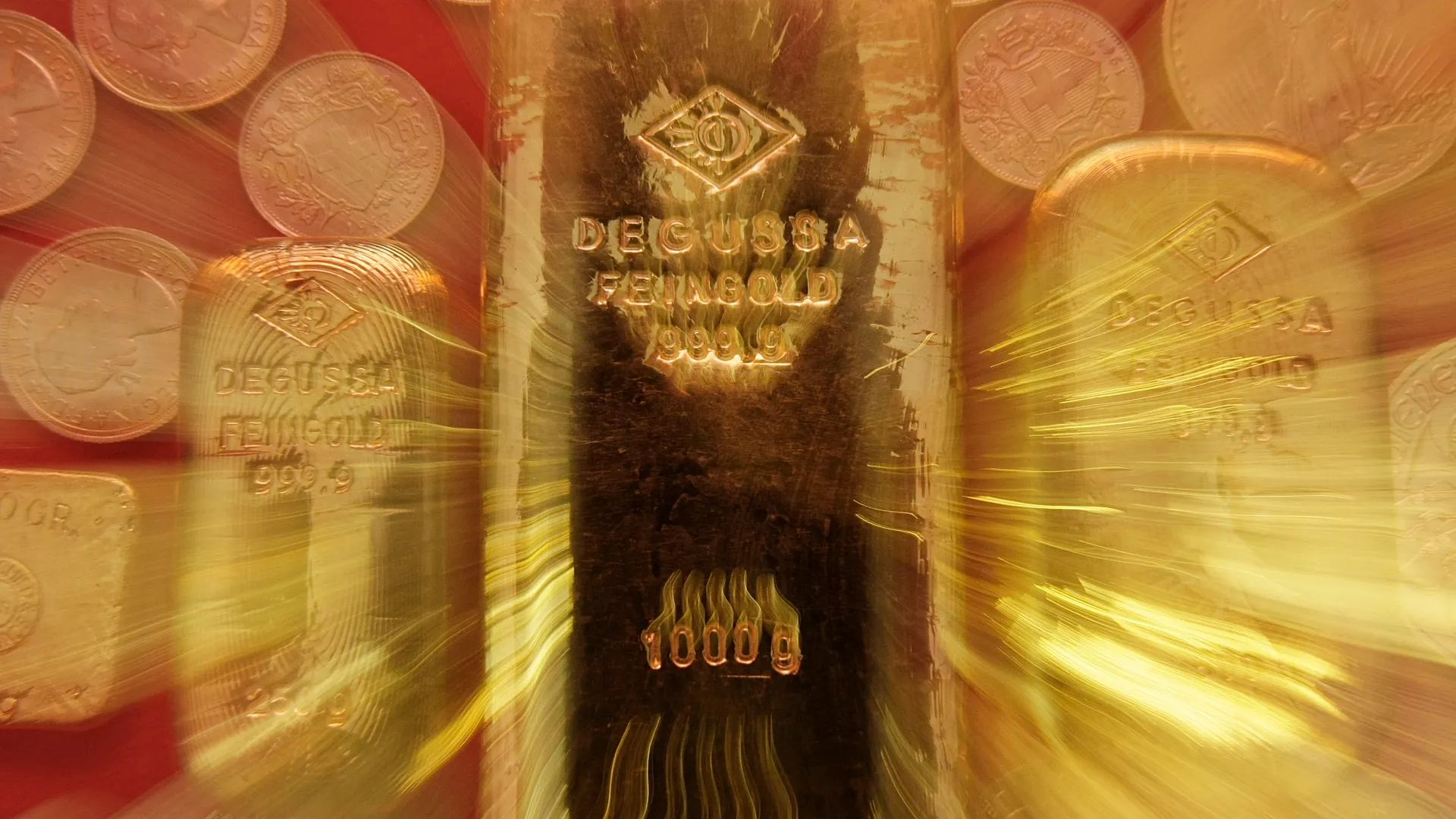
Uncertainty migrates from politics to prices.
Davos, January 2026.
Global financial markets entered a phase of heightened tension as gold prices surged to historic levels while stock markets across major economies retreated, reflecting a widespread recalibration of risk perception linked to geopolitical signaling surrounding high level diplomacy at the World Economic Forum. The movement was not driven by a single data release or economic shock, but by the accumulation of political signals that investors interpreted as indicators of prolonged instability and strategic friction among key economic powers.
The rise in gold represents more than a technical adjustment. It signals a collective shift in investor psychology toward preservation rather than expansion. In moments when policy direction appears uncertain and diplomatic postures suggest extended negotiation rather than resolution, capital tends to favor assets that are perceived as detached from immediate political influence. Gold, long treated as a benchmark of caution, once again absorbed that demand, pushing prices beyond previous ceilings.
Equity markets reacted in parallel. European indices opened lower as concerns over trade relations and political leverage weighed on sentiment. Asian markets followed with mixed but generally subdued performance, reflecting sensitivity to global capital flows and export exposure. In the United States, futures trading indicated restrained confidence ahead of scheduled political appearances, underscoring how expectations rather than outcomes were shaping market behavior.
This synchronized retreat illustrates how financial systems increasingly respond to narrative signals rather than concrete policy decisions. Investors are not reacting to enacted tariffs or signed agreements, but to the perception that negotiations may remain volatile and transactional. In such environments, uncertainty itself becomes a driver of market movement, encouraging defensive positioning across asset classes.
Currency dynamics reinforced this pattern. Fluctuations among major reserve currencies contributed to a relative weakening of confidence in fiat valuation stability, further enhancing the appeal of gold. When exchange rates are perceived as vulnerable to political rhetoric or diplomatic escalation, commodities that operate outside sovereign control gain comparative advantage. This interaction between currencies and commodities amplifies the impact of geopolitical uncertainty on market structure.
Beyond advanced economies, the effects extended into emerging markets. These regions often experience amplified consequences from shifts in global risk appetite due to reliance on external financing and trade flows. As capital migrated toward perceived stability, emerging market assets faced renewed pressure, highlighting the asymmetric impact of geopolitical stress across the global financial system.
The broader context of this market movement is critical. Global economic indicators such as inflation trends and employment data have not deteriorated sharply. Central bank policies remain largely predictable. Yet markets are behaving as if structural risk has increased. This divergence suggests that political coherence and diplomatic predictability have become as influential as traditional economic fundamentals in shaping investor behavior.
High profile international forums play a unique role in this process. Statements delivered in such settings are scrutinized not only for content, but for tone, sequencing, and implied intent. Investors interpret these cues as indicators of future policy posture, often adjusting positions in anticipation rather than reaction. In the current environment, anticipation has skewed toward caution.
The psychological dimension of markets cannot be overstated. Financial systems are not purely mechanical. They reflect collective judgment under conditions of incomplete information. When political actors signal assertiveness without clear frameworks for resolution, markets internalize that ambiguity. The result is a preference for liquidity, safety, and assets with long standing reputations for value retention.
Gold’s ascent therefore functions as a barometer rather than an anomaly. It measures the distance between confidence and clarity. At the same time, the retreat in equities signals that growth narratives are being temporarily discounted in favor of risk management. This does not imply an imminent crisis, but it does suggest a period of defensive positioning until political signals stabilize.
For policymakers, the episode underscores the financial consequences of diplomatic signaling. Markets are increasingly sensitive to how power is exercised and communicated. Ambiguity may serve negotiation strategy, but it carries measurable economic effects. Investor confidence depends not only on outcomes, but on the perceived coherence of the process leading toward them.
As trading continues, attention will remain fixed on whether diplomatic engagements produce clearer frameworks or perpetuate uncertainty. Should political narratives shift toward de escalation and structured negotiation, markets may recalibrate once more. Until then, gold’s record levels and equity pullbacks stand as evidence that global finance is responding to politics with heightened caution.
In this environment, stability is no longer assumed. It is priced.
La verdad es estructura, no ruido. / Truth is structure, not noise.