

 Phoenix 24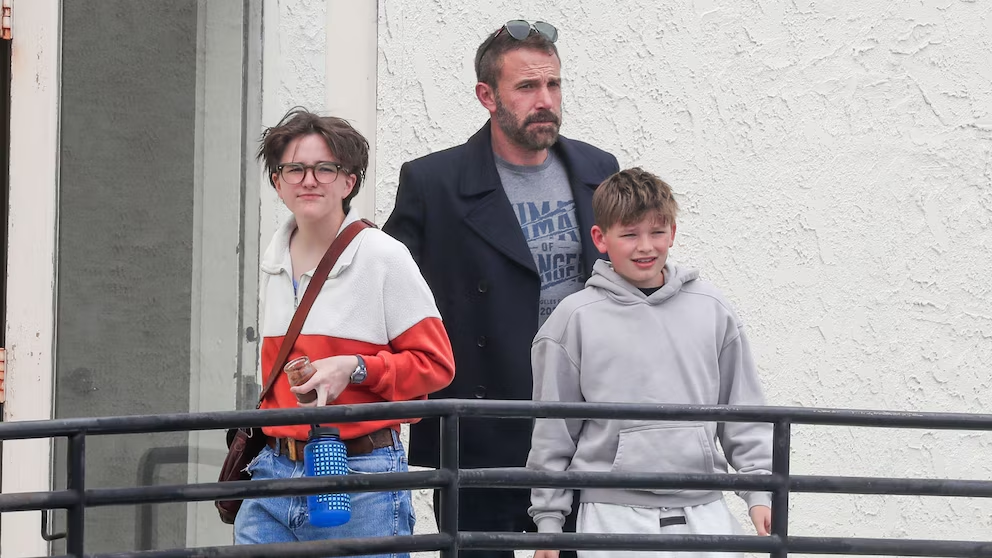
It was not a rebuke of art, it was a reflection on purpose and choice.
Los Angeles and Global Film Culture, January 2026.
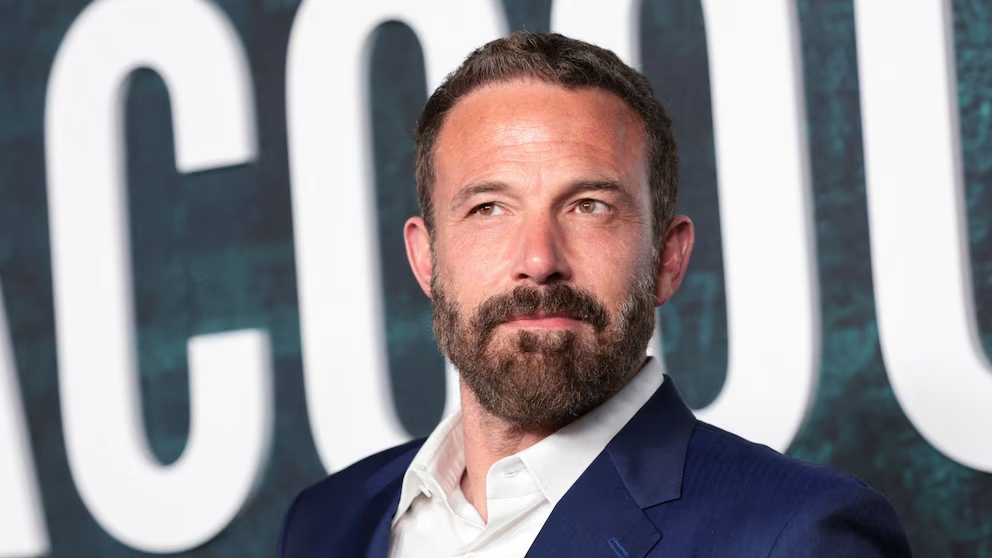
As one of Hollywood’s most recognizable figures, Ben Affleck has spent decades navigating the pressures, accolades and contradictions of a life devoted to performance and storytelling. In recent public comments, he expressed a heartfelt hope that his children will not feel compelled to pursue acting simply because of his career, emphasizing that the profession he knows so intimately should not be romanticized at the expense of personal fulfillment. Affleck’s remarks resonate not only because of his standing in the entertainment industry, but because they touch on a universal tension between heritage and agency, between admiration for a craft and the freedom to choose one’s own path.
Affleck’s reflections reveal a layered understanding of the entertainment world’s demands. Acting, especially at the level he has operated, requires both vulnerability and resilience. The public sees the glamor—the premieres, the red carpets, the applause—but often overlooks the complex interplay of preparation, rejection, scrutiny and emotional labor that defines the profession behind the scenes. For children growing up in the orbit of celebrity, the line between aspiration and expectation can blur. Affleck’s candid discussion acknowledges that dynamic and seeks to frame it in a way that prioritizes his children’s autonomy over inherited career trajectories.
This perspective aligns with a broader conversation among artists and professionals who have walked similar paths. When parents achieve prominence in a given field, their offspring frequently face assumptions that they should follow the same direction. Some embrace the expectation; others resist it to forge distinct identities. Affleck’s explicit desire for his children to find their own callings reflects a recognition that authentic engagement with any profession—acting included—derives not from lineage but from personal conviction and passion. By voicing this sentiment, he positions his children’s futures as open canvases rather than continuations of his own narrative.
The context of Affleck’s remarks is significant. He has reached a stage in his career where he has worn multiple hats: actor, director, producer and writer. His journey through Hollywood’s ecosystem has exposed him to both triumphs and critical judgments, successes and setbacks. That complex experience informs his wish for his children to define success on their own terms rather than inheriting a blueprint shaped by public opinion or familial legacy. In this regard, his stance does not diminish the value of acting as a profession; rather, it highlights the importance of self-determined purpose in whichever field one chooses to pursue.
Affleck’s comments also intersect with enduring debates about parenting in high-profile families. Children of public figures often grow up under heightened visibility, where personal choices and developmental milestones can be subject to public commentary. The father’s role in such environments frequently involves balancing the benefits of exposure to rich cultural and artistic experiences with the need to create a private space where children can explore interests without undue pressure. Affleck’s statement underscores his awareness of this balance and his intention to prioritize emotional well-being and personal agency over external expectation.

The entertainment industry itself is shaped by narratives of discovery, mentorship and legacy. Countless stories celebrate the child of a star who steps into the spotlight, and similar tales recount departures from familial professions in favor of divergent careers. The fascination with legacy reflects a cultural appetite for continuity and mythmaking, but it can also obscure the individual journeys that unfold within those larger narratives. By addressing this reality publicly, Affleck disrupts simplistic assumptions about inheritance in the arts and places emphasis on mindful choice. He invites audiences to consider what it means to pursue a life that resonates with internal motivation rather than external applause.
For audiences and fans, his remarks offer a rare moment of introspection from a figure often perceived through the lens of celebrity. They reveal a parent’s concern not just for professional achievement but for the emotional landscape of growing up in an environment suffused with expectation. Such reflections contribute to a broader dialogue about how society frames success, aspiration and familial influence. They suggest that the true measure of fulfillment lies not in following a well-worn path, but in charting one’s own course, even when it diverges from the familiar or celebrated.
Affleck’s hope for his children underscores a fundamental tension in contemporary life: the desire to honor heritage while also affirming individual choice. In articulating this hope, he affirms that the most meaningful legacy a parent can offer is not a vocation imposed but an invitation to explore, imagine and decide for oneself. Acting may remain a treasured art form, but its value, in his view, is not diminished if his children choose other avenues through which to express themselves.
In a world where public figures often project polished personas, Affleck’s candid concern for his children’s freedom to choose their own paths offers a rare glimpse into the complexity of legacy, identity and responsibility. It reminds us that behind every career shaped by the spotlight are questions about what matters most when the applause quiets and the choices become deeply personal.
Detrás de cada dato, hay una intención.
Detrás de cada silencio, una estructura.