

 Phoenix 24
Money is rising, but so is unease.
London, January 2026. Men’s professional tennis enters the new season with record revenues, expanding tournaments and unprecedented commercial reach. Yet behind the headlines about prize money and sponsorships, a different story is taking shape inside the locker rooms. More money is circulating, but many players say the system that generates it is becoming heavier, more demanding and less fair.
The Association of Tennis Professionals has spent the last two years reshaping its business model. Larger tournaments, longer events and stronger commercial alliances have pushed the tour into a new financial league. Masters 1000 events now last almost two weeks, prize pools continue to grow and partnerships in new markets, especially in the Middle East, have injected fresh capital into the circuit.
From a business perspective, the results are striking. Dozens of players now earn more than one million dollars a year in prize money. Top stars have reached income levels comparable to athletes in major global leagues. Television audiences and digital platforms continue to grow, making tennis more attractive to sponsors looking for global visibility.
But this success is unevenly felt. Players outside the top ranks argue that while total prize money has increased, the distribution still favors a small elite. Travel, coaching, medical care and training costs continue to rise, and for many players ranked outside the top 100, breaking even remains difficult. For them, the tour feels richer on paper but not in daily reality.
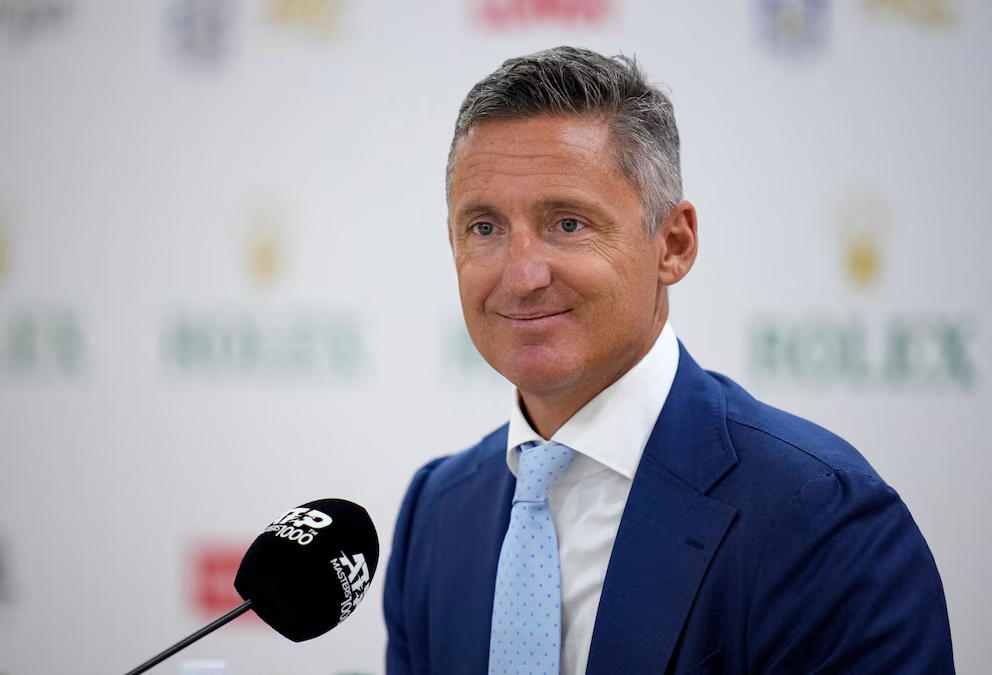
Several players have publicly questioned whether the new model truly serves the whole ecosystem. They point to longer tournaments that reduce rest time, mandatory appearances that limit personal scheduling and a calendar that leaves little space for recovery. Injuries, they argue, are becoming more common not only because of intensity, but because the system leaves fewer opportunities to rest.
ATP leadership defends its direction. Officials say that growing the business is the only way to create more resources for everyone. They argue that stronger commercial performance will eventually allow better pensions, injury protection, minimum income guarantees and development programs for younger players. In their view, short term discomfort is the price of long term stability.
Yet many players remain skeptical. They see a model that looks increasingly corporate, where marketing, television slots and sponsor demands shape the calendar more than athlete welfare. Some describe feeling like individual contractors inside a system that benefits most from their visibility but gives them limited voice in decision making.
This tension reflects a deeper structural problem in tennis. Unlike team sports, players are independent. They compete against each other, yet depend on the same system to survive. When business decisions favor spectacle and volume, players carry the physical cost. When profits rise, they do not always rise evenly.
The expansion of major tournaments is a key source of frustration. Two week events increase revenue and television value, but they also lengthen player commitments. For those who lose early, the trip may feel wasteful. For those who go deep, the physical toll can be severe, especially when events are stacked closely together.
Lower ranked players face a different pressure. To earn enough points and money, they must travel constantly, often flying between continents with little financial margin. Even with increased prize pools, early round losses rarely cover expenses. Some players say the system rewards visibility more than sustainability.
From Europe, sports governance analysts describe this as a classic growth dilemma. Expanding markets brings money, but also complexity and strain. If players feel used rather than supported, legitimacy weakens. In elite sport, trust between institutions and athletes is as important as contracts.
In North America, player advocacy groups have also taken interest in the debate. They see tennis as a case study of how individual sports struggle to balance freedom and protection. Without collective bargaining in the traditional sense, players rely on representation structures that many feel are weak.
In Asia and the Middle East, where much of the new investment is coming from, the focus is different. Governments and sponsors see tennis as a prestige platform, a way to project modernity and global relevance. For them, longer events and bigger stages are symbols of success. Player fatigue is rarely part of the political conversation.
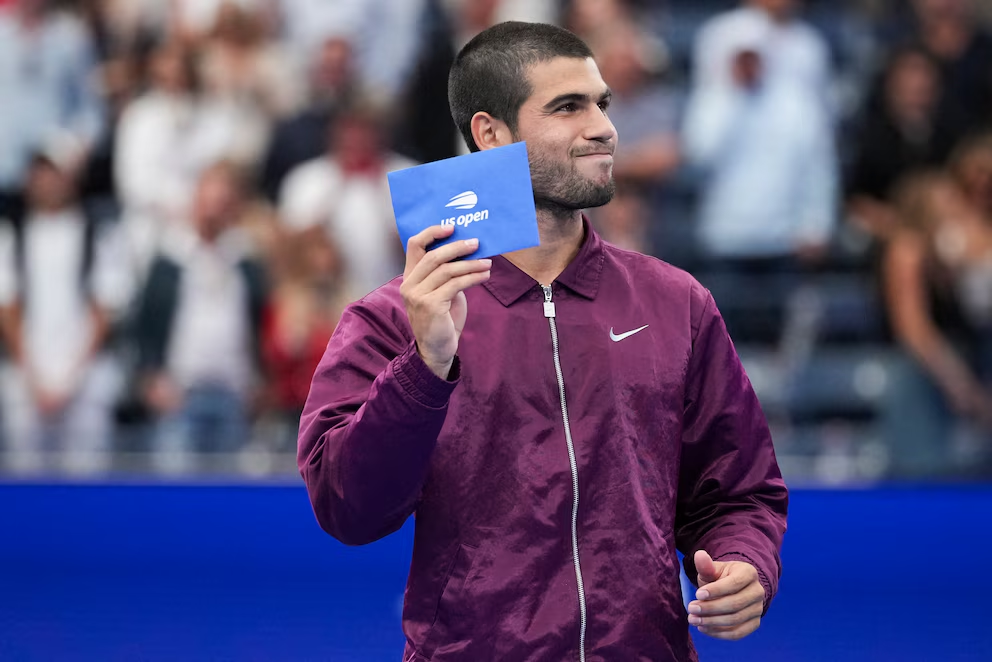
Fans are divided. Some celebrate the growth, enjoying more matches, more stars and more global reach. Others worry that overexposure will reduce quality, turning tennis into a marathon of tired bodies rather than a showcase of excellence.
The ATP insists that reforms are ongoing. Officials promise better health protocols, more data driven scheduling and expanded financial support for developing players. But trust is fragile. Players who feel unheard tend to organize, speak publicly and search for alternative structures.
What is at stake is not only money, but identity. Tennis has long sold itself as a sport of individual mastery, elegance and endurance. If players begin to see themselves as replaceable content in a commercial machine, that image cracks.
For now, the tour moves forward with packed calendars and rising profits. But the tension is real. It lives in tired legs, long flights, short rest periods and conversations in locker rooms where players compare income, injuries and expectations.
The future of men’s tennis will depend on whether growth can be matched with care. If not, the sport may become richer and more fragile at the same time.
Beyond the news, the pattern.
Más allá de la noticia, el patrón.