

 Phoenix 24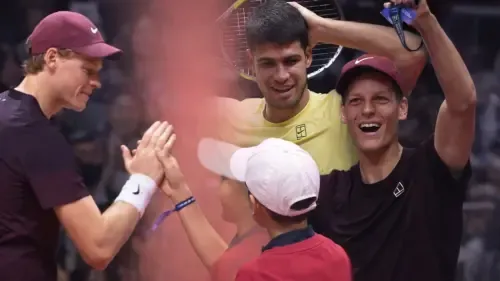
One gesture rewrote the meaning of competition.
Adelaide, January 2026. What began as another high level clash between two of the world’s best players became something else entirely when Jannik Sinner paused a fierce match against Carlos Alcaraz and invited a young boy from the stands to play a single point. In a sport built on tension, ranking points and prize money, the moment cut through routine and reminded everyone watching that tennis is also about belonging.
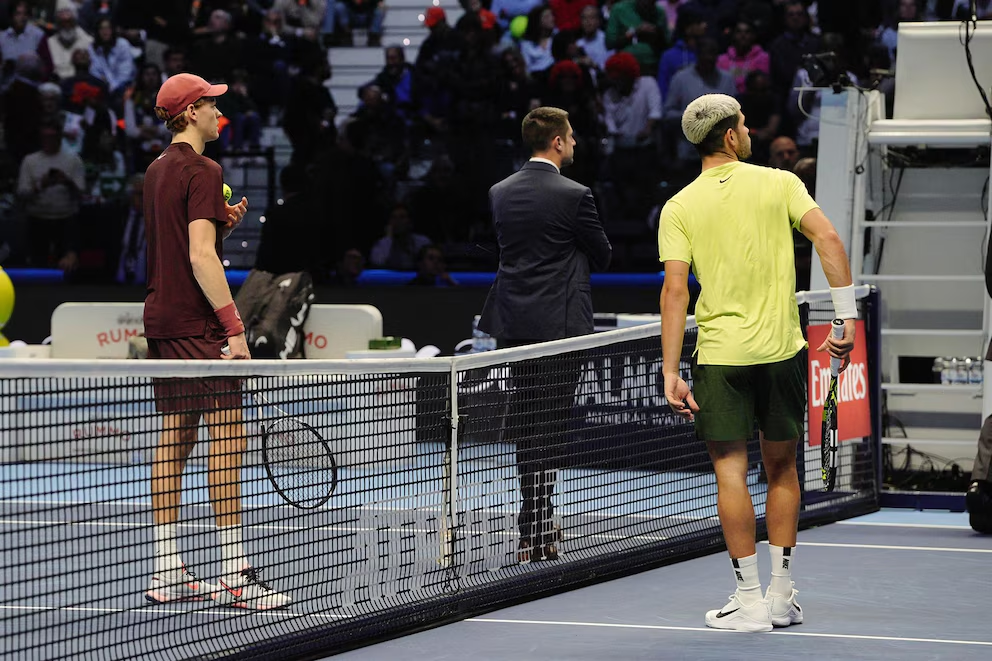
The match itself had started with the intensity expected from two generational talents. Sinner’s flat, penetrating groundstrokes tested Alcaraz’s speed and creativity. Alcaraz answered with explosive movement and imaginative shotmaking. Rallies were long, physical and precise. The crowd followed every exchange as if each point might decide the night.

Then, during a short pause between games, a small sign appeared in the stands. A boy, no older than nine, asked for the chance to play a point. In most matches, such requests are part of background noise. They are seen and forgotten. This time, Sinner looked up, smiled and raised his hand.
After a brief exchange with officials, he walked toward the sideline and invited the boy onto the court. The stadium shifted instantly. Cheers replaced tension. Phones went up. Even Alcaraz, moments earlier locked in competitive focus, stepped back and clapped.
The point itself was simple. The boy served carefully, managed a short rally, then missed. Sinner and Alcaraz applauded him. They spoke to him briefly, smiling, and walked him back to the sideline as the crowd stood. It lasted less than a minute. It will last in memory for decades.
In elite tennis, matches rarely stop unless there is injury, equipment failure or rule dispute. That is why this moment felt powerful. It was not required. It was chosen. It showed that even inside the strict structure of professional sport, human judgment still matters.
European tennis officials later described the gesture as unusual but welcome. According to officials within the ATP structure, players are encouraged to engage with fans before and after matches, but in match interaction remains rare because of competitive integrity. Sinner’s choice therefore stood out not as protocol, but as personality.
From the Americas, sports psychologists noted that moments like this can shape a child’s identity far beyond sport. Associations that study youth development through athletics have long argued that early experiences of recognition, not victory, are what sustain long term motivation. For the boy in Adelaide, the point was not about winning. It was about being seen.
In Asia, where tennis continues to grow rapidly through academies and school programs, broadcasters highlighted the clip as an example of why global stars matter beyond trophies. Coaches in countries investing heavily in youth sport said that images like this travel faster than any training manual. They show children not only how to hit a ball, but why they might want to.
For Sinner, the gesture fits a broader reputation. Those around him often describe him as calm, reserved and unusually grounded for someone who reached the top so young. In past interviews, he has spoken about how small gestures from older players mattered to him when he was a child training in Italy. He has said that he never forgot what it felt like to be invisible, and how powerful it was when someone noticed.
Alcaraz’s reaction also mattered. Rivalry did not stop him from applauding the boy or supporting the pause. In modern tennis, where competition is fierce and schedules brutal, moments of shared humanity between rivals help preserve respect inside the sport. Their interaction sent a message that greatness is not threatened by kindness.
When play resumed, the match returned to its sharp rhythm. Shots were heavy again. Bodies moved at full speed. But something had changed. The crowd watched not only with excitement, but with warmth. The earlier tension now shared space with gratitude.
Social media carried the clip around the world within hours. Many people who did not follow tennis shared it anyway. That is the power of moments that feel honest. They do not need explanation. They need only to be seen.
Some critics argued that competition should never stop for spectacle. They said rules exist for a reason and that exceptions weaken structure. Others responded that structure without humanity becomes empty. Tennis, like all sport, lives in that balance.
The governing bodies did not discipline anyone. Officials recognized that the moment did not compromise fairness. It added nothing to the score. It added something to the story.
In recent years, tennis has struggled at times with its image. Long matches, complex rankings, and constant travel can make it feel distant from ordinary life. Governing organizations in Europe and North America have tried to bring the sport closer to communities through clinics, school visits and exhibitions. But those are organized efforts. What Sinner did was not organized. That is why it felt real.
For the boy, the memory will likely become part of his identity. Whether he becomes a player, a fan, or simply someone who once stood on a famous court, that moment will live with him. Studies on childhood experience and sport suggest that such memories often influence not only participation, but confidence and imagination.
For fans in the stadium, the night gained a second story. Years from now, many will forget the score line. They will remember the child walking onto the court, the applause, the smiles of two champions.
For tennis, the moment became a reminder. Records, rankings and rivalries are what fill history books. But what fills people is something else. It is the feeling that sport can still surprise, not with speed or power, but with choice.
Sinner did not win the point. He gave it away. And in doing so, he created something that no trophy can replace.
Narrative is power too.
La narrativa también es poder.