

 Phoenix 24
Trade agreements rarely fail on tariffs alone. They fail where economics collides with political survival.
Brussels, January 2026.
Agriculture ministers from across the European Union entered a round of critical discussions this week as the bloc approaches a possible signing of the long negotiated trade agreement with Mercosur. After more than two decades of technical bargaining with Argentina, Brazil, Paraguay and Uruguay, the political moment has arrived. What remains unresolved is not the text of the agreement itself, but whether Europe’s internal balance between free trade ambitions and rural protection can hold.
At the center of the debate lies agriculture, a sector that carries disproportionate political weight across several member states. The proposed agreement would expand access for South American agricultural exports to the European market, particularly beef, poultry, sugar and ethanol. For supporters, this represents a strategic opportunity to strengthen ties with Latin America, diversify supply chains and reinforce the EU’s position as a global trade actor. For critics, it is a direct threat to domestic farmers already under pressure from rising costs, environmental regulations and volatile markets.
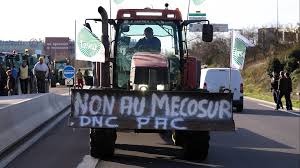
France has emerged as the most visible opponent. Its government argues that European farmers operate under stricter environmental, health and labor standards than their Mercosur counterparts, creating what it describes as structurally unfair competition. Paris has demanded stronger safeguard mechanisms and clearer enforcement tools before any final approval. Similar concerns have been voiced in Ireland, Poland and parts of Central Europe, where agricultural constituencies remain politically decisive.
The European Commission has attempted to bridge these divisions by emphasizing protective clauses embedded in the agreement. These include monitoring mechanisms, emergency brakes on imports and the possibility of suspending trade preferences if market disruption becomes evident. Supporters of the deal argue that these tools provide sufficient insurance, allowing Europe to reap geopolitical and economic benefits without abandoning its farmers. Yet for skeptics, safeguards on paper do not always translate into protection on the ground.
Germany, Spain and several Nordic countries have positioned themselves on the opposite side of the divide. They view the Mercosur agreement as a strategic necessity in a fragmenting global economy. With trade tensions rising elsewhere and supply chains increasingly politicized, deeper engagement with South America is seen as both an economic hedge and a geopolitical signal. From this perspective, delaying or abandoning the agreement would weaken Europe’s credibility as a reliable trade partner.
The institutional arithmetic adds further pressure. Approval requires a qualified majority within the Council, meaning that opposition from a limited number of populous or strategically positioned member states could stall the process indefinitely. This dynamic has transformed the agriculture ministers’ talks into a high stakes exercise in coalition building, where technical arguments are inseparable from electoral calculations.
Beyond Europe, Mercosur governments are watching closely. For South American exporters, the agreement represents access to one of the world’s largest consumer markets and a counterbalance to dependence on other major powers. Prolonged hesitation in Brussels risks reinforcing perceptions that the European Union struggles to convert negotiations into concrete outcomes, particularly when domestic politics intervene.
What makes this moment decisive is not only the agreement itself, but what it reveals about Europe’s internal coherence. The Mercosur debate exposes a structural tension between Europe’s global ambitions and its domestic social contract with rural communities. Resolving that tension will determine whether the EU can pursue expansive trade strategies without fracturing its political base.
As ministers continue their discussions, the outcome remains uncertain. A breakthrough could pave the way for one of the largest trade agreements in the EU’s history. Failure would signal that, in the current climate, agricultural politics retain veto power over Europe’s global trade agenda.
Más allá de la noticia, el patrón.
Beyond the news, the pattern.