

 Phoenix 24
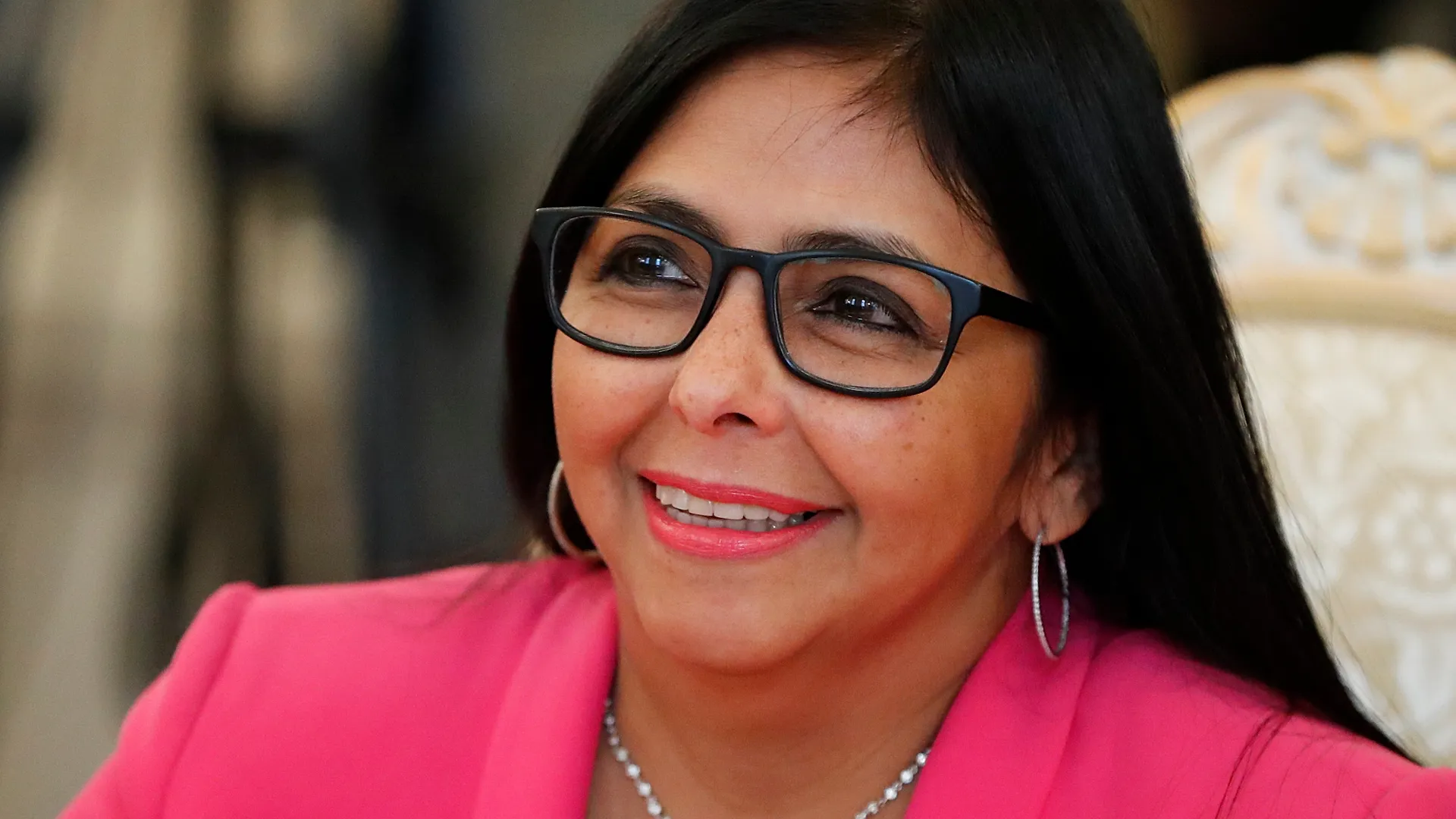
Her appointment marks a significant shift in leadership amid political uncertainty and ongoing national turmoil.
Caracas, Venezuela.
Delcy Rodríguez has been sworn in as interim president of Venezuela following a period of significant political upheaval, assuming the nation’s highest office amid ongoing uncertainty over governance and legitimacy. Rodríguez, who previously served as vice president and held other senior positions in Venezuelan politics, took the oath of office in a ceremony organized by the country’s Supreme Court, which moved to ensure continuity of state functions after the recent reported removal of Nicolás Maduro from power. Her elevation to the interim presidency reflects both constitutional precedent and a broader effort to stabilize governmental operations in the face of internal and external pressure.
The Supreme Court’s decision to install Rodríguez as interim president came amid a context of contested leadership claims, as political institutions worked to maintain continuity after extraordinary events disrupted normal political processes. According to official statements, the court’s action was aimed at avoiding a power vacuum and ensuring that the executive branch remained operational during a sensitive and volatile period. This step underscores the judiciary’s role in interpreting constitutional succession mechanisms when traditional electoral or political pathways are disrupted.
Rodríguez’s political career spans decades in Venezuelan public life, having held influential roles within government and the ruling political movement. As vice president, she was closely aligned with Maduro’s administration and its policy priorities, which have included state control over key economic sectors, resistance to external pressure and efforts to maintain internal cohesion amid economic hardship. Her accession to the interim presidency signals continuity for supporters of the existing political order, even as it raises questions about how governance will be perceived domestically and internationally.
Reactions to Rodríguez’s swearing-in have been mixed. Supporters within Venezuela’s political establishment and among segments of the population sympathetic to the government’s policies welcomed her appointment as a necessary measure to preserve stability and uphold constitutional norms under extraordinary circumstances. They framed her leadership as a unifying force capable of navigating the country through an exceptionally turbulent moment and defending national sovereignty in the face of external scrutiny.
Critics, both within Venezuela and abroad, have expressed concern over the legal and political legitimacy of Rodríguez’s interim presidency. Some observers argue that constitutional succession has been strained by recent events and that the manner in which authority was transferred raises questions about the independence of institutions and the broader rule of law. International actors and diplomatic missions have called for clarity and transparency, urging Venezuelan authorities to ensure that governance structures respect democratic principles and human rights protections.
The broader international community has responded cautiously to Rodríguez’s appointment, with diplomatic reactions varying based on geopolitical perspectives and regional priorities. Some governments have expressed conditional support for a peaceful transition and the restoration of political normalcy, while others have emphasized the need for inclusive dialogue among all sectors of Venezuelan society. Multilateral organizations have underscored the importance of safeguarding stability, addressing humanitarian needs and pursuing negotiated solutions to longstanding political tensions.
Economic and social challenges remain central to Venezuela’s current landscape. Years of economic contraction, declining oil production, inflationary pressures and infrastructure deficits have placed significant strain on everyday life for many Venezuelans. Rodríguez inherits these systemic issues at a moment when political uncertainty further complicates efforts to implement policy measures, attract investment and restore public confidence in state institutions.
The interim presidency also raises questions about the roadmap for future elections, constitutional reform and the potential for national reconciliation. Domestic political actors, civil society groups and international partners are closely watching developments, seeking signals about how the government plans to balance governance responsibilities with pressures for democratic legitimacy and accountability.
As Delcy Rodríguez begins her tenure as interim president, the trajectory of Venezuela’s political transition will depend on her ability to navigate competing expectations, institutional constraints and the broader socio-economic realities facing the country. Her leadership at this juncture highlights the complexity of governance amid crisis and the challenges of charting a path toward stability in a deeply divided political environment.
Detrás de cada dato, hay una intención. Detrás de cada silencio, una estructura.
Behind every data point, there is an intention. Behind every silence, a structure.