

 Phoenix 24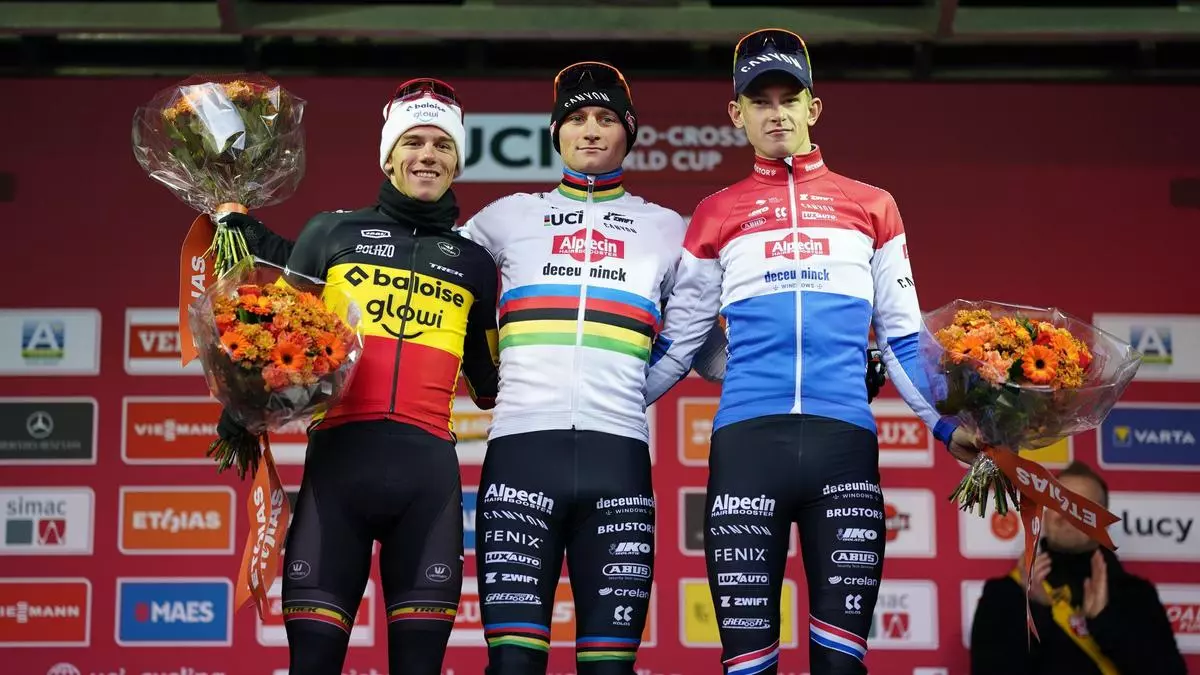
True control in elite cycling is not expressed through attack alone, but through the ability to decide when the race is already over.
Gavere, December 2025.
Mathieu van der Poel has reached a competitive state where dominance no longer needs to announce itself loudly. His latest performance in cyclo cross did not hinge on spectacle or chaos, but on control exercised with surgical timing. The victory was not built through constant aggression, but through restraint, patience, and the precise identification of the moment when resistance finally dissolved.
The race unfolded with intensity, yet without panic. Rivals tested the pace, altered lines, and attempted to provoke instability. Van der Poel absorbed those pressures without deviation. His riding reflected a deep internalization of terrain, rhythm, and opponent behavior. When the decisive move came, it was not improvised. It was executed as if the race had already been mapped internally several laps earlier.
What distinguishes this phase of his career is not physical superiority alone, but strategic maturity. Van der Poel no longer reacts to the race. He shapes it. The field adjusts to his cadence, not the reverse. This inversion of pressure marks the threshold between a successful rider and a structurally dominant one.
Cyclo cross rewards precision under fatigue. Margins are defined by errors more than by bursts of speed. Van der Poel’s performance minimized exposure to those margins. Line choice, bike handling, and energy distribution remained stable even as conditions deteriorated. That consistency erodes the psychological confidence of competitors long before the finish.
His sustained success also reflects a broader versatility that spans multiple cycling disciplines. The capacity to transition between formats without losing competitive sharpness indicates a rare adaptability. This is not the product of raw talent alone, but of accumulated race intelligence and disciplined preparation across seasons.
For his rivals, the challenge is no longer how to outride him, but how to disrupt a system that appears internally coherent and resistant to external pressure. Attacks fail not because they lack force, but because they arrive too late or too early. Van der Poel operates in the narrow window where timing outweighs effort.
In elite competition, repeated victories are not accidental. They are symptoms of structural alignment between body, mind, and strategy. At this stage, van der Poel is not merely winning races. He is defining the conditions under which others are allowed to compete.
Detrás de cada dato, hay una intención. Detrás de cada silencio, una estructura.
Behind every datum, there is an intention. Behind every silence, there is a structure.