

 Phoenix 24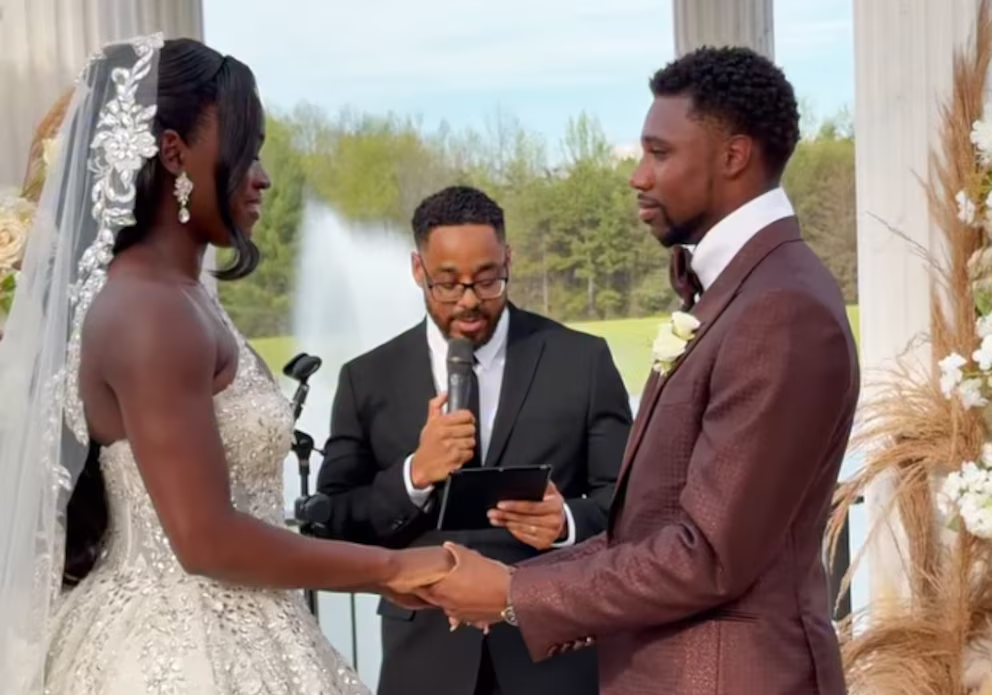
A private reaction became a public referendum.
Atlanta, April 2026. Noah Lyles and Junelle Bromfield have found themselves at the center of an unexpected social media storm after a wedding video turned a private exchange between newlyweds into a public debate about affection, masculinity, and performance in relationships. The clip showed Lyles reacting to Bromfield’s bridal look with visible surprise and a remark that many users read as underwhelming rather than admiring. Within hours, the moment was no longer being discussed as an intimate detail from a wedding day. It had become a digital tribunal in which strangers projected their own expectations of romance onto a couple they do not actually know.
What gave the controversy force was not simply what Lyles said, but what many viewers believed he failed to say. Online criticism focused on the perceived absence of an immediate overt compliment, with users arguing that his first reaction lacked emotional warmth or visible awe. In the logic of social media, however, silence often becomes more provocative than speech. The internet is especially quick to punish moments that do not conform to a familiar script, and the wedding reveal is one of the most scripted emotional rituals in contemporary visual culture. When a groom does not respond with instant verbal worship, the platform often treats the deviation itself as evidence of failure.
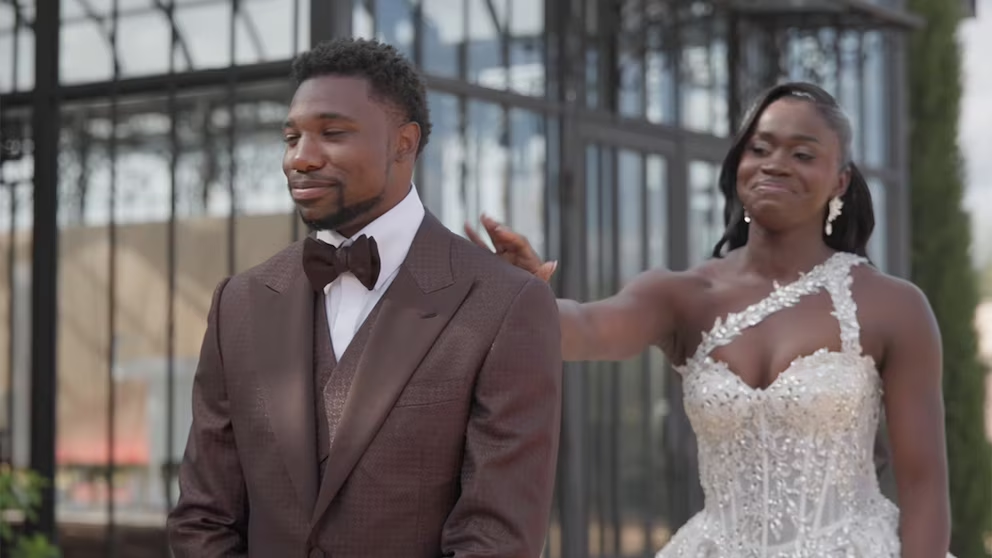
That dynamic reveals something larger than celebrity gossip. The backlash was really about how audiences now consume intimacy through highly curated expectations. Social platforms have trained viewers to recognize and reward a narrow set of emotional performances, especially in wedding content, where wonder, tears, and verbal affirmation are almost mandatory codes. Lyles’ reaction disrupted that code. Instead of delivering the exact emotional choreography expected by viewers, he appeared surprised, playful, and somewhat unscripted. In a healthier interpretive environment, that might have registered as personality. Online, it was recoded as deficiency.
Bromfield’s response to the criticism is what changed the story from a fleeting viral moment into a more revealing commentary on digital culture. She publicly defended her husband and explained that the one minute clip did not capture the emotional reality surrounding the moment. According to her account, the wedding day had been shaped by stress, disappointment, and family complications, including painful last minute absences. She said Lyles responded in the way she needed at that exact time, helping her laugh and decompress rather than deepening her emotional overload. That explanation matters because it reintroduces context into a media environment built to erase it.
Her defense also exposed the arrogance built into parasocial judgment. Large numbers of strangers were not merely commenting on a public video. They were confidently diagnosing the quality of a marriage from a fragment edited for entertainment and circulation. This is now a recurring pattern in digital life. Users do not simply react to mediated moments. They treat them as diagnostic evidence of hidden truths, especially in relationships, where any deviation from expected sentiment is immediately interpreted as a sign of disrespect, incompatibility, or emotional neglect. The result is a culture that mistakes performance analysis for moral insight.
There is also a gendered layer to the debate. Much of the criticism reflected a contemporary expectation that men must publicly display emotional fluency in instantly recognizable ways or risk being seen as inadequate partners. Some of that pressure grows out of legitimate cultural shifts around emotional responsibility and visible care. But part of it also becomes theatrical in its own right, demanding not just sincerity, but a platform optimized version of sincerity. Lyles was judged not against what Bromfield felt in the moment, but against what viewers believed a groom should perform for an audience conditioned by viral romance content.
That is why this episode matters beyond athletics or celebrity culture. It shows how social media increasingly collapses the boundary between lived experience and public script. Weddings, once intimate and familial rituals, now circulate as micro spectacles open to commentary, ranking, and projection. A look, a pause, a phrase, or even a facial expression can be stripped from its emotional ecology and reassembled as content for collective judgment. In that system, the people at the center of the moment lose authority over its meaning unless they actively reclaim it. Bromfield did exactly that, and in doing so she exposed how little digital spectators often understand about the realities they judge most harshly.
The deeper irony is that the controversy says less about Noah Lyles than about the audience watching him. The outrage was fueled by an assumption that love must always look instantly legible to outsiders. But real relationships do not always speak in cinematic lines, and care does not always arrive in the vocabulary the internet prefers. Sometimes intimacy is awkward, playful, or shaped by invisible pressures that a viral clip cannot hold. The scandal emerged because viewers treated performance as truth and context as optional. Bromfield’s intervention restored the missing variable: that the people inside a relationship remain better witnesses to it than the crowd surrounding a screen.
Detrás de cada dato, hay una intención. Detrás de cada silencio, una estructura.
Behind every datum, there is an intention. Behind every silence, a structure.