

 Phoenix 24
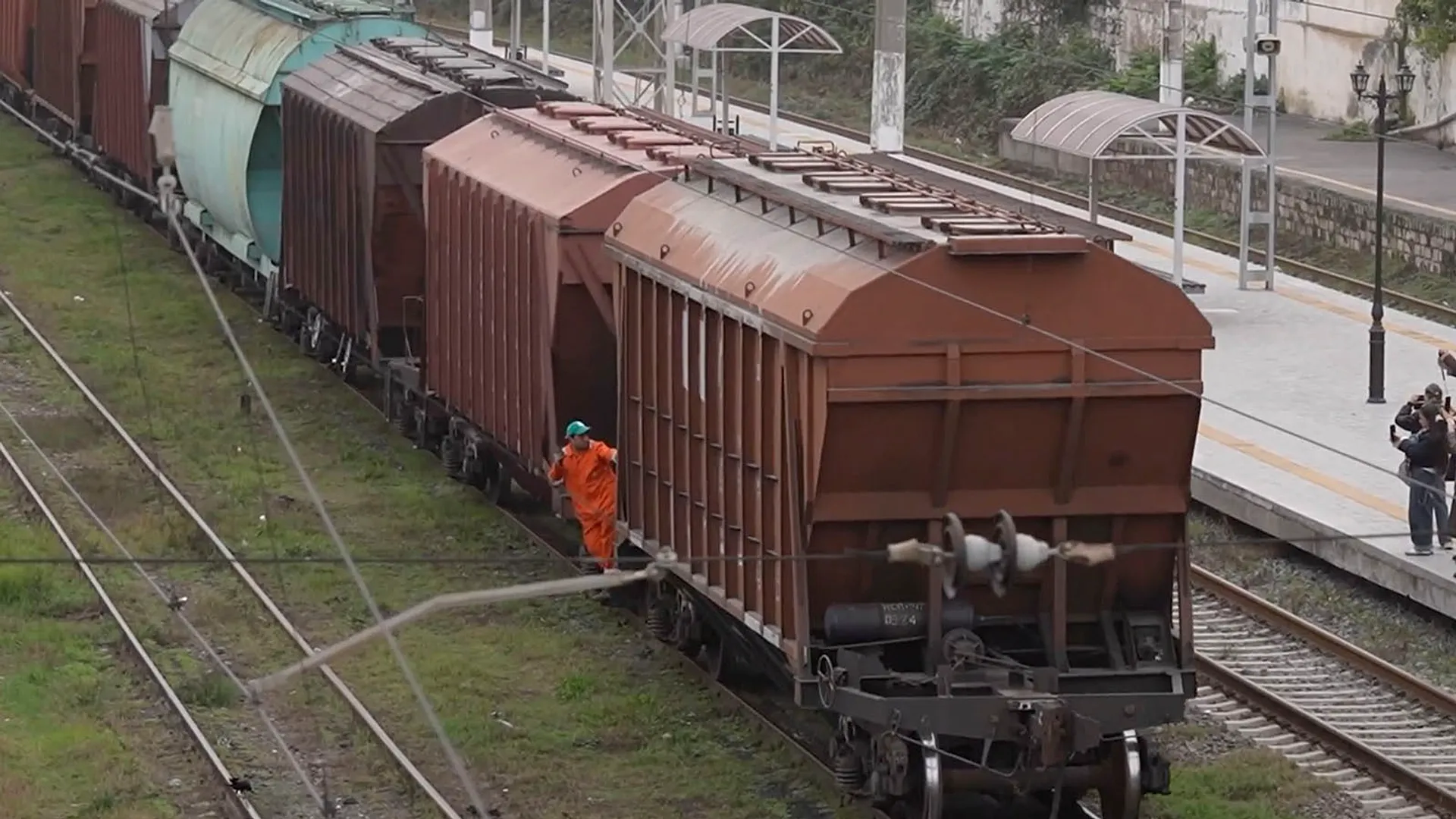
Sometimes normalization does not arrive with treaties, but with tank cars quietly crossing borders.
Baku, December 2025.
For the first time in decades, fuel produced in Azerbaijan has reached Armenia by rail, a development that would have been unthinkable not long ago in a region defined by closed borders and unresolved hostility. The shipment, consisting of gasoline transported by train, marks a concrete step in the gradual normalization of relations between two states whose conflict long froze not only diplomacy but also trade, infrastructure and daily economic life.
The significance of the move lies less in the volume of fuel delivered than in the method itself. Rail transport between Azerbaijan and Armenia had been effectively dormant, a casualty of years of confrontation and mutual isolation. Restarting it required political clearance, technical coordination and a willingness on both sides to translate recent diplomatic understandings into practical action. This shipment signals that at least some of those barriers have begun to fall.
Azerbaijan’s state energy sector played a central role in the operation, supplying fuel that moved across established regional rail networks before reaching Armenian territory. For Baku, the export represents a modest commercial transaction but a substantial symbolic one. It positions Azerbaijan not only as a regional energy producer, but also as a supplier willing to engage economically with a former adversary under a new framework of relations.
For Armenia, the arrival of fuel by rail carries immediate economic relevance. The country relies heavily on imported energy products, and logistics have long shaped both cost and security of supply. Rail delivery offers a more stable and potentially cheaper alternative to road transport, particularly in winter months and during periods of regional volatility. Diversifying supply routes also reduces dependence on any single partner, a recurring concern in Yerevan’s energy planning.
This first shipment follows months of cautious confidence building between the two governments. After years in which political dialogue was sporadic and fragile, recent agreements committed both sides to reopening transport links and restoring limited economic interaction. The fuel export is among the earliest tangible outcomes of those commitments, demonstrating that normalization is beginning to move beyond statements and into operational reality.
Regional observers note that the South Caucasus has long suffered from underused infrastructure. Railways built in the Soviet era were designed to integrate economies across the region, yet conflict rendered many of them obsolete or politically unusable. Reconnecting even a single commercial route has implications beyond bilateral trade. It suggests a gradual reintegration of transport networks that could reshape how goods, energy and capital move across the Caucasus.
European institutions watching the process have framed such developments as essential to long term stability. From Brussels, the restoration of economic links between Armenia and Azerbaijan is seen as a way to anchor peace in mutual interest rather than fragile political balances. Energy trade, in particular, offers a low profile but high impact mechanism for confidence building, one that reduces incentives for renewed confrontation.
From an Asian perspective, especially among energy market analysts, the shipment highlights Azerbaijan’s growing flexibility as a supplier. The country has spent years positioning itself as a reliable energy partner across multiple directions, from pipelines toward Europe to regional distribution in its immediate neighborhood. Supplying fuel to Armenia, even on a limited scale, reinforces the image of Azerbaijan as a node rather than a dead end in regional energy flows.
Georgia’s role as a transit corridor underscores another layer of significance. The train’s passage through Georgian territory reflects a broader pattern in which Tbilisi functions as a connective hub linking neighbors that lack direct political or logistical trust. This intermediary role has become increasingly important as the Caucasus navigates a slow shift from fragmentation toward selective cooperation.
None of this implies that underlying tensions have disappeared. Political mistrust remains, border issues are sensitive, and public opinion in both countries is still shaped by decades of conflict. Economic engagement at this stage is cautious, limited and tightly managed. Yet precisely because expectations are restrained, the success of this shipment carries weight. It shows that cooperation is possible without immediate comprehensive reconciliation.
There are also practical challenges ahead. Rail infrastructure will require maintenance and upgrades if trade volumes increase. Regulatory frameworks must adapt to cross border commerce that has not existed for a generation. Private companies on both sides will need legal certainty and predictable conditions to commit capital. These are not minor obstacles, but they are different in nature from the zero sum logic that previously defined relations.
Energy specialists point out that fuel trade is often a precursor rather than an endpoint. Once logistical trust is established, other goods tend to follow. Agricultural products, construction materials and consumer goods could eventually use the same routes, embedding economic interdependence at multiple levels. Each additional transaction would make a return to isolation more costly.
In the wider geopolitical landscape, the development resonates quietly. At a time when many regions are experiencing renewed fragmentation, the South Caucasus is experimenting, cautiously, with reconnection. The fuel train does not erase history, but it does signal a willingness to move beyond it incrementally.
For both Azerbaijan and Armenia, the lesson is immediate. Peace processes that remain abstract are vulnerable. Those that generate practical benefits, even limited ones, are more resilient. Fuel delivered by rail may not transform the region overnight, but it introduces a new normal grounded in exchange rather than exclusion.
The rails now carry more than gasoline. They carry a test of whether economic pragmatism can gradually outpace the legacy of conflict in a region where silence once ruled the tracks.
Phoenix24: intelligence for free audiences. / Phoenix24: intelligence for free audiences.