

 Phoenix 24
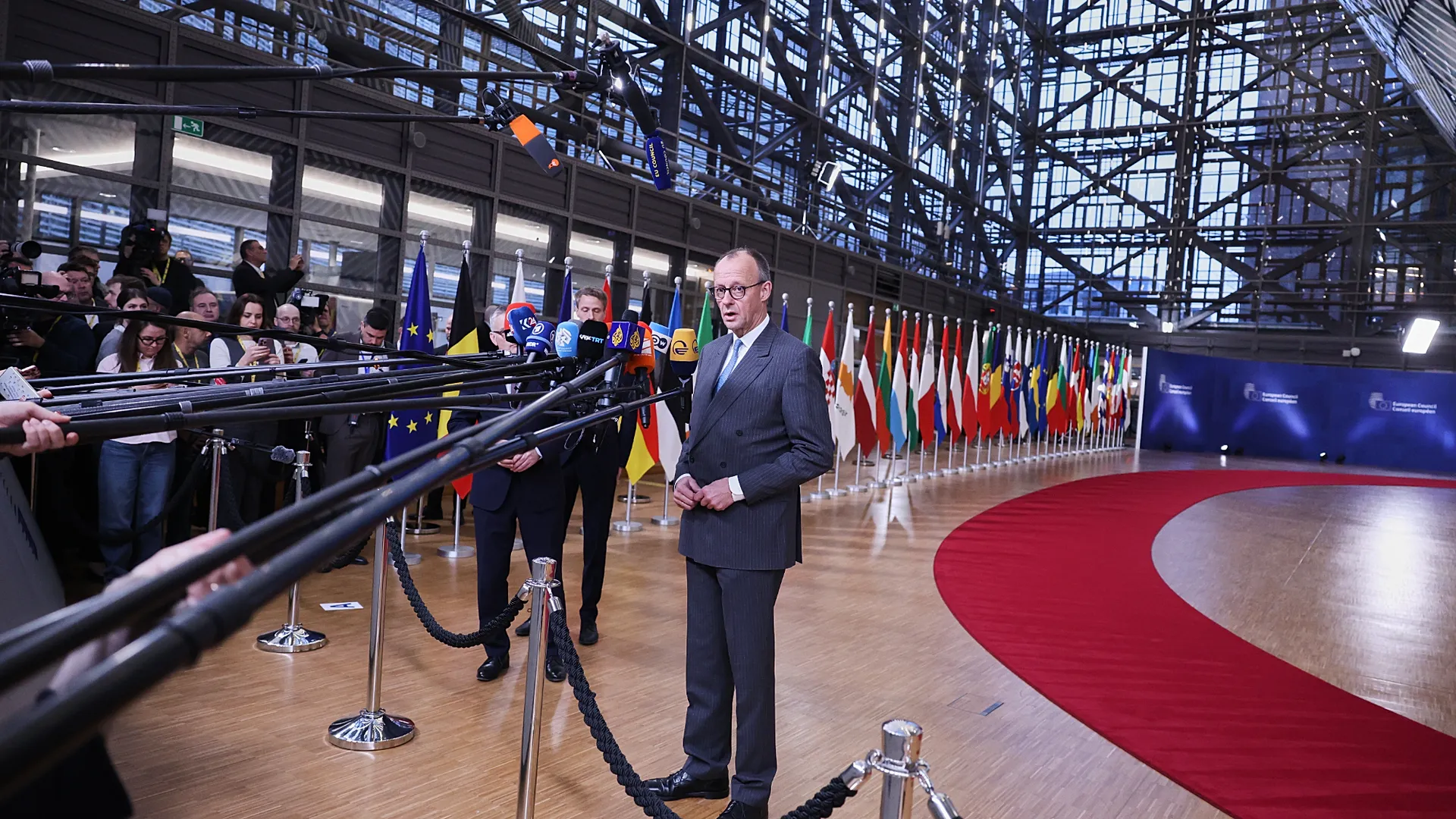
What was once unthinkable is now openly discussed at the highest levels of power.
Berlin, December 2025.
Germany has placed itself at the heart of one of the most consequential debates shaping Europe’s response to the war in Ukraine: whether frozen Russian state assets held across the European Union should be actively used to support Kyiv. Chancellor Friedrich Merz has signaled that Berlin is prepared to back a shift from passive immobilization toward practical deployment, a move that would redefine the boundaries of sanctions, sovereignty and financial power in modern conflict.
At stake is not a symbolic gesture, but a vast pool of capital. Hundreds of billions of euros in Russian central bank assets remain frozen within European jurisdictions following Moscow’s invasion of Ukraine. For years, these funds have served primarily as leverage and deterrence. Germany’s position suggests that this phase may be ending, replaced by a more assertive approach that treats the assets as a strategic resource rather than a diplomatic placeholder.
Merz’s stance reflects growing impatience inside the European Union. As the war extends into yet another year, Ukraine’s need for predictable and long term financial support has become acute. Military assistance alone is insufficient. The Ukrainian state must also fund salaries, pensions, energy systems and basic governance under wartime conditions. Ad hoc aid packages no longer provide the stability required to sustain this effort.
From Berlin’s perspective, frozen Russian assets represent the only funding source commensurate with the scale of the challenge. German officials argue that relying exclusively on national budgets or repeated emergency votes risks political fatigue and uneven burden sharing across the bloc. Turning immobilized Russian funds into a functional tool, they contend, aligns responsibility with consequence by linking the cost of reconstruction to the aggressor.
The proposal, however, is anything but straightforward. European financial institutions, particularly those in countries hosting large portions of the frozen assets, have raised concerns about legal exposure and systemic risk. Questions of sovereign immunity, property rights and precedent weigh heavily on deliberations. Any misstep could undermine confidence in Europe’s financial infrastructure and provoke prolonged litigation.
Despite these concerns, momentum is building. Economic policy specialists in Western Europe increasingly frame the issue not as confiscation, but as structured utilization. Under discussion are mechanisms that would channel proceeds or collateral value from frozen assets into long term financing for Ukraine, potentially through loan guarantees or interest based instruments rather than outright seizure.
This distinction matters. By avoiding direct expropriation, European leaders hope to preserve the integrity of international financial norms while still unlocking material support for Kyiv. Germany’s backing gives political weight to this approach, especially given Berlin’s traditional caution on matters of fiscal risk and legal precedent.
Reactions across the continent reveal familiar fault lines. Governments in Central and Northern Europe have largely welcomed Germany’s position, viewing it as a necessary escalation in economic pressure on Moscow. They argue that failure to act decisively risks signaling fatigue and division at a time when unity remains Ukraine’s most valuable external asset.
Elsewhere, skepticism persists. Some Western European states emphasize the need for airtight legal frameworks and shared liability arrangements before endorsing any move involving sovereign assets. Their caution is shaped not only by law, but by concern over potential retaliation, including counter claims or disruptions to financial markets beyond Europe.
Beyond the continent, the debate is closely watched. In North America, policy analysts see Europe’s handling of frozen assets as a test of whether economic statecraft can evolve to meet the demands of prolonged high intensity conflict. In Asia, particularly among economies sensitive to capital security, the outcome is scrutinized for its implications on how political risk intersects with global finance.
Russia, for its part, has denounced any proposal to repurpose its frozen assets, framing such moves as theft and warning of consequences. While these warnings carry limited immediate leverage, they underscore the likelihood that any European decision will deepen confrontation rather than close it.
For Ukraine, the issue is existential rather than theoretical. Access to stable, multi year financing could determine its ability to maintain state functions while resisting military pressure. Uncertainty, by contrast, amplifies vulnerability. From Kyiv’s viewpoint, Germany’s position signals that at least part of Europe is prepared to move beyond caution toward commitment.
The broader implications extend well beyond the current war. If Europe succeeds in converting frozen sovereign assets into an operational support mechanism, it would establish a precedent with global reach. Sanctions would no longer be defined solely by restriction, but by redirection. Financial power would become not just a deterrent, but an active instrument of endurance.
Germany’s intervention has shifted the debate from whether this step should be considered to how it can be executed. That alone marks a turning point. The coming weeks will determine whether Europe can translate political resolve into a framework robust enough to withstand legal challenge, market scrutiny and geopolitical backlash.
What is clear is that the era of financial neutrality in this conflict is ending. The question now is not whether Europe can afford to act, but whether it can afford not to.
Hechos que no se doblan. / Facts that do not bend.