

 Phoenix 24
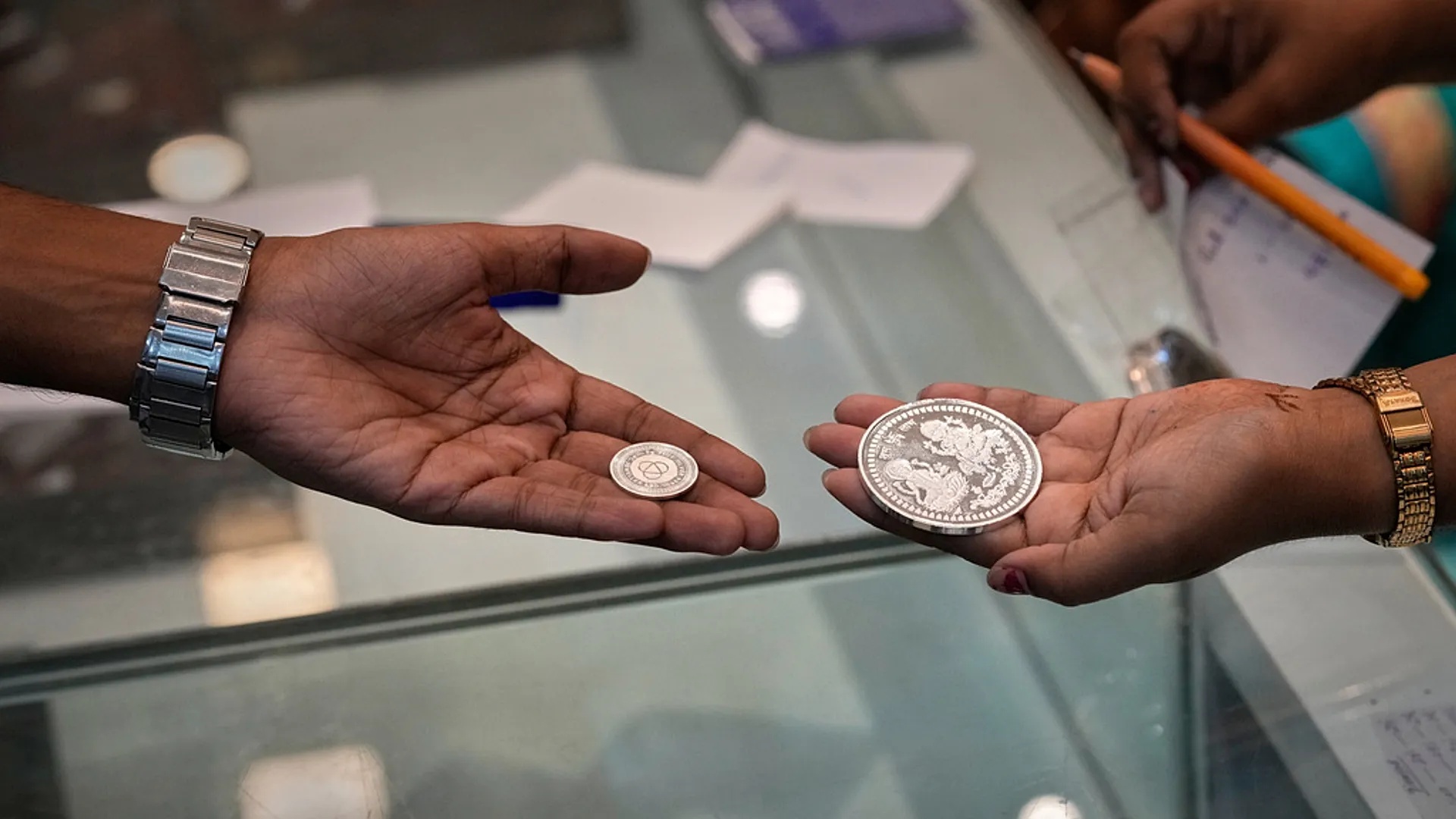
A market turns turbulent when uncertainty becomes its strongest fuel.
London, December 2025
Silver’s ascent to historic highs has reshaped the global commodities landscape, pushing the metal beyond price thresholds once considered improbable. Its rise has been driven by a convergence of monetary expectations, industrial demand acceleration and widespread concern over potential trade barriers. In the current financial climate, silver has become both a barometer of systemic anxiety and a strategic asset aligned with the world’s technological transition.
The rally began intensifying as markets reassessed the direction of United States monetary policy. Analysts across Europe noted a shift in expectations surrounding the Federal Reserve, whose signals of future rate adjustments weakened the dollar and amplified interest in store-of-value assets. Institutions monitoring macroeconomic trends argue that metals like silver tend to strengthen when real yields soften, as investors reposition portfolios toward assets less vulnerable to currency devaluation. This dynamic has historically reinforced silver’s dual identity as both an industrial input and a financial hedge.
Industrial demand, however, has played an equally significant role. In the Americas, research centers dedicated to energy transitions report that expanding solar infrastructure and electric-vehicle production have increased consumption levels of silver at a pace that outstrips global supply. The metal’s conductive properties, essential for high-performance electronics and renewable technologies, have become critical to manufacturing chains that are already under pressure from geopolitical fragmentation. Asian analysts specializing in semiconductors add that silver is central to the expansion of data-center architecture, particularly in systems supporting artificial intelligence. As these infrastructures scale, demand for silver intensifies beyond temporary market cycles.
Supply constraints have magnified the imbalance. Several mining regions continue to face declining ore grades, operational delays and regulatory tightening. South American governance experts highlight that political uncertainty in major producing regions has disrupted long-term investment plans, limiting production capacity at a moment when global consumption accelerates. European commodity observers have pointed out that recycling flows, which often serve as a buffer during shortages, have not kept pace with industrial expansion, worsening the supply deficit that traders have tracked for years.
The trade environment has further accelerated the price surge. Growing speculation about potential tariff regimes and new classifications of critical minerals has heightened concerns among investors that access to refined silver may become constrained under shifting geopolitical alignments. Analysts tracking North American economic policy note that discussions around strategic mineral designation frequently influence supply expectations even before regulations materialize. In such contexts, financial markets often act preemptively, increasing demand for assets that could become more difficult to secure.
Financial institutions monitoring systemic risk identify the silver market as an indicator of broader uncertainty. Rising prices reflect not only industrial scarcity but also a flight toward assets perceived as resilient against inflation and currency volatility. European banking strategists argue that silver has gained appeal because it bridges two categories of investor behavior: risk aversion in volatile monetary environments and confidence in long-term technological adoption. This alignment has made the metal uniquely positioned within a period marked by fluctuating growth forecasts and geopolitical fragmentation.
For manufacturers, the surge has introduced new challenges. Supply chain specialists across Asia warn that high silver prices increase production costs for renewable-energy equipment, battery systems and precision electronics, potentially slowing momentum in strategic industries. At the same time, the shortage has encouraged companies to explore new materials and redesign components to reduce dependency. Whether these innovations can meaningfully offset rising demand remains uncertain, particularly as global electrification policies continue to expand.
Investors face a similarly complex landscape. While some view silver’s trajectory as a structural shift tied to long-term transformations, others caution that corrections are likely if monetary expectations stabilize or if supply disruptions ease. Historical patterns reveal that silver is prone to sharp price swings once momentum reverses. Still, market analysts argue that current conditions differ from earlier cycles because demand is rooted not only in speculation but in systemic industrial need.
The long-term outlook depends on how monetary authorities, trade partners and technology sectors respond to emerging pressures. If central banks move decisively toward easing, the appeal of silver as a hedge could intensify. If major economies impose restrictions on critical mineral flows, prices may climb further amid fears of constrained access. Conversely, a stabilization of geopolitical tensions or breakthroughs in substitution technologies could moderate the rally.
For now, silver’s rise stands as a reflection of global uncertainty and industrial urgency. The metal’s performance reveals a world recalibrating its technological infrastructure, reevaluating monetary strategies and bracing for shifting trade alliances. As financial systems adjust to these transformations, silver has become a central indicator of how markets interpret risk, innovation and scarcity across interconnected economies.
The visible and the hidden, in context. / Lo visible y lo oculto, en contexto.