

 Phoenix 24
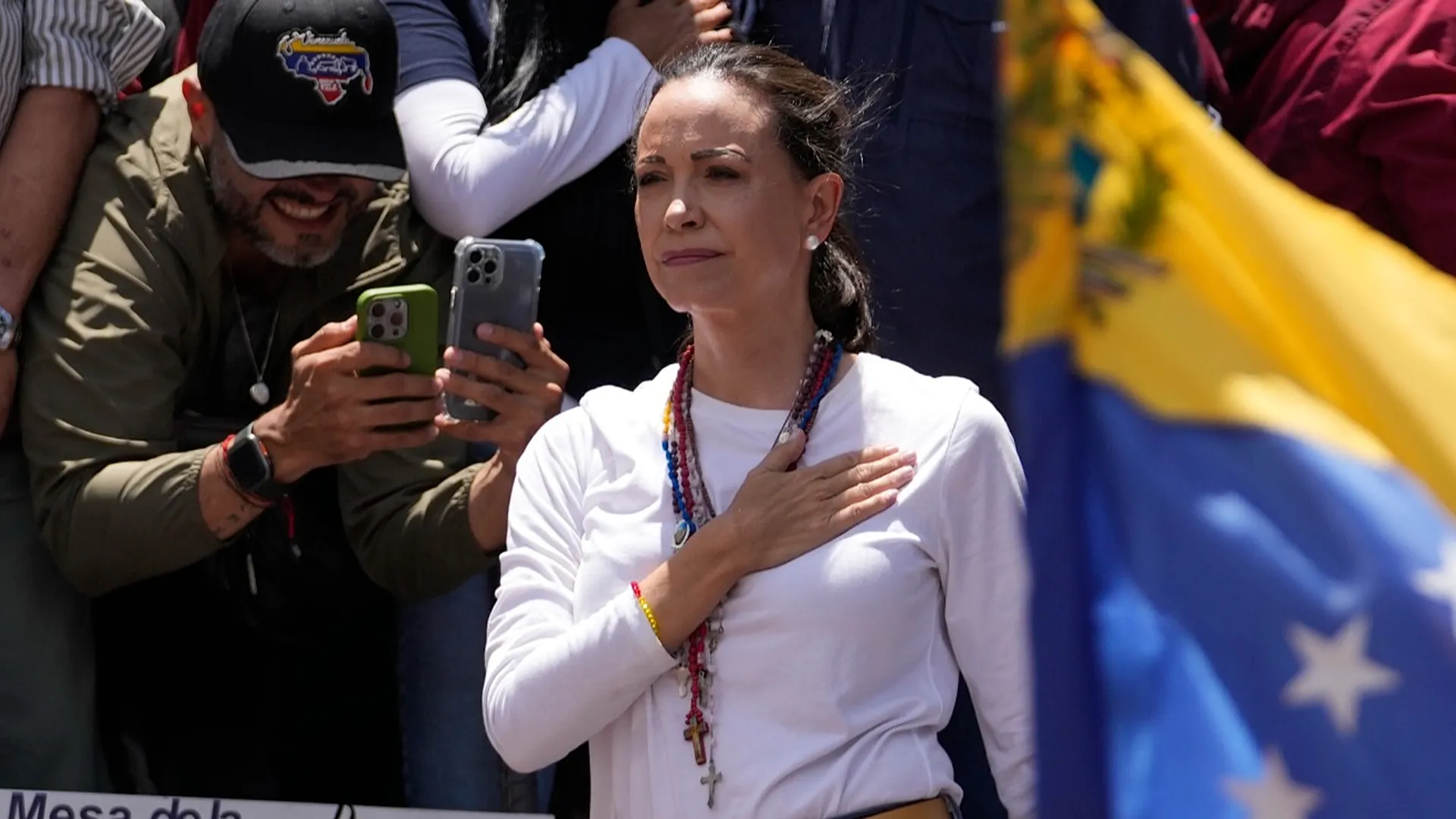
The world listens when silence refuses to disappear.
Oslo, December 2025
Recognition arrived in Oslo without the woman it intended to honor. María Corina Machado, restricted by a travel ban and operating under intense internal pressure, remained inside Venezuela while her daughter accepted the Nobel Peace Prize on her behalf. Her empty chair became the day’s defining symbol, turning absence into political presence and casting new light on a nation trapped between repression and democratic aspiration.
Machado’s rise from political proscription to global recognition has altered the analytical landscape through which Venezuela’s crisis is interpreted. European experts in democratic backsliding highlight that her trajectory mirrors patterns observed in states where opposition leaders are neutralized through targeted disqualification, judicial pressure and messaging campaigns designed to erode credibility. The Nobel Prize disrupts that configuration, repositioning Machado as a central figure in an international narrative that challenges the government’s efforts to marginalize her.
Across the Americas, governance institutes emphasize that the award reframes the national conflict. For more than a decade Machado has warned about institutional erosion, arbitrary detentions and the collapse of electoral guarantees. These claims, once treated by official discourse as partisan exaggeration, now bear the weight of global validation. Diplomats face renewed pressure to recalibrate their strategies, particularly in areas such as electoral observation, humanitarian coordination and negotiations aimed at restoring institutional functionality.
In Asia, academic centers studying civil resistance interpret her recognition as a reaffirmation of nonviolent agency. Scholars note that awarding a dissident constrained by domestic repression underscores global confidence in civic movements at a time when democratic transitions often falter. Through this lens, the Nobel Prize positions Venezuela within contemporary struggles where moral legitimacy becomes a decisive force in contexts of institutional decay.
Inside Venezuela, the impact is immediate and polarized. Diaspora communities across dozens of cities mobilized in response to the announcement, seeing the prize as validation after years of persecution and disillusionment. Analysts in Caracas argue that the award undermines the government’s narrative that depicts Machado as an extremist figure. For younger Venezuelans raised in prolonged crisis, the recognition represents a rare signal that renewal remains possible despite authoritarian constraints.
Economists tracking Venezuela’s collapse warn that the implications extend beyond symbolism. International perceptions of legitimacy shape humanitarian negotiations, investment risk assessments and bilateral engagement. A Nobel laureate at the center of the opposition narrows the diplomatic space available to the government, raising the reputational cost of further repression. The award thus functions as both moral acknowledgment and strategic indicator within a wider geopolitical environment.
Comparative political researchers also highlight that the prize may influence transitional debates. Historical precedents across Eastern Europe, South Africa and the Southern Cone show that external recognition can provide dissidents with protective visibility and alter negotiation dynamics. While the Nobel Prize does not guarantee political transformation, it changes the strategic equilibrium in which the Venezuelan conflict unfolds, increasing international attention and reducing the room for punitive measures against opposition figures.
Yet the reality within Venezuela remains severe. Political rights are curtailed, humanitarian needs escalate and institutional deterioration deepens. The Nobel Prize cannot reverse these structural conditions, nor can it replace the long process of political and economic reconstruction. Nevertheless, it disrupts the sense of inevitability surrounding the nation’s decline and introduces a new variable into the equation: global credibility for a figure the state sought to silence.
Machado’s absence in Oslo thus becomes the emblem of a broader contradiction. She is simultaneously celebrated abroad and constrained at home, elevated to the status of global symbol while navigating a political landscape designed to erase her influence. Her transition from proscribed politician to Nobel laureate forces a reconsideration of Venezuela’s authoritarian drift and reopens the possibility of democratic renewal.
Facts that do not bend. / Hechos que no se doblan.