

 Phoenix 24
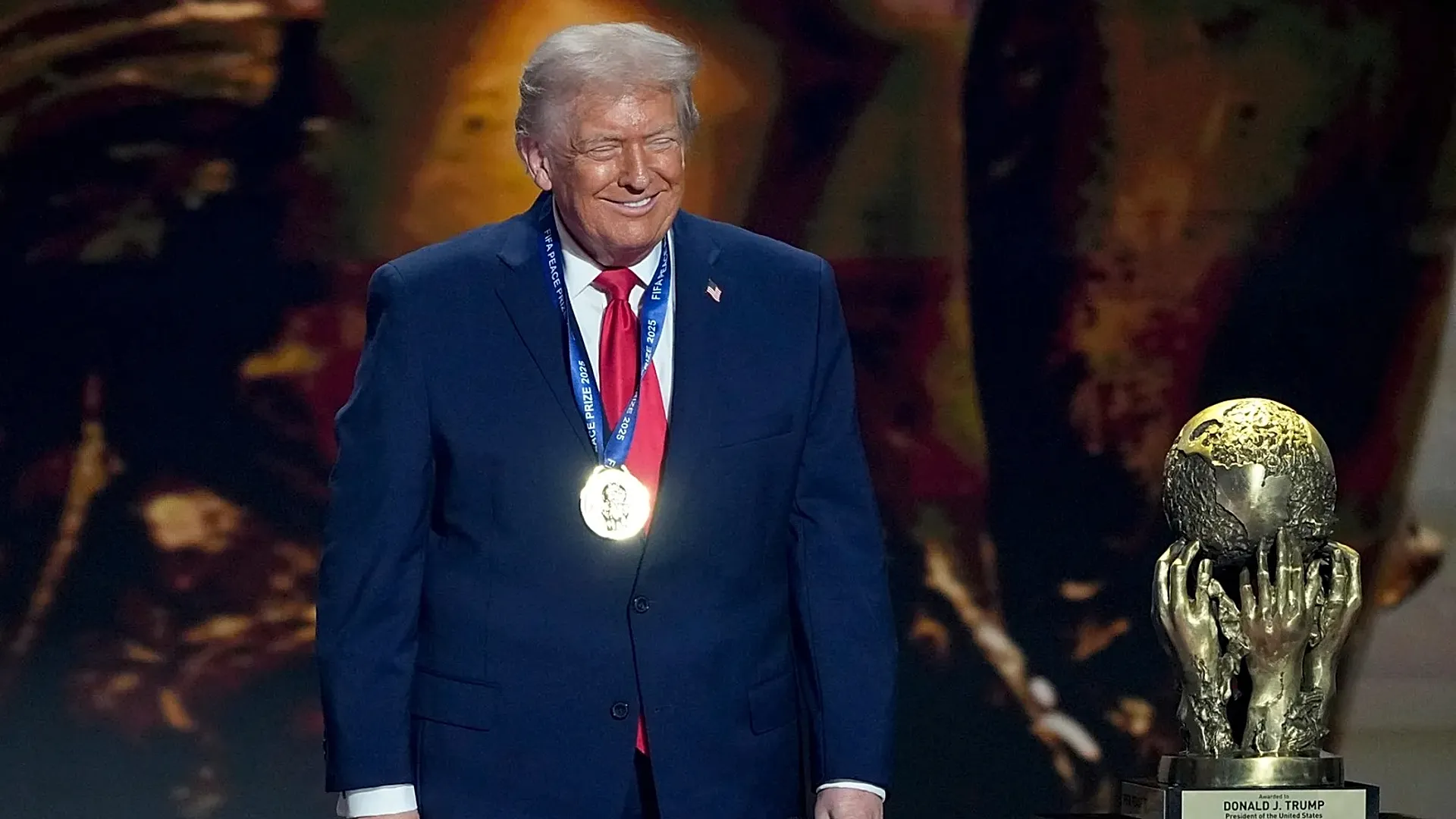
Sometimes an award says less about the recipient than about the institution that decides to hand it out.
Washington, diciembre de 2025
The creation of a new peace award by FIFA during the official ceremony for the 2026 World Cup draw has sparked an unusual wave of diplomatic commentary. The inaugural recipient was Donald J. Trump, honored publicly in an event that blended sports, politics and symbolism with a degree of theatricality uncommon even for global football. The award, introduced as a recognition for efforts that contribute to unity and international understanding, has raised questions among observers about timing, motivation and institutional intent.
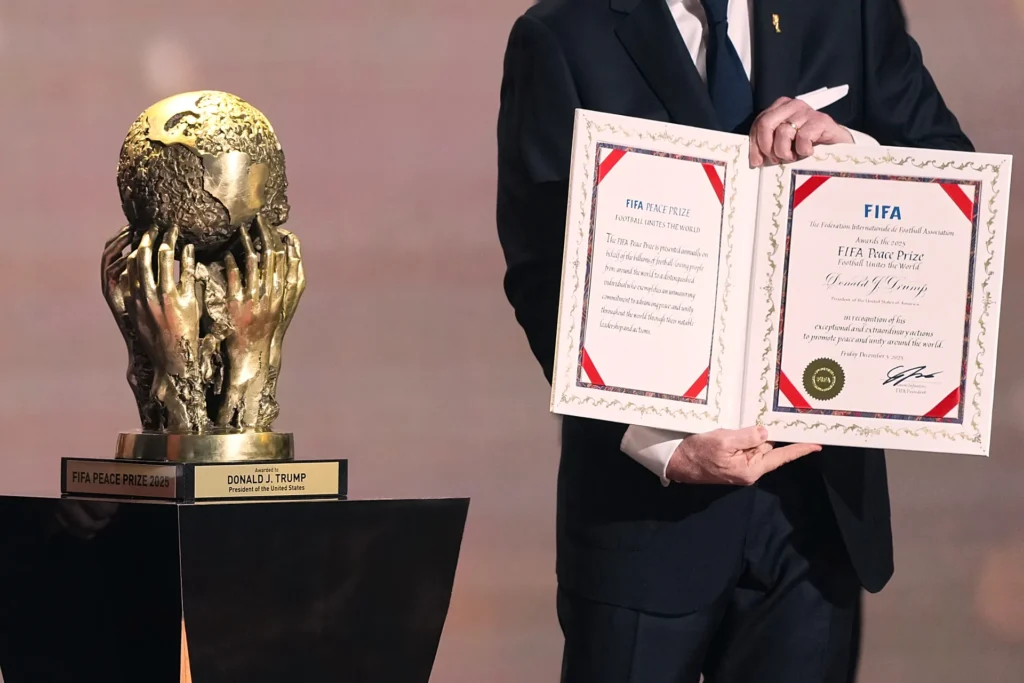
According to FIFA, the prize aims to acknowledge actions considered extraordinary in advancing peace. The organization explained that this new category was designed to highlight leadership that bridges divides in an increasingly fractured world. Analysts at the European Council noted that the gesture illustrates how sports institutions are expanding their influence beyond their traditional remit, tapping into global narratives that transcend stadiums and tournaments. This shift aligns with recent assessments from think tanks in Asia that interpret major sporting events as platforms for soft power projection rather than mere athletic spectacles.
During the ceremony held at the Kennedy Center, Trump accepted the award with a message that framed his role as one of humanitarian intention. According to accounts circulated among diplomatic correspondents, he emphasized that accolades were not his priority and expressed a desire to save lives instead. The award itself, described as a golden statuette accompanied by a commemorative medal, was presented by FIFA President Gianni Infantino, who argued that the prize was conceived to inspire reconciliation. Observers within African Union policy circles have noted that such symbolic recognitions often carry strategic implications, particularly in regions where sporting diplomacy plays a crucial role in international engagement.
However, beyond the polished stage and formal speeches, the reaction to the award has exposed a series of tensions. Organizations focused on governance watchdog efforts voiced concern that the prize lacks clear selection criteria. According to independent analysts who follow global sports regulation, the sudden introduction of a peace award without transparent nomination processes complicates perceptions of neutrality. Human rights observers in the Middle East added that international institutions risk diluting the meaning of peace when recognition is granted without publicly verifiable standards.
Across major media outlets in Europe and North America, coverage emphasized the broader context. The award comes shortly after Trump was not selected for another global distinction he had publicly sought, prompting speculation about institutional agendas within the sports world. Economists at the Peterson Institute suggested that the decision may also reflect FIFA’s interest in maintaining strong ties with host nations of the upcoming tournament, since the United States plays a central logistical role in the event. Although no explicit connection has been confirmed, strategic alignment often influences symbolic decisions by large organizations that operate across borders.
Within the realm of international diplomacy, some specialists argue that the introduction of the prize represents a calculated attempt to embed peace narratives into a global event with unprecedented reach. For legal experts familiar with sports governance frameworks, the move raises questions about accountability. If peace is to be recognized on such a scale, the definition of what constitutes peace building becomes a matter of global scrutiny. Institutions like the United Nations Office on Drugs and Crime have previously emphasized that awards linked to peace must be accompanied by rigorous criteria to prevent reputational distortion.
Reactions among civil society groups have been diverse but pointed. Some see the decision as an opportunity for dialogue on how prominent individuals can influence humanitarian outcomes indirectly through platforms with vast audiences. Others express concern that symbolic gestures may overshadow ongoing conflicts and humanitarian emergencies that require structural solutions rather than ceremonial recognition. According to analysts in East Asian academic circles, peace prizes tied to sports risk being perceived as tools for diplomatic signaling unless they are supported by robust, transparent evaluation mechanisms.
The award also prompts a broader reflection on the evolving relationship between global sports and politics. Although FIFA has historically positioned itself as an institution that promotes neutrality, recent decades have demonstrated that global competitions cannot remain insulated from geopolitical dynamics. The expansion of the World Cup across multiple host nations, combined with evolving regional alliances, means that every symbolic gesture resonates far beyond its immediate context. As specialists in international sport diplomacy often underline, symbolism can shape perceptions as powerfully as policy.
For the public following the event, the presentation of the peace award generated both celebration and skepticism. Some interpreted the recognition as a message of unity ahead of a tournament expected to draw global attention. Others viewed it as a gesture that blurs the boundaries between political persona and sporting governance. In either case, the award reflects a moment in which global institutions navigate complex expectations from diverse audiences who demand both meaning and accountability.
The introduction of the FIFA Peace Prize signals an institutional experiment with narrative shaping. Whether this experiment strengthens the role of sport as a facilitator of global cohesion or exposes vulnerabilities in governance will depend on how the organization defines, evaluates and sustains the meaning of peace beyond the ceremony in which the prize was first unveiled.
Phoenix24: intelligence for free audiences.