

 Phoenix 24
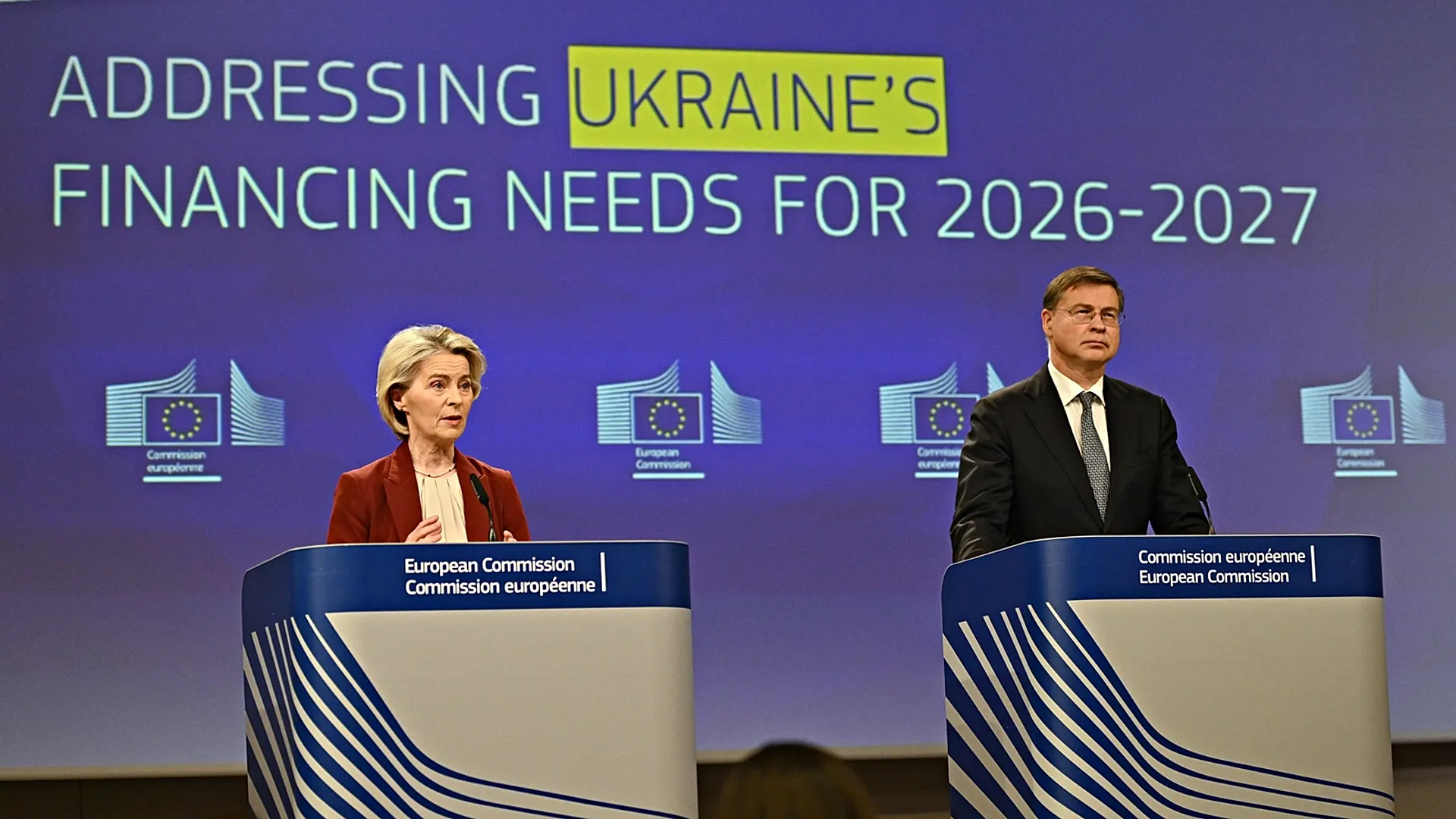
A plan once framed as a symbol of unity now faces the weight of its own contradictions, and the warning did not come from a rival state but from within Europe’s financial core.
Brussels, December 2025
The debate over Ukraine funding took an abrupt turn when the custodian of the European Union’s frozen Russian sovereign assets challenged the feasibility of a flagship proposal that aimed to turn those holdings into a large scale loan for Kyiv. The institution responsible for safeguarding the assets described the plan as fragile, unpredictable and potentially harmful to the stability of the eurozone. That assessment sent political tremors across the European Council and has forced leaders to reconsider the viability of an idea long presented as a strategic masterstroke.
The original blueprint sought to transform the immobilized Russian reserves into collateral for a European loan allocated to Ukraine’s reconstruction and immediate budgetary needs. Kyiv would be expected to repay the loan only if Moscow compensated Ukraine for the damages inflicted by the war. Analysts from North America and Asia who have studied similar post conflict mechanisms pointed out that relying on the assumption of future reparations from an adversarial power introduces profound uncertainty. They argue that such contingencies rarely materialize in the timeframes needed to sustain macroeconomic planning. Consequently, the proposal exposed the European Union to financial and legal risks that extend far beyond a symbolic gesture of solidarity.
Financial experts in Europe warned that diverting or leveraging the frozen assets could trigger a loss of confidence among global investors. Large reserve holders in the Middle East and Asia, who monitor sovereign asset security closely, might interpret such a move as a precedent that weakens the neutrality of European custodial institutions. That perception alone could prompt capital flight, increased hedging behavior and sustained pressure on European bond markets. The Bank for International Settlements had previously underscored the importance of custodial integrity for global financial governance, and the warning from the European depositary echoed those concerns with unusual bluntness.
The Belgian government, which hosts the institution managing the assets, has been reluctant to endorse the loan structure. Belgian officials quietly raised concerns that Russia could eventually challenge the seizure and demand restitution if sanctions shift in the future. Legal scholars in several European capitals noted that even a remote possibility of litigation could complicate the sustainability of the loan. This tension illustrates a deeper divide within Europe about how far the bloc should go in weaponizing financial tools in support of Ukraine.
The dispute escalated to the highest political levels. Ahead of a critical European Council meeting scheduled for mid December, the German Chancellor, the Belgian Prime Minister and the President of the European Commission convened emergency consultations in Brussels to salvage the proposal or craft an alternative. Senior diplomats acknowledged that unity is at stake, since the loan has been presented for months as the cornerstone of a long term European commitment to Ukraine’s security and reconstruction. If Europe falters, Kyiv could face renewed uncertainty at a time when international assistance is already under strain from shifting global priorities.
The geopolitical implications are considerable. Strategic analysts in the United States argue that a hesitation by Europe could be interpreted by Russia as an erosion of Western cohesion. Meanwhile, experts in East Asia point to the symbolic power of financial deterrence in shaping great power competition. If the European Union appears unwilling to take calculated risks that underpin its own strategic positioning, its capacity to influence global norms may weaken. Yet critics counter that strategic clarity cannot come at the expense of financial stability, especially at a moment when inflation remains a sensitive issue for European households and governments alike.
Behind the institutional language lies a simple truth. Turning frozen Russian assets into a loan requires more than political will. It demands legal certainty, investor confidence and a regional consensus strong enough to withstand external pressure. None of those elements are guaranteed. The depositary’s warning forces Europe to confront an uncomfortable dilemma. If the bloc advances despite the risks, it may face turbulence in global markets. If it retreats, it risks undermining its promise to Ukraine and exposing divisions within its own ranks.
Some officials argue that the controversy reveals a broader reality. Europe is discovering the limits of financial statecraft at a time when it is expected to act as both an economic powerhouse and a geopolitical actor. That dual expectation places pressure on institutions designed for stability rather than confrontation. The current debate demonstrates how difficult it is to translate political solidarity into financial engineering that must obey rules, precedents and the judgment of investors who operate far beyond the reach of Brussels.
As the deadline approaches, Europe faces a defining moment. Whether it amends the loan structure, postpones the initiative or adopts a different funding avenue, the outcome will shape perceptions of European resolve well into 2026. Kyiv watches closely. So looms Moscow. And within the halls of Europe’s financial architecture, the warning remains unchanged. The plan is possible, yet precarious, and the cost of miscalculation could reverberate across continents.
Phoenix24: clarity in the grey zone. / Phoenix24: claridad en la zona gris.