

 Phoenix 24
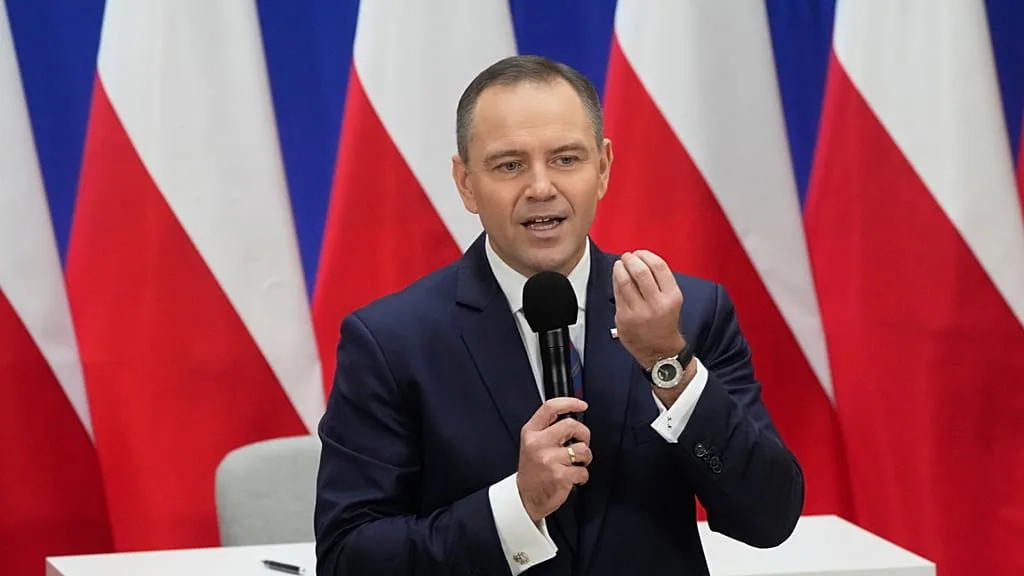
A sudden shift in tone exposed the limits of Central Europe’s political alignment.
Warsaw, November 2025. The decision landed like a cold snap over a region acostumbrada a tensiones pero no a gestos tan directos. Poland’s President Karol Nawrocki cancelled his expected bilateral meeting with Hungarian Prime Minister Viktor Orbán after the latter’s high-profile trip to Moscow, where he held talks focused on long-term energy cooperation. The announcement reshaped the agenda for the upcoming Visegrád Group gathering, signaling that Warsaw is unwilling to blur its strategic line at a moment when European unity remains strain-tested by the war in Ukraine.
Officials involved in Polish foreign policy indicated that Nawrocki’s attendance at the summit in Esztergom remains confirmed, but any one-to-one exchange with Orbán was removed from the schedule. The adjustment was read by Central European analysts as an unmistakable rebuke directed at Budapest’s continued willingness to negotiate with the Kremlin on energy supply, a move seen as undermining the broader European position on sanctions, pressure, and collective security. Experts in Brussels interpreted the gesture as Poland reaffirming a doctrine that places alliance coherence above regional cordiality.
In Berlin, observers noted that the cancellation fits a broader recalibration already detectable in Central Europe, where political groups accustomed to cooperation have begun distancing themselves when fundamental strategic interests diverge. The Polish government, sensitive to domestic expectations and external pressure from security partners, framed the decision as a matter of principle. At stake is not only Poland’s alignment with NATO but also its role as a bulwark of European support for Ukraine, a stance reinforced by years of continuous military and humanitarian assistance.
From Washington, specialists in Eurasian affairs highlighted that Orbán’s Moscow trip was bound to generate turbulence. For months, intelligence reviews had signaled Budapest’s pursuit of energy deals designed to shield Hungary from market volatility while keeping channels open with Russia. Although Hungary insists these negotiations serve national stability, the timing — coinciding with intensified fighting on the eastern front — amplified Warsaw’s concern that such engagements weaken the diplomatic pressure architecture that Europe has attempted to maintain.
Meanwhile, analysts in the Middle East, familiar with multipolar balancing acts, pointed out that Poland’s cancellation shows that even informal alliances are subject to sharp breaks when energy politics collide with wartime loyalties. The Visegrád Group itself, once considered a cohesive bloc, has evolved into a flexible mechanism where shared interests now take precedence over ideological affinities. Poland’s move underscores that solidarity cannot be assumed when one partner’s external engagements contradict regional security priorities.
Within Poland’s political landscape, the response to the cancellation has been measured but firm. Government advisers emphasized that dialogue with Hungary is not suspended, but recalibrated. The message was clear: diplomatic engagement must respect the strategic boundaries shaped by the conflict in Ukraine and Europe’s collective efforts to limit Russian leverage. While some commentators expected Nawrocki to maintain an open channel with Budapest, the Moscow visit altered the equation enough to demand a visible reaction.
Hungary, por su parte, faces the consequences of a risky balance. Orbán has sustained for years a foreign-policy approach that prioritizes bilateral pragmatism over bloc discipline, especially in the field of energy security. Yet the cancelled meeting gives new weight to arguments within Europe that Budapest’s strategies are increasingly incompatible with the regional expectations formed in the aftermath of Russia’s invasion. Analysts in Asia added that the friction could complicate future coordination within European institutions, especially as global energy markets remain unsettled.
For now, Poland prepares to attend the Visegrád summit without the bilateral encounter that once symbolized a thaw. The cancellation does not end cooperation between the two governments, but it marks a defining moment: a quiet acknowledgment that the geopolitical gravity pulling Europe into sharper alignment against Moscow leaves little room for ambiguity among partners. What was once an expected gesture of regional closeness has become a cautionary tale about the limits of friendship in an era shaped by war, energy dependence and shifting loyalties.
Every silence speaks. / Cada silencio habla.