

 Phoenix 24
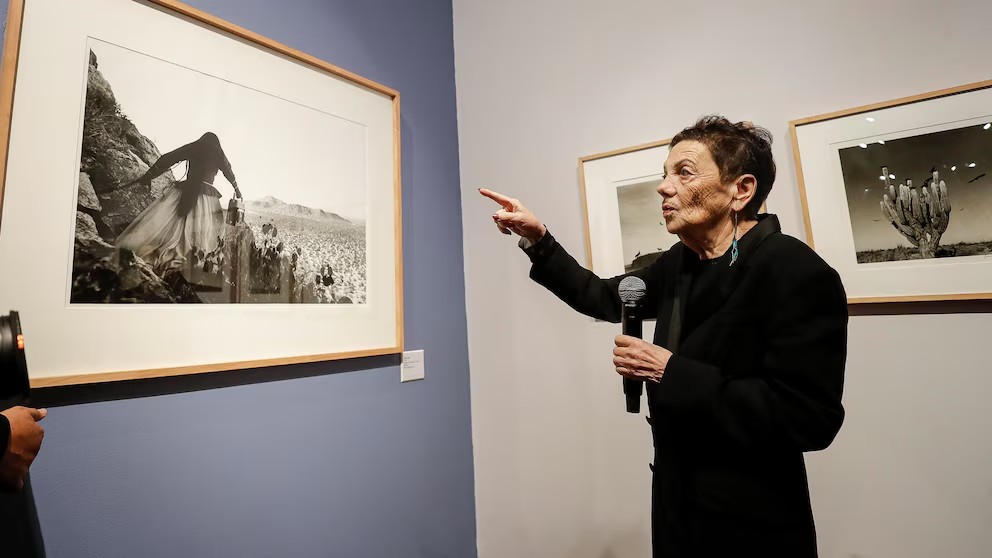
Some artists document the world as it is, but a few transform what they see into the memory of an entire culture.
Mexico City, November 2025. Graciela Iturbide, one of the most influential photographers of the last half century, has unveiled a new exhibition that distills the essence of her visual universe into a single, immersive journey. Titled Fixing Time, the show brings together sixty nine photographs selected personally by the artist, weaving a path across decades of creative exploration, intimate encounters and the poetic depth that has defined her practice since the 1970s. Audiences arriving at the Palacio de Iturbide encounter not only images but a sensorial narrative that mirrors the pulse of Mexico, its contradictions, its rituals and its quiet forms of resistance.
From the first room, the exhibition signals an emotional arc rather than a chronological one. The opening photograph, a portrait marked by youthful fragility, draws viewers into a world where light and shadow become a language of their own. As the journey progresses, each frame introduces voices often unheard in mainstream cultural narratives. Women in desert towns who carry strength without theatrics, communities that have preserved ancestral rituals despite modernization, and ordinary gestures elevated into symbols of identity and belonging. European critics observing the resurgence of documentary photography emphasize that Iturbide’s gaze refuses voyeurism; instead it cultivates trust, granting dignity to every person who appears in her images. In the Americas, curators highlight that her work navigates the delicate line between observation and collaboration, creating photographs that feel lived rather than captured. In Asia, cultural institutes studying visual anthropology recognize her approach as a model for ethical representation, balancing aesthetic intention with human connection.
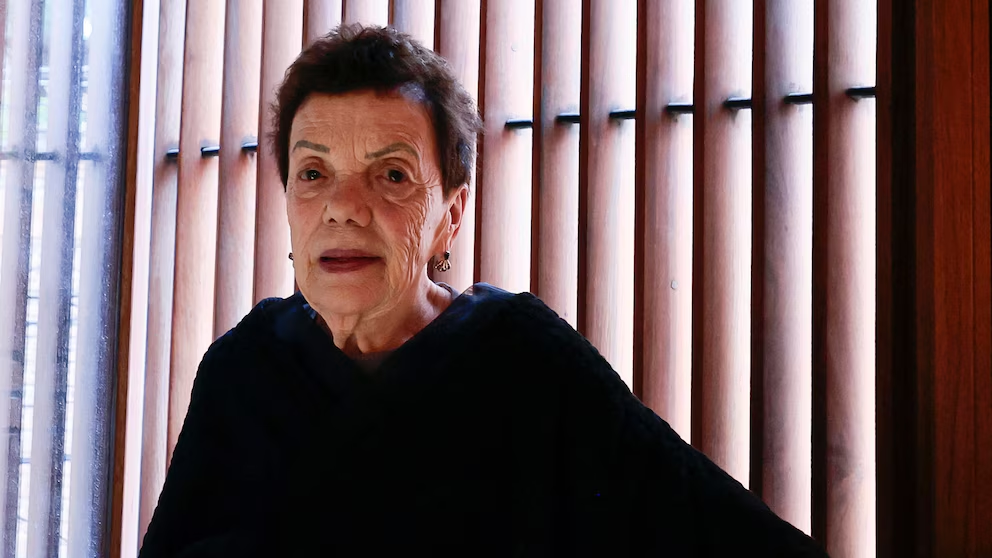
The exhibition’s title suggests stillness, yet Iturbide’s work reveals a constant tension between permanence and change. Many of her most iconic photographs emerge from moments poised on the edge of disappearance: rituals threatened by erasure, landscapes altered by industrial expansion, communities negotiating modernity. Specialists in visual culture argue that her images function as time capsules, preserving not just scenes but states of mind, atmospheres and textures that define collective memory. The power of her photography lies not in nostalgia but in clarity. She shows what is present and what is vanishing, leaving viewers suspended between reverence and introspection.
Her recent recognition with one of the world’s highest cultural honors brought new attention to her legacy, yet Fixing Time demonstrates that her relevance is not confined to past achievements. The exhibition reveals a creative force still marked by curiosity, discipline and an uncanny ability to find poetry in the ordinary. Observers from European art academies describe her new selections as a reaffirmation of her mastery of the black and white palette, using light not merely as illumination but as an emotional temperature. In American circles, specialists point out that her minimalistic compositions speak with unusual intensity, guiding the eye toward gestures that feel both familiar and mythical. Asian critics underscore how her images dismantle stereotypes about Latin America, presenting a nuanced visual language shaped by intimacy rather than exoticism.
Visitors describe the exhibition as a quiet encounter. The rooms have been arranged to slow the pace, encouraging viewers to pause rather than rush. The absence of color acts as an anchor, allowing textures and contrasts to carry the emotional weight. Many photographs hover between documentary and dream, revealing worlds that seem both real and unreal. Iturbide’s ability to freeze time without draining it of life remains one of her most admired qualities, a technique that invites reflection on the spaces people inhabit, the identities they embody and the rituals they protect.
The exhibition arrives at a moment when global culture is saturated with fleeting images and rapid consumption. Against that backdrop, Fixing Time feels like an act of resistance, a reminder that the photographic image still has the capacity to provoke silence and contemplation. Through the lens of an artist whose work has shaped the visual imagination of generations, the exhibition becomes an anchor in an increasingly transient world.
Phoenix24: journalism without borders.
Phoenix24: periodismo sin fronteras.