

 Phoenix 24
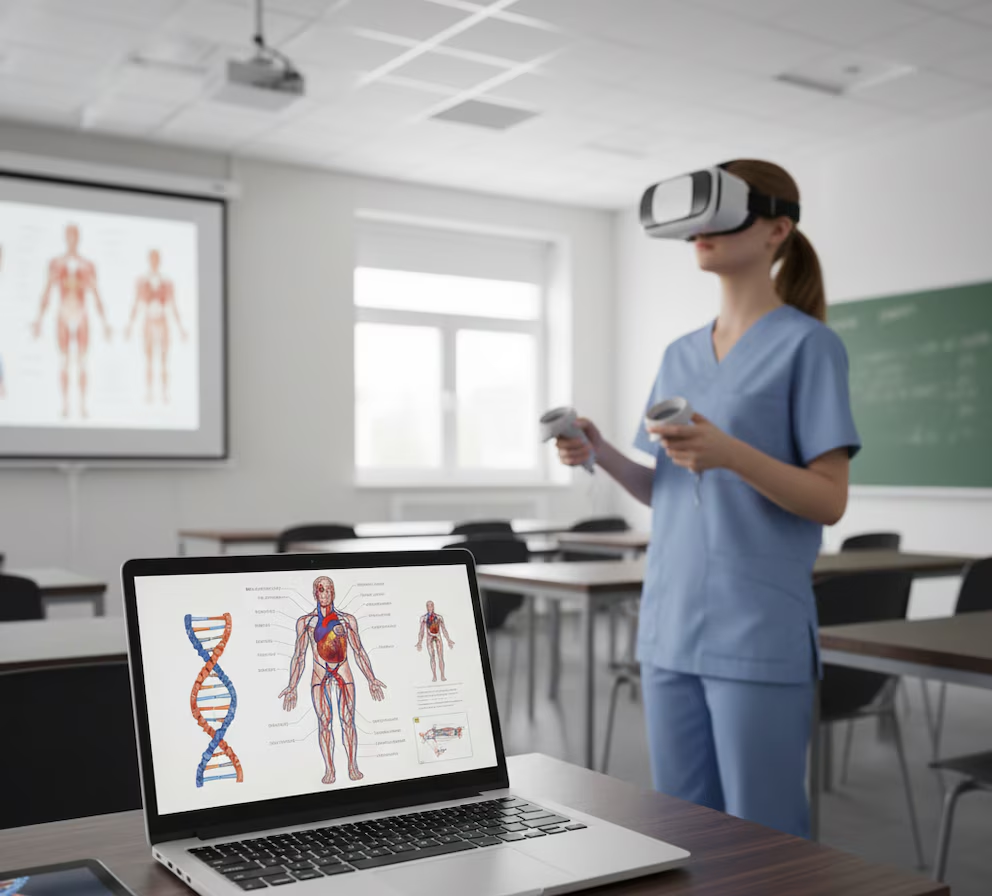
In the anatomy room of the future the scalpel gives way to sensors, algorithms and immersive simulation.
Philadelphia, November 2025
Medical education is undergoing a profound shift. Long dominated by cadaver dissection and static textbooks, anatomy and clinical training now embrace technologies that challenge the old paradigms: digital cadavers, virtual reality environments and artificial intelligence-enhanced platforms. These tools promise not only to replicate human structure but to expand the ways practitioners learn, practise and refine skills, and they arrive at a moment when health-care systems across continents strain under well-documented shortages of hands-on training opportunities.
In Europe, leading medical schools have begun adopting immersive 3D models of human anatomy that allow students to manipulate organs, explore internal systems and experience surgical simulations in virtual spaces. Analysts note that the ability to rehearse in zero-risk settings both accelerates learning curves and reduces the repeated reliance on donated human bodies. In Latin America, where cadaver supply and lab infrastructure remain limited, institutions are finding that these tools offer practical solutions to longstanding bottlenecks in practical training-hours. From Asia’s large-scale simulation centres to remote digital classrooms, the trend is global: technology is reconfiguring the first contact a trainee has with the human body.
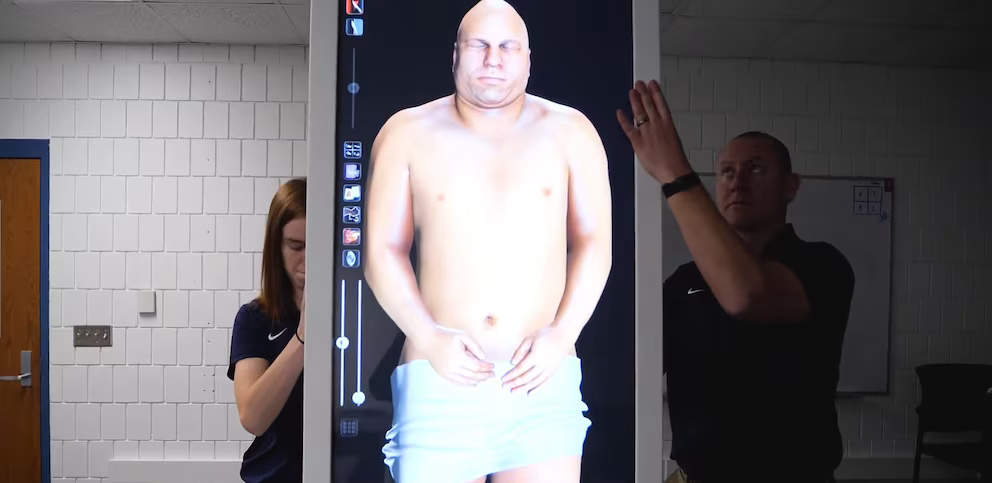
Artificial intelligence plays a crucial role behind the scenes. By analysing thousands of anatomical datasets and surgical outcomes, AI systems now guide learners through step-by-step procedures, evaluate performance and adapt difficulty in real time. Some platforms can flag errors before they become habits and personalise the training pathway based on a student’s weaknesses. This shift transforms practice from rote repetition into targeted skill development. Observers in North America highlight that the combination of AI and VR fosters “muscle memory” without the tissue degradation, while experts in Africa emphasize that such platforms can bridge disparities in training access across socio-economic divides.
The rise of digital cadavers also raises ethical and logistical questions. Traditional dissection requires donor consent, physical infrastructure and disposal protocols—constraints that have impeded scaling. Virtual alternatives reduce these barriers but require substantial technological investment and raise questions about fidelity, haptic feedback and emotional engagement with the human form. Educational ethicists in Europe argue that while the simulation is powerful, it cannot fully replace the emotional and ethical dimensions of working with actual human tissue. In Oceania, where simulation has been a core part of medical training for years, faculty note that the optimal approach may blend real and virtual experiences rather than replace one with the other.
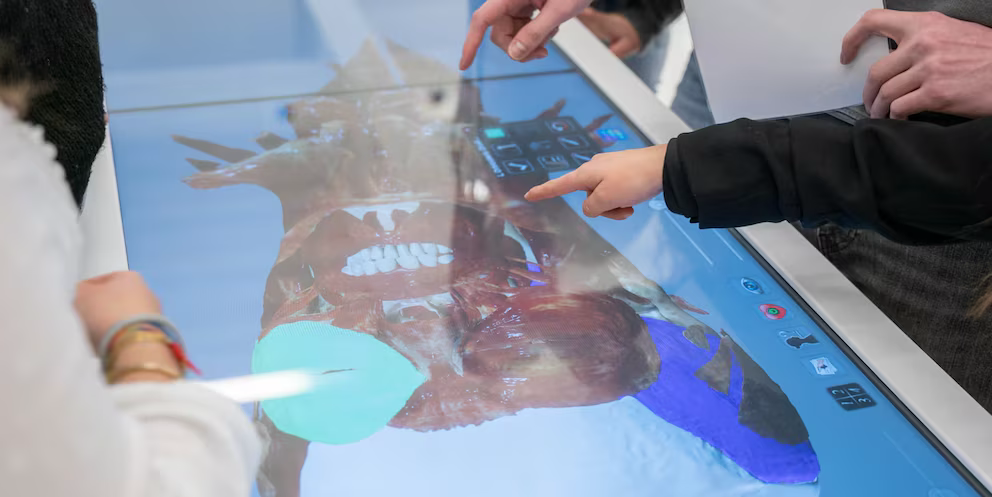
The implications extend beyond undergraduate education. Surgical residencies are integrating simulation modules that allow trainees to rehearse rare or high-risk procedures many times before entering the operating theatre. Health systems in the Middle East and Southeast Asia report that these modules reduce time to competency and may improve patient outcomes by lowering early-career error rates. The COVID-19 pandemic accelerated this adoption, forcing hospitals to adopt remote and simulated learning when access to live cases contracted.
For the medical profession, the message is clear: the future surgeon, radiologist or physician will likely spend as much time in virtual environments as in clinical wards. This requires changes in curriculum, accreditation standards and investment in digital infrastructure. Policymakers in Latin America call for national frameworks that recognise simulation-based training for credentialing, while European accreditation bodies are updating criteria to include VR competency.
Yet even as the tools proliferate, caution is warranted. The most advanced simulation does not erase the uncertainty of real-world anatomy or patient variability. Educators emphasize that technology is a complement—not a replacement—for clinical experience, critical thinking and human compassion. The hallmark of excellence will remain the ability to navigate the unexpected, interpret ambiguous findings and make decisions with incomplete information—a terrain where only experience provides true mastery.
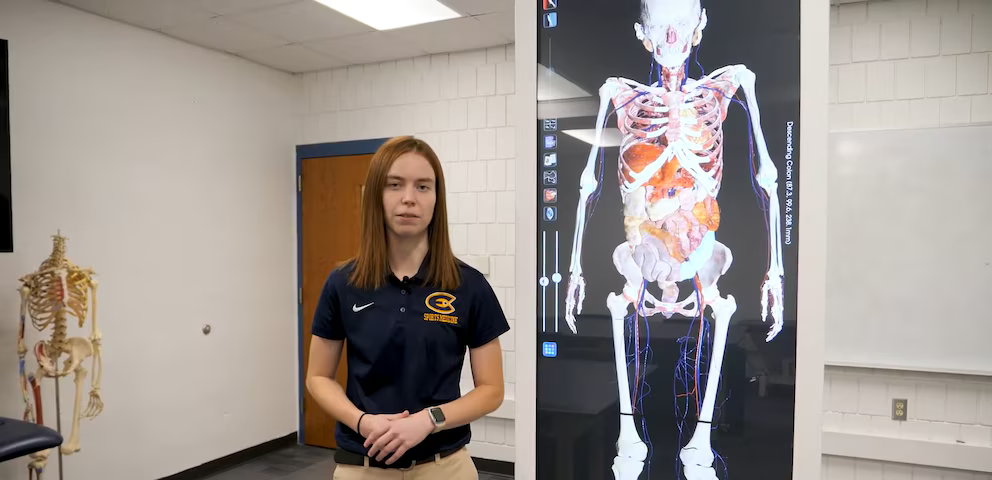
The transformation unfolding in medical training is not a mere technological upgrade. It signals a shift in how professionals learn, practise and scale their skills globally. In this new paradigm, cadavers, algorithms and virtual worlds converge to redefine the anatomy of tomorrow’s healthcare workforce.
Information that anticipates futures. / Información que anticipa futuros.