

 Phoenix 24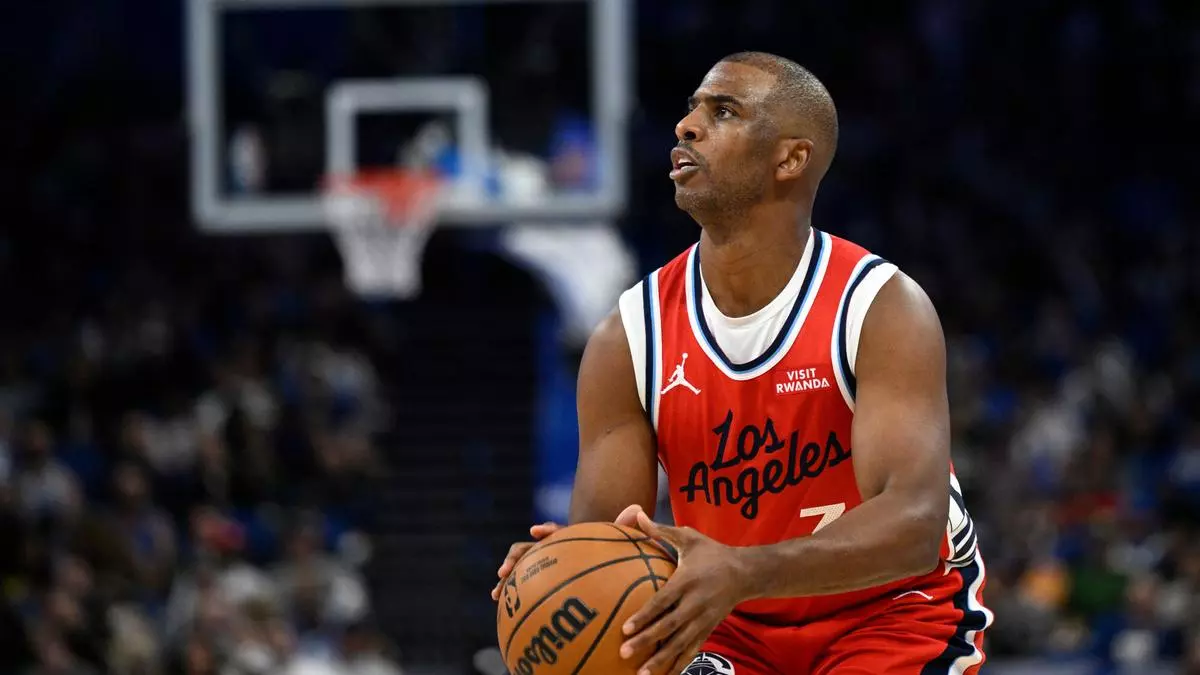
Greatness measures time differently.
Los Angeles, November 2025. Chris Paul’s confirmation that he will retire at the end of the 2025–26 season marks the closing of one of the most influential careers in global basketball. For more than two decades, he shaped the identity of the modern point guard, elevating the position through precision, intelligence and an unrelenting competitive drive that defined every franchise he touched. His decision turns this season into both a farewell and a reflection point for a league preparing to transition beyond the generation of leaders who built the NBA’s stylistic evolution from the mid-2000s onward.
Paul’s legacy is anchored not only in accolades but in the way he reimagined the relationship between orchestration and leadership on the court. His command of pace, spacing and timing influenced a generation of guards who studied his approach as a blueprint for high-IQ basketball. Throughout his career, he turned teammates into optimized versions of themselves, unlocking shooters, stabilizing systems and imposing order in moments where chaos would have swallowed lesser players. The culture he implemented everywhere he played, from New Orleans to Houston and Phoenix to Los Angeles, became synonymous with discipline, accountability and elevated standards.
The announcement in Los Angeles carries symbolic weight. Returning to the city where he built one of the league’s most iconic modern identities, Paul positions his final act in a familiar landscape, surrounded by a fanbase that once witnessed his rise as a conductor of electrifying basketball. His final season becomes both a reunion with the past and a forward-facing reflection on how the NBA has changed. Younger guards now dominate through explosiveness and versatility, yet the imprint Paul leaves behind proves that the cerebral dimension of the position remains essential.
Internationally, Paul’s retirement reverberates across continents where the NBA’s influence has expanded dramatically. In Europe, his style of play is seen as bridging American explosiveness with European tactical precision. In Latin America, broadcasters and fans highlight how Paul’s longevity and adaptability mirror the values that emerging basketball systems aim to cultivate. Across Asia, where the league’s audience has surged, Paul stands as an example of how professional excellence can shape a global persona without relying solely on highlight-driven theatrics. In Africa, where the NBA invests heavily in talent development, Paul’s strategic understanding of the game is celebrated as a model for players refining fundamentals in increasingly competitive regional leagues.
The business dimension of his retirement also carries significance. The NBA enters a decade defined by data-driven management, international talent flows and new modes of fan engagement. Paul represents an analogue of timeless basketball intelligence, contrasting with the algorithmic era shaping the sport’s future. His departure invites questions about how teams will identify leadership in a landscape prioritizing versatility and statistical ceilings over traditional positional hierarchy. Front offices will look for players capable of balancing analytics with intuition, yet few possess the natural command that Paul exercised from his rookie year to his final campaign.
The emotional impact of his announcement resonates deeply among peers and rivals who acknowledge that competing against Paul required heightened concentration and a willingness to engage in mental contests as demanding as the physical ones. He built a reputation as a meticulous tactician capable of controlling games without necessarily dominating the scoreboard. His ability to manipulate angles, anticipate rotations and punish defensive lapses turned him into a constant threat, even as athleticism became a defining trait of the next generation. In this way, Paul’s career stands as a testament to basketball’s dual identity as both art and engineering.
For fans, Paul’s final season becomes not only a celebration but an education. Younger audiences will experience a rare opportunity to observe a master concluding his craft, while older generations will view it as the closing chapter of a lineage that stretched from Steve Nash to Tony Parker and Jason Kidd. His presence offers continuity in a league where stars rise and fade with increasing speed, and his departure underscores the impermanence even of the most defining figures. The league will move forward, but the stylistic foundations Paul helped construct will remain embedded in the sport’s architecture.
As he approaches the final months of his career, Paul’s focus remains characteristically centered on preparation, execution and elevating those around him. There is no dramatic farewell tour, no amplified theatrics, only the familiar rhythm of intentionality that has defined his professional life. His departure invites reflection on how greatness is measured—by championships, by longevity, by influence, or by the standards one leaves behind. In Paul’s case, the answer likely lies in the convergence of all three.
Basketball evolves, players emerge and systems change, yet the imprint of a transcendent mind endures beyond statistics. Chris Paul’s final season is not an epilogue but a reminder: the sport’s most enduring legacies are written by those who command not only the ball, but the game itself.
Lo visible y lo oculto, en contexto. / The visible and the hidden, in context.