

 Phoenix 24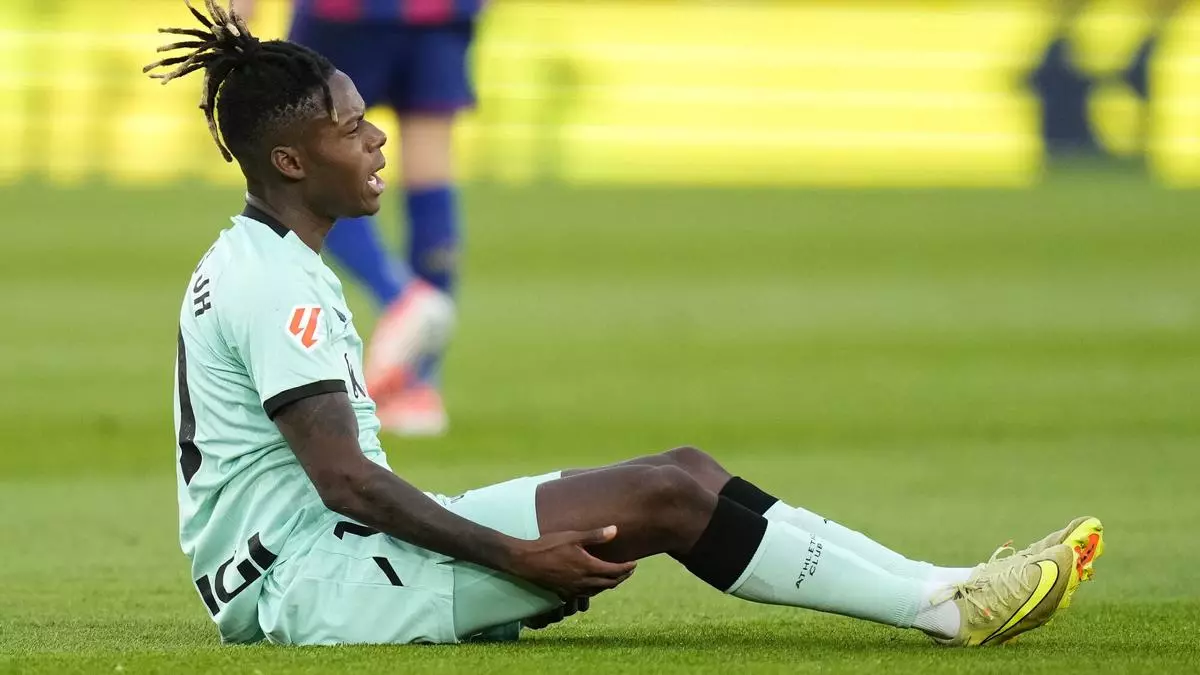
Pressure sharpens every touch.
Barcelona, November 2025. The tension inside the Olympic Stadium unfolded long before the final whistle, and Nico Williams felt it with every stride, every miscontrolled ball and every attempt to break a match that refused to open. What was expected to be a routine evening for Barcelona turned into a psychological stress test for one of the squad’s most scrutinized talents. Williams, whose arrival was met with enormous anticipation, endured one of his most difficult outings of the season, facing a hostile atmosphere from sections of the home crowd and an opponent determined to expose his frustrations. What happened on the pitch reflected not only an underwhelming personal performance but also a broader discomfort within a club still navigating identity, pressure and transition.
The match unfolded in a way that highlighted the individual isolation Williams experienced. His early touches lacked fluidity, and each misplaced pass drew a louder reaction than the last. Rather than recovering rhythm, the winger’s urgency grew, turning decision-making into a series of hurried attempts. Barcelona’s tactical structure offered him few supports; he was often left to face double marking without synchronized movements from teammates to create passing lines. In these situations, a player’s talent is not enough; cohesion determines outcomes, and Barcelona struggled to provide it.
The psychological atmosphere surrounding Williams intensified as the minutes passed. A part of the stadium shifted from impatience to hostility, and the young winger carried the weight of expectation on his shoulders. This response, though not new in Barcelona’s turbulent seasons, reveals a recurring cycle: when performances fall below the idealized version of the team, pressure concentrates on the most dynamic and visible profiles. Williams’ explosive style, normally applauded when it breaks defensive lines, becomes a focal point of frustration when the plan collapses. In modern football, applause and criticism often flow from the same source; the difference lies in the match’s emotional outcome.
Barcelona’s staff must now confront the implications of this match. Williams is a player whose confidence amplifies his contribution, and episodes like this can either accelerate growth or deepen self-doubt. In elite football, psychological management is as crucial as tactical instruction. European clubs, especially those that handle large-scale expectations, invest heavily in performance psychology to prevent isolated incidents from turning into long-term decline. Barcelona, engaged in a medium-term reconstruction, must ensure that the environment does not devour its own talents.
Beyond the individual dimension, the match exposes structural issues within the team. Barcelona oscillates between periods of positional control and moments of disarray, suggesting that the collective mechanisms intended to support creative players are not yet fully synchronized. A winger thrives on timing, spaces and coordinated runs. Williams often found himself receiving the ball too wide, too static or too far from the midfield’s zones of influence. The opponent capitalized on this by compressing the flank, neutralizing his acceleration and forcing him into predictable movements. Tactical rigidity remains one of Barcelona’s challenges this season.
The emotional context of the club heightens every micro-crisis. Barcelona’s trajectory in recent years, marked by financial constraints, managerial rotations and uneven sporting performance, has generated an atmosphere where patience is scarce. Each match becomes a referendum on the club’s broader direction. Supporters oscillate between nostalgia for past eras and demands for immediate success, creating a volatile environment for players still consolidating themselves. Williams, at 23, enters this crucible with undeniable potential, but potential becomes fragile when filtered through collective anxiety.
International observers draw varied conclusions. Analysts in England interpret the episode as evidence of the psychological toll suffered by young stars in big-market clubs. Commentators in Germany see it as a symptom of a tactical system still searching for balance. In South America, where Williams’ style resonates with raw athleticism and flair, the scrutiny is viewed as part of the cultural pressure inherent to European elite football. What unites these perspectives is the recognition that the development of high-profile players increasingly depends on their ability to navigate hostile emotional climates as much as complex tactical demands.
Inside Spain, the conversation already extends beyond the match. Sports media debate whether the reaction from the stands crossed a line, questioning the role supporters play in shaping performance. Some argue that demanding environments forge competitive steel; others insist that public hostility towards young players damages both individuals and long-term club stability. Barca’s coaching staff now faces the task of recalibrating Williams’ confidence without feeding the narrative of fragility.
In the end, the match will not define Williams’ career, but it stands as a revealing moment. Every talent passes through hostile afternoons, and the difference between stagnation and breakthrough often lies in how those afternoons are processed. Barcelona must decide whether it wants to cultivate resilience through support or outsource responsibility to pressure. Williams, for his part, carries the tools to respond; the question is whether the ecosystem around him will allow those tools to flourish.
Against propaganda, memory. / Against propaganda, memory.