

 Mario López Ayala, PhD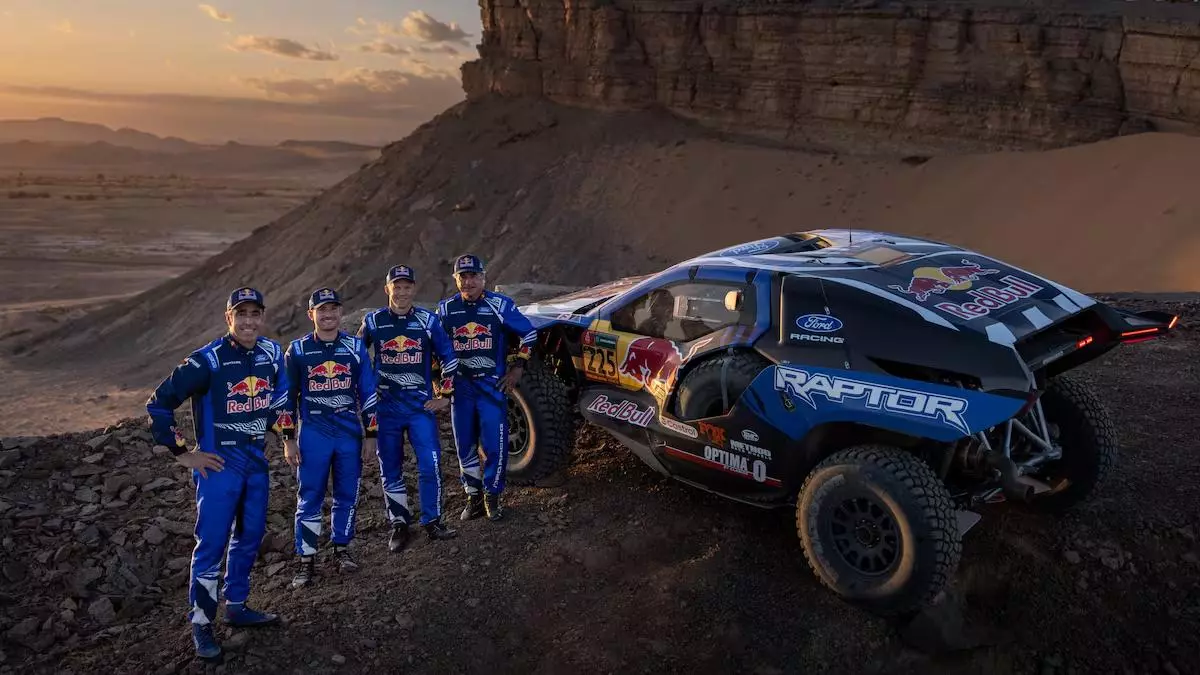
When the dunes demand more than speed, they test the identity of the maker.
Saudi Arabia
As the dawn over the Empty Quarter rose for the 2025 edition of the world’s toughest rally-raid, one silhouette stood out in the convoy of prototypes: the new Ford Raptor T1+, fielded by Ford in partnership with M‑Sport. This marked more than just a return to the starting grid—it represented a strategic repositioning of the American brand within the elite rally-raid ecosystem. Ford’s decision to commit to Dakar’s brutal landscape underscores its ambition not merely to compete but to signal resilience, technical evolution and brand DNA rooted in off-road dominance.
Behind this move lies a narrative of transition and determination. After years of internal debate about motorsport orientation and brand positioning in a climate-aware era, Ford elected to deploy its highestprofile engineering credentials in the desert arena. The Raptor T1+ was engineered for extremes—sand, rocks, hours of navigation, suspension stress and driver fatigue—and the deployment saw seasoned veterans such as Carlos Sainz and Nani Roma at the wheel. Their involvement pushed the project beyond marketing spectacle into high-stakes performance terrain.
The context is essential: the Rally Dakar 2025 presented unique challenges, from 7,700 km of terrain in Saudi Arabia to the separation of routes between cars and bikes on five of the twelve stages. worldrallyraidchampionship.com+3Wikipedia+3Wikipedia+3 Ford’s entry into this theatre therefore was not peripheral—it was a statement of re-entry into global off-road competition at its most unforgiving. The practical implications extend beyond podiums: the data gathered, the endurance validated, the brand exposure achieved under harsh conditions all feed into Ford’s future consumer programmes and global positioning.
From the outset the team knew success would be measured differently. The highly publicized crash of Sainz early in the race—an overturned Raptor in a two-day marathon stage—served as a stark reminder that even the most advanced machines and celebrated names remain vulnerable. Cadena SER+2Reuters+2 Yet the strategy did not collapse. Ford regrouped, its remaining crews pressed on, mechanics pushed past fatigue, and the team logged stage wins and consistent finishes. The Raptor carried through with resilience, setting a foundation rarely achieved in a debut season.
In broader strategic terms, Ford’s Dakar campaign touches on multiple dimensions. First, it aligns with the brand’s emphasis on trucks and SUVs in global markets—regions such as North America, Middle East and Asia where ruggedness and off-road credentials resonate. Second, it sends a message to rivals and consumers alike: Ford is capable of translating high-concept competition into real-world engineering legitimacy. Third, the timing is no accident. As automotive OEMs face transition pressures toward electrification and sustainability, involvement in extreme endurance rally-raid offers a narrative counterpoint—highlighting heritage, durability and performance under stress.
Yet this endeavour is not free from risk. Participation at Dakar is expensive, resource-intensive and logistically complex. The margin for mechanical failure is tiny, navigation errors multiply, and reputational setbacks are easily amplified. Ford’s leadership is aware that finishing well matters nearly as much as winning. For a brand like Ford, a failure to finish or a high-profile breakdown would have negative reverberations—questions about competence, brand authenticity or strategic coherence could arise. By contrast, completing the rally and achieving notable finishes—even without outright victory—represents a tactical win.
The performance also carries implications for the broader motorsport ecosystem. Ford’s return raises the bar for manufacturers in rally-raid, injecting fresh energy into competition dominated by legacy players. Teams and series organizers will feel the ripple. The collaboration between Ford and M-Sport, the selection of world-class drivers, and the focus on top-tier engineering signal that the sport is ascending into the mainstream of automotive strategy rather than remaining niche enthusiast-driven.
For Ford’s corporate leadership the campaign offers tangible advantages. The data from the Dakar programme—drivetrain stress, thermal loads, suspension travel, navigation reliability—can feed directly into next-generation consumer products. Off-road capable trucks and performance SUVs are growing segments globally. The branding uplift from Dakar success or credible debut creates halo effects that transcend motorsport alone. In short, the desert lap becomes a laboratory for commercial relevance.
In the weeks following the finish, Ford’s internal review will evaluate not only the competitive results but the return on strategic investment. What did the engineering team learn? How many kilometers of real-world failure-mode testing were logged? What was the media value of the campaign, and how might it influence product roadmaps? These are the questions that distinguish a mere motorsport project from a business-driven strategic execution.
In the grand narrative of automakers repositioning themselves in a diversifying market, Ford’s Dakar entry is emblematic. It reflects a brand rediscovering its roots in “Ford toughness” while embracing the realities of 21st-century global competition. For enthusiasts, the Raptor T1+ signals promise. For rivals, it signals intent. And for Ford itself, the Sahara was not merely a race—it was a proving ground.
Behind every fact, there is an intention. Behind every silence, a structure.