

 Phoenix 24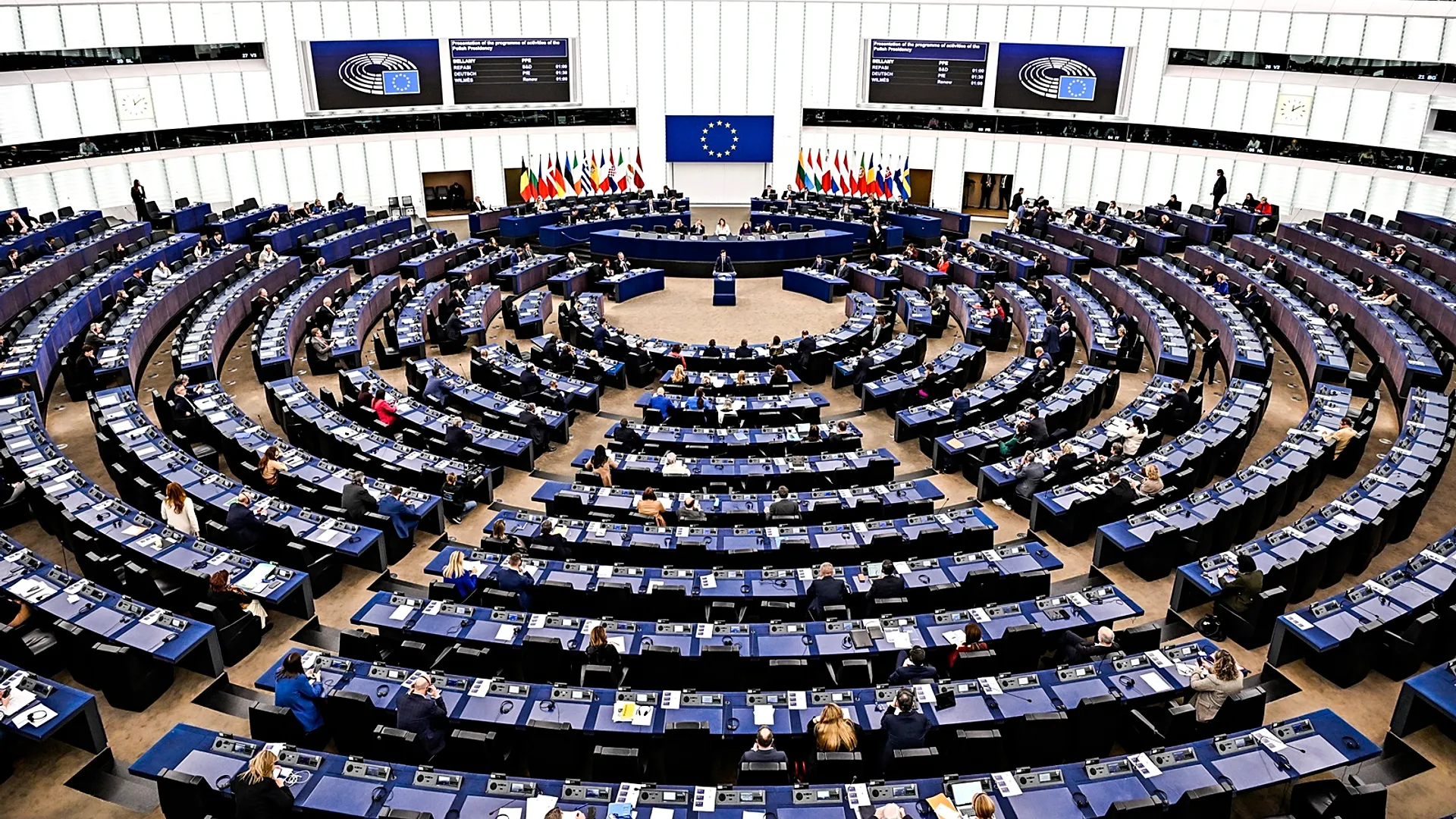
The shift happened faster than expected.
Brussels, November 2025
Europe’s political balance tilted sharply after the most recent European elections, where conservative and right leaning groups secured enough seats to assemble a new majority in the European Parliament. The European People’s Party, long regarded as the engine of the centrist tradition in Brussels, became the pivotal force enabling the formation of this strengthened right leaning bloc, a rearrangement that has altered institutional expectations, strategic alliances and policy direction across the Union.
What began as a routine electoral adjustment evolved into a structural reconfiguration. Political analysts in Brussels argue that the rise of conservative and nationalist parties cannot be explained simply as a decline in progressive support, but rather as a shift in voter preferences on sensitive issues such as migration, security, economic pressure and industrial competitiveness. Experts across European think tanks point out that voters increasingly sought firmer political structures in the face of accumulated crises and a perception that the European project was not delivering rapid or convincing solutions.
In the United States, researchers at the Atlantic Council highlight the decisive role played by the European People’s Party. Its willingness to cooperate with moderate right formations and national conservative factions allowed the creation of an unprecedented parliamentary bloc with enough weight to shape legislative priorities and influence key appointments. The move has raised concerns among diplomats who anticipated a stronger centrist continuity.
Across Asia, political observers note that Europe’s shift creates a new benchmark in global institutional competition. The strengthening of right wing forces in the European Parliament contrasts with the liberal model that defined the Union for decades and may reshape how the EU positions itself on trade rules, technological regulation and foreign policy. For Asian governments with strategic interests in Europe, the change signals the need to reassess how Brussels will negotiate on issues ranging from data governance to industrial subsidies and defense cooperation.
Inside the Parliament, the new majority is already reshaping internal dynamics. Conservative lawmakers are pushing for stricter border control policies, a reexamination of asylum systems, adjustments to climate commitments and faster approval of industrial instruments aimed at reinforcing the EU’s manufacturing capacities. Progressive groups counter that the alliance among right leaning parties weakens historic pillars of European integration and risks redefining long standing principles linked to rights and civil liberties.
According to parliamentary insiders, the European People’s Party has positioned itself as an intermediary capable of navigating between pragmatic center right demands and the more rigid expectations of nationalist groups. This strategic posture enables the EPP to retain influence in critical committees dealing with economic policy, agriculture, foreign affairs and digital regulation. Even so, legislative strategists warn that cohesion is not guaranteed; maintaining the majority will require converting electoral alignment into workable policy agreements.
Beyond institutional boundaries, Europe’s political shift is interpreted as an answer to a broader social climate shaped by inflation, energy concerns, security anxieties and a renewed debate over strategic autonomy. Comparative policy experts argue that voters across the Union opted for firmer political architectures, even at the cost of weakening the long standing centrist consensus that defined Brussels for years.
Foreign policy implications are already emerging. European diplomats acknowledge that heightened emphasis on security and border control may introduce new complexities in relations with African, Latin American and Asian partners. Migration debates are likely to become more rigid, and climate negotiations may increasingly revolve around economic guarantees rather than regulatory ambition. The result could be a more cautious but also more assertive European posture in defense, industry and global competition.
The rise of a right wing majority in the European Parliament signals a new stage for the Union. The political center still exists, but no longer as the dominant axis. A sense of transition is palpable both in institutional corridors and in national capitals, where governments and opposition groups are recalibrating their strategies in response to the new parliamentary geometry. The upcoming legislative cycle will determine whether this emerging majority becomes a functional governing force or merely a temporary convergence of interests.
Phoenix24: the visible and the hidden, in context. / The visible and the hidden, in context.